FEC & Indoor Play: what operators need to decide before they build
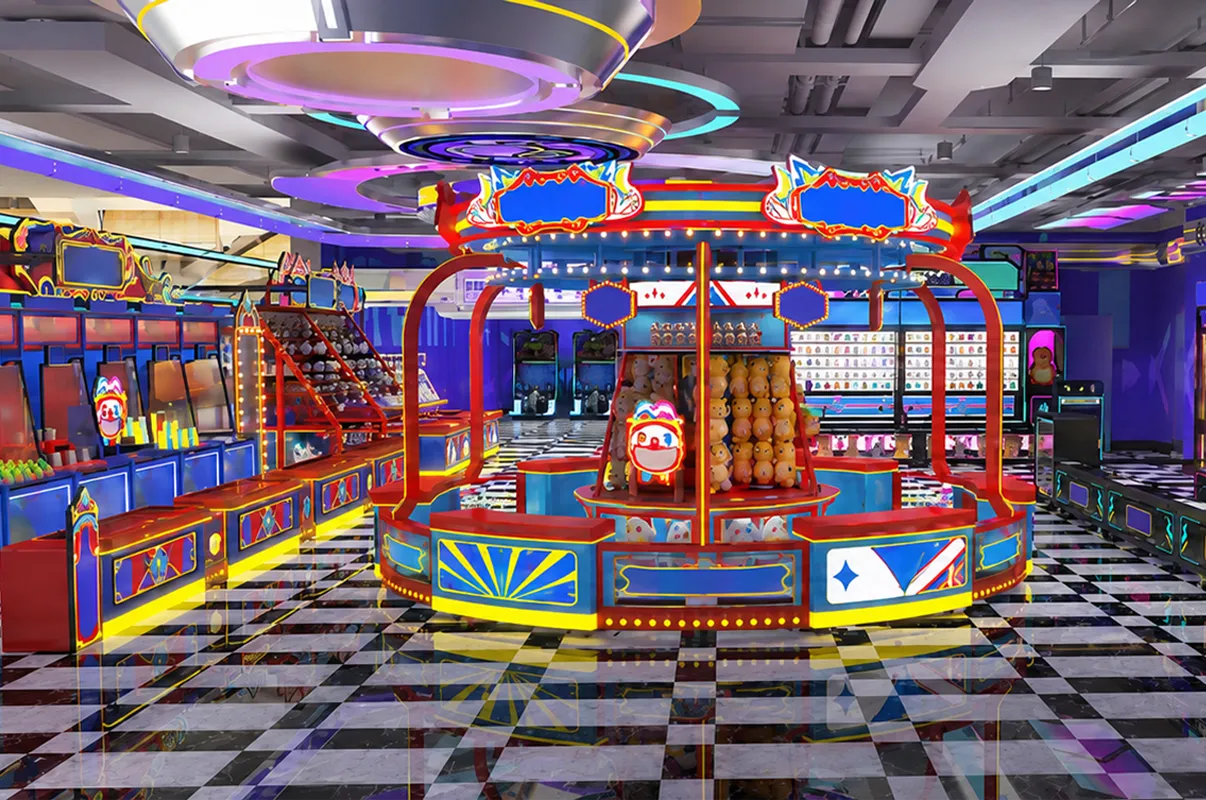
FEC & Indoor Play projects look simple from the outside: fill a building with attractions, add food and tickets, and wait for families to show up. In practice, the profitable sites are the ones that treat the space as an operating system, not just a room full of equipment. Layout, traffic flow, age zoning, durability, noise, cleaning access, and staffing all affect whether an indoor family entertainment center feels easy to use or frustrating by the second visit.
For owners, developers, and product teams, the real question is not whether the concept works. It is how to choose the right mix of attractions, finishes, and support systems for the building you actually have. A warehouse shell, a mall unit, and a purpose-built family venue each impose different constraints. Miss those constraints early and the costs usually show up later in retrofit work, poor throughput, or unhappy guests.
Why this category keeps growing
Indoor entertainment has a practical advantage that outdoor leisure does not: it can operate in more weather conditions and can be planned around predictable visitor flow. That matters for landlords looking to repurpose vacant space and for operators trying to smooth out seasonal swings. Families also like venues where younger children, older siblings, and adults can all stay in one place without the day falling apart after 30 minutes.
That said, the category is not forgiving. An indoor venue has to earn repeat visits through comfort and operational clarity, not novelty alone. If check-in is awkward, sightlines are poor, or the noise level overwhelms the café, the place may still be busy on opening month and underperform by month six. Buyers often underestimate how much the small details shape the customer experience.
What an indoor family venue really has to do
An effective family entertainment center usually has three jobs at once: it must entertain children, keep adults comfortable enough to stay, and let staff monitor the whole site without constant bottlenecks. Those goals can conflict. A dense play area may excite kids but make supervision harder. A polished lounge may improve dwell time but take away square footage from revenue-generating attractions.
The best projects work because the plan matches the intended visitor mix. A venue aimed at toddlers and birthday parties needs different equipment, surfacing, and seating than a venue built around older children, active play, or multi-attraction spend. This is where the term FEC & Indoor Play becomes more than a category label; it becomes a planning framework for decisions about size, safety, and pacing.
Quick reference: the main decisions buyers need to make
Before the drawings get too far along, most teams should settle a handful of basics:
1. Who is the primary guest: toddlers, mixed-age families, or older children?
2. Is the business model more party-driven, walk-in driven, or membership driven?
3. How much supervision will the attraction mix require?
4. Will the venue need food service to be a major revenue line or only support dwell time?
5. How much maintenance downtime can the site tolerate each week?
Those answers shape nearly everything else. They affect ceiling height, floor loading, acoustic treatment, equipment spacing, storage needs, and the number of staff stations. A design that ignores them may still look attractive on paper, but it becomes expensive to operate.
Common attraction types and what they demand
Indoor family venues typically combine several attraction types rather than relying on a single anchor feature. Soft play zones, climbing elements, trampoline areas, arcade sections, themed rooms, and party spaces each behave differently in daily use. Operators should think in terms of operational load, not just visual appeal.
Soft play and toddler zones
Soft play is often the backbone of early-childhood venues. It is relatively approachable, easy to understand, and useful for birthday traffic. But it also gets heavy wear. Surfaces need to be easy to clean, edges should be well protected, and the layout should allow staff to see trouble spots without moving through every corner. A cramped toddler area can create avoidable friction between age groups, which is a detail parents notice immediately.
Active play and climbing features
These attractions increase energy and can support higher ticket value, but they require more thoughtful engineering. Falls, impact zones, access paths, and queueing all need attention. The mistake some operators make is stacking too many action elements into a single footprint. The site may look impressive in renderings, yet the experience can become congested and difficult to supervise.
Party rooms and event spaces
Party rooms are not just add-ons. They are scheduling tools. A good party program can stabilize weekday revenue and help fill off-peak hours. For that reason, party rooms should be easy to reset, close enough to the action to feel connected, and far enough away that noise does not dominate the dining area. A room that photographs well but functions poorly during turnover is a common and avoidable problem.
How to evaluate layouts without getting fooled by renderings
Renderings are useful, but they can hide the things operators live with every day. The key question is how the building works when it is busy, not empty. Can parents see the play floor from seating? Can staff reach restrooms and exits quickly? Are there pinch points where children will bunch up? Does the entrance create a bottleneck on rainy days when everyone arrives at once?
One practical test is to walk the space mentally as if you were a parent with two children, a stroller, and a drink in hand. If that mental walk feels awkward, the actual customer journey will likely be worse. Another useful check: assume some guests are first-time visitors and will not intuitively know where to go. Signage, sightlines, and thresholds matter more than many teams expect.
Materials, surfaces, and maintenance: the unglamorous side
Indoor attractions take a beating. High-touch surfaces, food spills, dragged chairs, dropped toys, and constant foot traffic all shorten the life of weak finishes. Buyers should ask not only what a component looks like at launch, but how it will age after repeated cleaning and daily use. This is especially important in family venues, where hygiene perceptions affect trust almost as much as the actual condition of the equipment.
Durable materials, cleanable surfaces, and replaceable wear parts usually pay off even when they cost more upfront. That does not mean everything should be overbuilt. It does mean that the cheapest option often becomes the most expensive once it starts failing in visible ways. Operators should be cautious about decorative features that are hard to access for cleaning or repair. If a panel, net, or trim piece cannot be maintained without shutting down half the zone, it is probably the wrong choice.
Safety and supervision are part of the business model
In indoor play, safety is not a separate department. It is built into the customer experience. Clear rules, visible supervision, age separation, soft transitions between zones, and sensible entry points all reduce risk. That is true whether the venue is a compact local play café or a larger entertainment center.
Operators should also think about the less obvious hazards: line-of-sight dead zones, slick flooring near drink stations, awkward stair transitions, and exit paths that become blocked during peak periods. These are not theoretical issues. They are the sort of operational details that staff end up managing on busy weekends, often while also handling birthday check-ins and food orders.
Choosing the right mix for your market
There is no universal formula for FEC & Indoor Play success. A suburban market with young families may support a gentler, party-friendly format. A dense urban location may need tighter footprint efficiency and a stronger food-and-beverage component. Tourist-heavy areas may lean toward higher-capacity attractions and faster turnover. The point is to match the concept to local demand, not to copy a floor plan because it looked good elsewhere.
Before committing, buyers should ask what their revenue mix is likely to be in practice. If birthday parties will drive the calendar, the back-of-house and room turnover process deserve as much attention as the headline attractions. If walk-in traffic is the main engine, the venue needs intuitive wayfinding and strong curb appeal. If the site depends on repeat memberships, comfort and cleanliness become even more important because members see the flaws faster than one-time visitors do.
Common mistakes that show up after opening
Several mistakes appear again and again in indoor family projects. The first is overfilling the floor with attractions and leaving too little circulation space. The second is treating supervision as an afterthought. The third is underestimating storage, which is one reason many attractive venues become cluttered within weeks. Another frequent issue is separating the café or seating area too far from the action, which reduces dwell time and weakens the adult experience.
A more subtle mistake is designing for opening day instead of year two. If replacement parts are awkward to source, if cleaning access is poor, or if the staff workflow depends on one or two people knowing everything, the operation becomes fragile. That is manageable at a small scale, but it becomes a problem as soon as traffic increases.
Buyer advice: what to ask suppliers and designers
When sourcing equipment or planning a new site, ask direct questions. How is the attraction cleaned? Which parts are considered wear items? How long does routine inspection usually take? What are the space and ceiling requirements? How many staff members are typically needed to monitor the area safely? Those questions sound basic, but they reveal whether a supplier understands operations or is only selling a visual concept.
It also helps to request practical references, not just images. A good supplier should be able to discuss how the equipment performs in real family venues, what changes are usually needed for different building types, and which layout choices tend to create trouble. Be cautious if every answer sounds effortless. Real indoor venues always involve tradeoffs.
FAQ
Is indoor play only for younger children?
No. Many successful venues serve mixed ages, but the mix has to be planned carefully. If older children and toddlers share the same play zone without enough separation, both groups may have a worse experience.
Do larger venues always perform better?
Not necessarily. A smaller, well-organized venue can outperform a bigger one that is awkward to staff or expensive to maintain. Efficiency often beats sheer size.
What matters most at the concept stage?
Guest mix, layout logic, and operating model. Equipment choice matters too, but those first three decisions determine whether the project can be run smoothly.
What a good next step looks like
If you are planning or upgrading a family venue, start with the operational questions before you lock in the attraction list. Map who the customers are, what they will spend time doing, and where the space will be hardest to manage. Then build the attraction mix around that reality. It is slower than chasing a flashy concept, but it usually leads to a venue that works on weekdays, survives weekends, and still looks acceptable after a year of real use.
That is the practical aim in FEC & Indoor Play: not just a bright opening, but a site that keeps earning visits without becoming a maintenance headache. If your concept can do that, the rest of the business becomes much easier to defend.