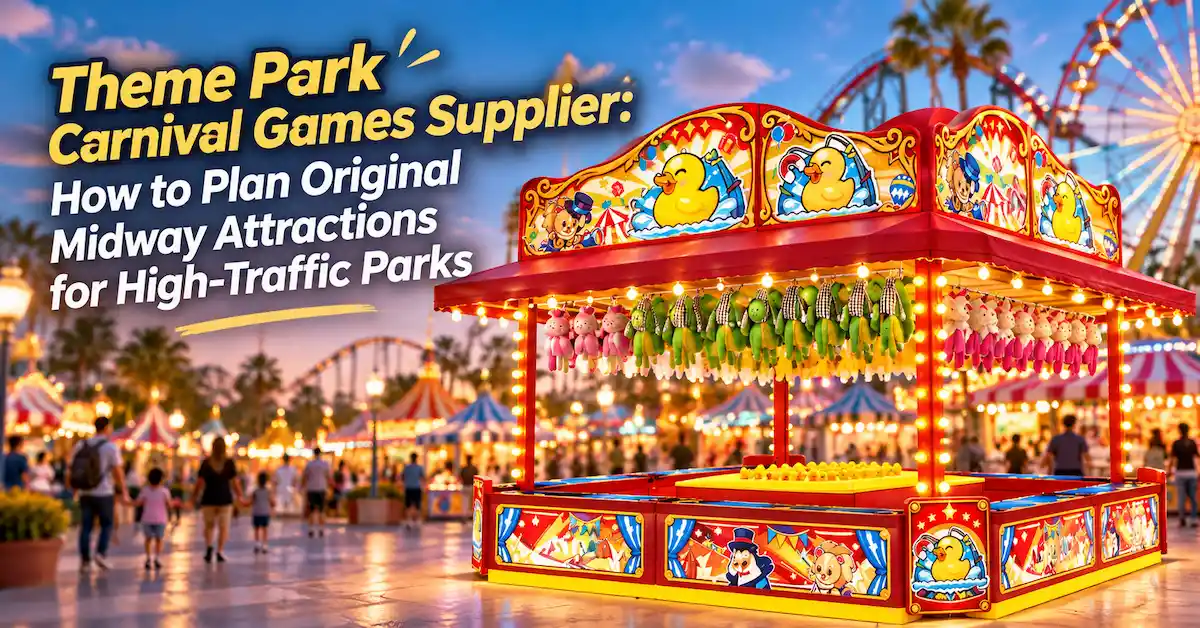
A theme park carnival games supplier should help you solve a park problem before it sells you a machine. The right supplier connects original game design and manufacturing with the realities of a busy attraction area: visitor flow, visibility from a distance, outdoor exposure, player throughput, prize handling, maintenance access, electrical planning, and the opening schedule. A product can look impressive in a catalog and still be unsuitable if guests cannot approach it safely, staff cannot reset it quickly, or the delivered configuration does not match the approved plan.
For theme park buyers, the practical starting point is a written venue brief. Explain the zone, visitor profile, available footprint, ceiling or canopy conditions, operating season, staffing model, reward model, and target opening date. Then ask the shortlisted supplier to recommend a game mix with model-specific dimensions, power, materials, player capacity, installation requirements, testing scope, packing details, and support responsibilities. This process gives a purchasing team something more useful than a generic product list: a configuration that can be reviewed by operations, engineering, procurement, and finance together.
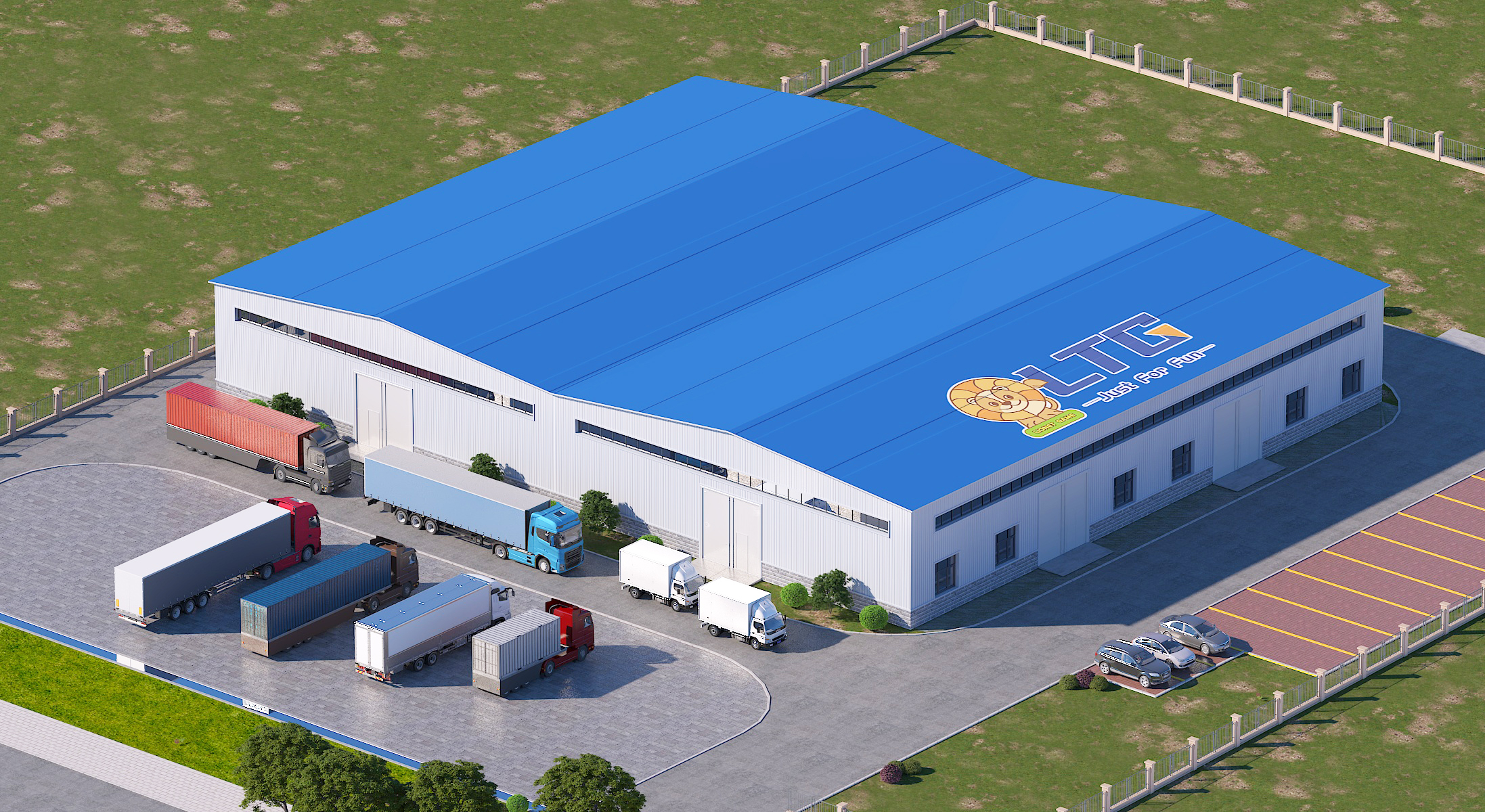
Lionet is a Guangzhou-based carnival and midway game manufacturer. Its public website describes original carnival games and venue solutions for entertainment operators worldwide, including outdoor midway booths, indoor carnival games, multiplayer games, and competitive socialising games. The company also publishes manufacturing capabilities covering structural fabrication, game assembly, product testing, and packing and delivery. The Lionet About Us page and product catalog are useful starting points for a theme park project, while the solutions page explains how the company approaches different venue types.
Send your park brief to Lionet
What should a theme park carnival games supplier deliver?
The phrase “theme park carnival games supplier” can describe a reseller, a booth builder, a game developer, or a manufacturer that manages the full equipment path. For a commercial park, the label matters less than the evidence and responsibilities behind it. Before comparing prices, identify what the supplier will actually provide and what your own team must arrange.
A complete project discussion normally covers the following areas:
- Game concept and format. Is the attraction a classic skill booth, a prize-every-time game, a multiplayer competition, a basketball challenge, or a multi-game station? What guest behavior should it create: quick participation, repeat play, group competition, or a visible crowd?
- Physical configuration. What are the body dimensions, player positions, access sides, service panels, loading path, and required clearance? Product dimensions are not the same as the complete operating footprint.
- Environmental fit. Is the game intended for an indoor park, a covered outdoor walkway, or an exposed outdoor area? Ask for the written environmental assumptions for the exact configuration rather than relying on a general product photograph.
- Operating cycle. What happens from start to finish? A buyer should understand player entry, game action, scoring or win determination, prize handover, reset, fault recovery, and routine cleaning.
- Manufacturing evidence. Which parts are fabricated, assembled, tested, packed, and documented by the supplier? The public Lionet company profile identifies structural fabrication, game assembly, product testing, and packing and delivery as manufacturing capabilities.
- Project documents. Request an approved specification, drawing revision, electrical information, installation instructions, spare-parts list, and an agreed inspection scope. These documents turn a visual concept into a controlled purchase.
- Delivery and support. Confirm production milestones, packing method, receiving requirements, installation support, training, warranty terms, and the route for reporting a fault. Put open items beside an owner and a decision date.
This is why original design and manufacturing matter. A theme park attraction has to work as a part of a zone, not just as a standalone object. The supplier should be able to discuss structure, gameplay, visibility, guest interaction, maintenance, and delivery as connected decisions.
Why original game design matters in a theme park
Theme parks compete on memory. A guest may forget the name of a machine, but they remember the booth that was visible from the walkway, the game their family played together, or the moment a crowd reacted to a winning shot. Original design gives a park more control over that memory because the attraction can be shaped around its theme, visitor mix, footprint, and operating rhythm.
Original does not have to mean complicated. In a strong carnival game, the guest understands the objective quickly. The challenge is physical and visible: throw, shoot, aim, time, roll, or pull. The attraction then adds the details that make the experience worth repeating, such as changing targets, multiple lanes, score feedback, prize displays, lighting, sound, or a visual theme that belongs to the park.
For a theme park, the value of original design usually appears in five places:
Visual identity
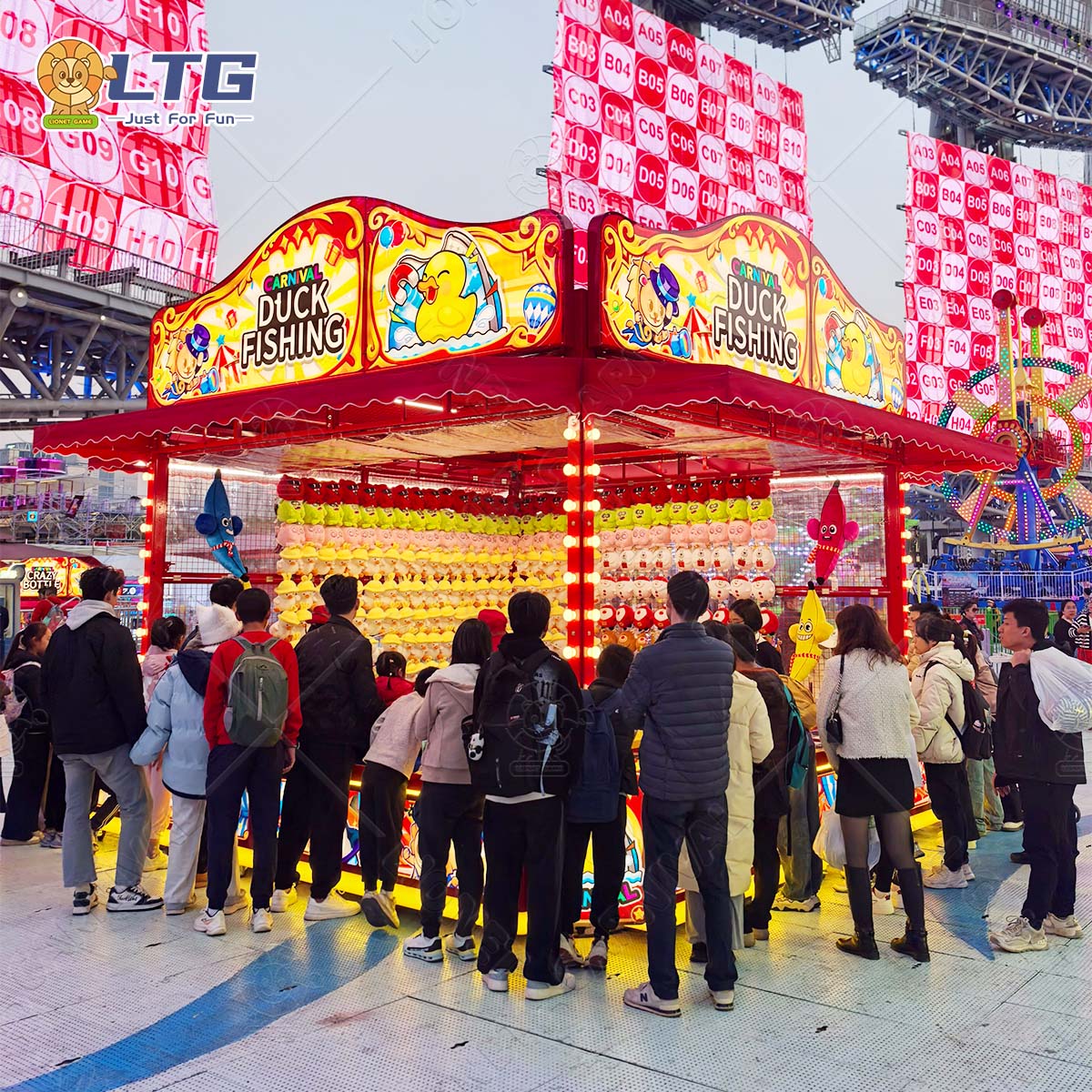
Outdoor midway booths often become visual anchors. A circus-style booth, woodland cabin, container-style attraction, or sports-focused game can support the identity of a zone without requiring a large ride footprint. The graphic treatment, prize display, canopy, lighting, and structure should be reviewed together so the attraction reads clearly in daylight and during evening operation.
Guest participation
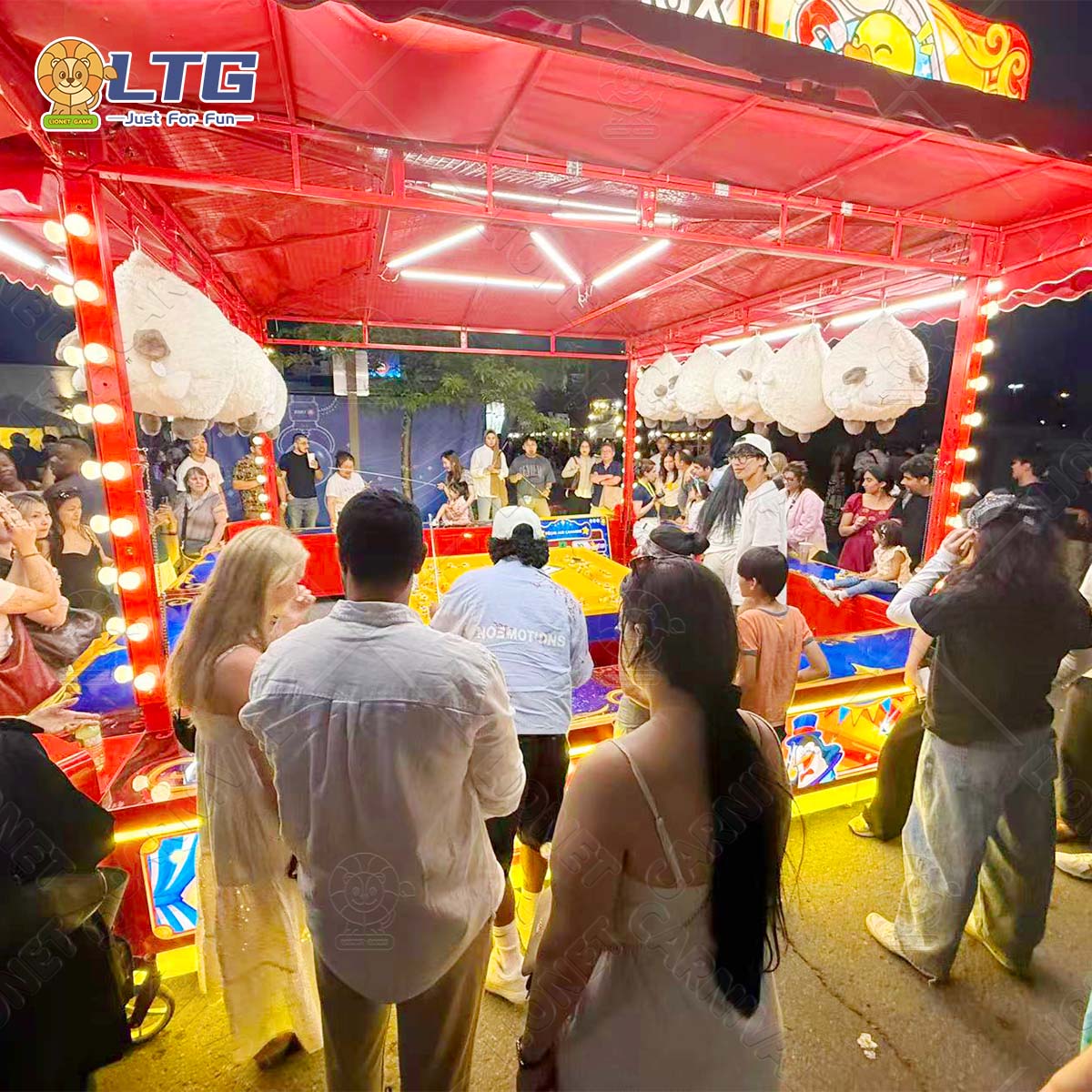
A game is easier to join when the action can be understood from a distance. A guest should be able to see where to stand, what to throw or shoot, and what counts as success. Multi-player lanes and open access can make a group decision easier because friends can begin together rather than waiting for one person to finish.
Repeat play
Repeat play comes from a credible challenge, social comparison, a new score to beat, a prize objective, or a combination of these. The supplier should explain what makes the game different on the second and third attempt. “Colorful” is not a repeat-play strategy. A specific mechanic is.
Park operations
Original design should include service access, reset behavior, component replacement, cleaning, prize replenishment, and staff visibility. If these items are considered only after the exterior is approved, the park inherits avoidable operating friction.
Long-term flexibility
Some Lionet booth formats use a modular relationship between the frame and the selected game content. That can allow a park to refresh a seasonal game mix while keeping a substantial structure in place. Confirm exactly which elements can be changed, who performs the change, how long it takes, and which parts remain compatible.
Who should use this buying guide?
This article is written for theme park owners, attraction directors, entertainment managers, procurement teams, park designers, resort operators, and regional buyers who are planning commercial carnival games. It is most useful when a project has a real venue, a defined visitor group, or a required opening date.
It is less useful for a private buyer looking for a small home game, because theme park procurement involves larger clearances, commercial duty cycles, public access, service planning, and documentation. It is also not a substitute for an engineer’s review of a final installation. The article helps you ask better questions before that review.
The most common buyer situations are:
- A new park zone needs a visually strong attraction mix that can open with the wider project.
- An existing midway needs refreshed games with more group interaction and better visitor dwell time.
- A seasonal park needs booths that can be repositioned, stored, or reconfigured between operating periods.
- A resort or destination attraction needs family-friendly games that work across different age groups.
- A park wants a sports, woodland, circus, or modern theme carried consistently across several game points.
- A procurement team needs comparable specifications from a China-based carnival game supplier before approving a purchase.
Match the game format to the park zone
There is no universal “best” carnival game for a theme park. The correct format depends on the job the zone needs to perform. Use the table below to frame the discussion with your supplier.
| Park requirement | Suitable format to investigate | Why it can fit | Questions to ask |
|---|---|---|---|
| A central, high-visibility outdoor anchor | Four-sided or large outdoor midway booth | Open access can increase visibility and support multiple simultaneous players | How will four approach sides, queues, spectators, prizes, and service access be managed? |
| A compact seasonal point | Compact or foldable outdoor booth | A smaller footprint can suit temporary layouts and event periods | What are the folded dimensions, handling method, storage needs, and repeated-setup limits? |
| A sports-themed zone | Basketball or skill competition game | Familiar actions are easy to understand and can create a visible challenge | How many lanes operate at once, how are balls returned, and how is the winning result shown? |
| A group competition zone | Multi-lane social competition game | Side-by-side play creates a shared reason to watch and participate | What are the player count, scoring logic, display, reset sequence, and fault procedure? |
| A prize-focused family area | Prize-every-time or pull-and-reveal game | A clear reward can make participation approachable for younger guests | What is the prize process, how are props replenished, and how is inventory controlled? |
| A themed walkway or destination area | Forest, circus, container, or custom visual format | A strong silhouette can help a zone become memorable | Which visual elements are fixed, which can be customized, and how are finishes maintained outdoors? |
Use the park map to decide whether an attraction should pull visitors toward a destination, fill a quiet edge, or create a transition between larger attractions. A high-throughput booth in the wrong location can create congestion. A compact game placed where visitors cannot see the action may never reach its intended participation level.
Product formats to review with a China supplier
Lionet’s public product categories provide a useful vocabulary for the first design meeting. The outdoor midway booth category includes formats such as the 3m Standard Midway Booth, 4-Sided Midway Booth, 2m Compact Midway Booth, Forest Outdoor Booth, and other outdoor structures. The social competition category includes Barrel Toss, Monster Strike, Spin Pitch, and Mega Hoops. The indoor carnival category can support indoor park areas, mall attractions, and covered entertainment zones.
Outdoor midway booths
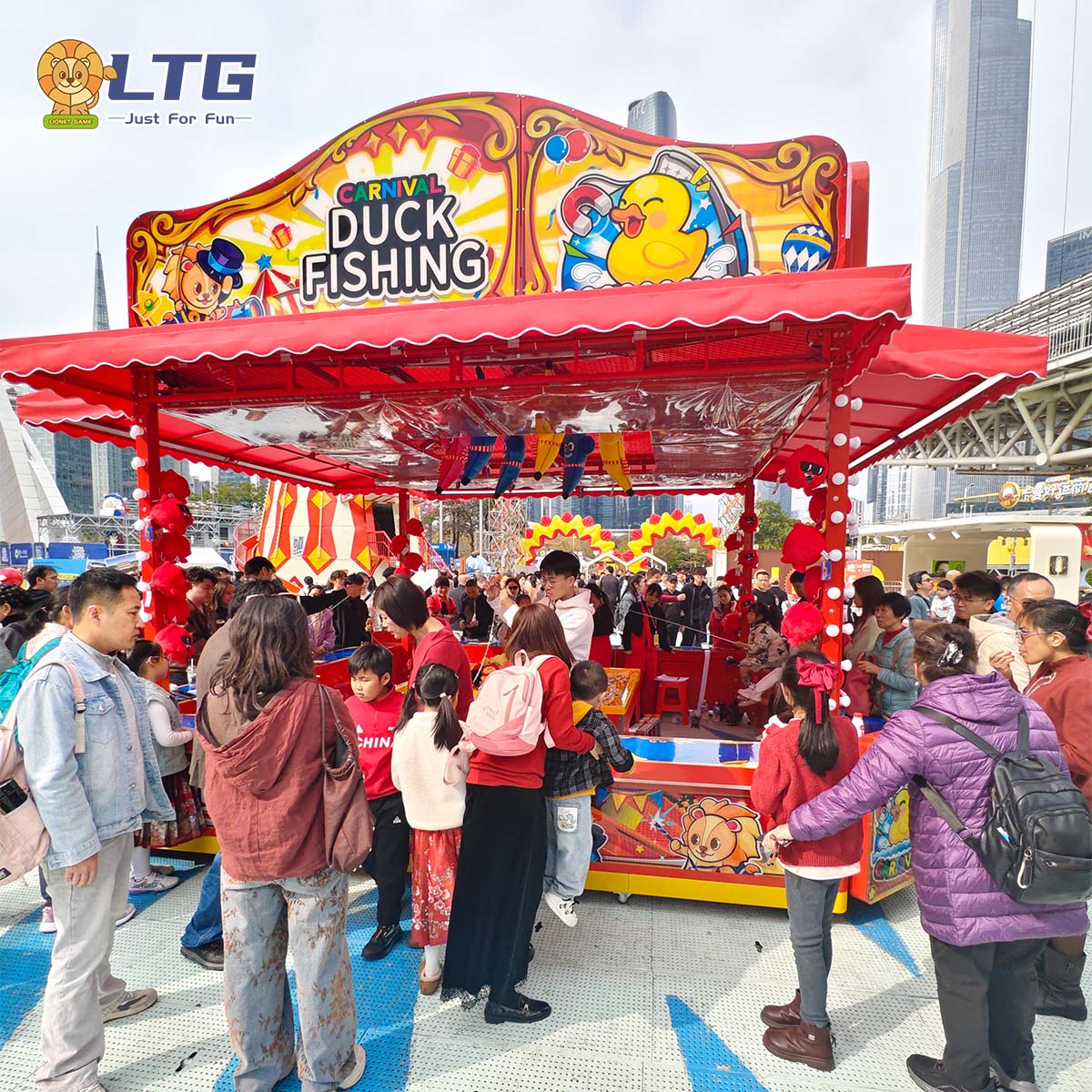
Outdoor booths are effective when visibility, theme, and quick participation matter. The 3m Standard Midway Booth is publicly described with space for three players, more than 30 game options, a prize display system, and an outdoor type. The public product page lists dimensions of 3,080 x 3,620 x 4,130 mm, 600 W power, and an 880 kg weight. Treat these as the published starting specification for that product page, then request a drawing for the exact game selection and destination.
The 4-Sided Midway Booth is designed for play from all four sides. Its public page lists dimensions of 5,100 x 5,100 x 4,200 mm, 3,200 W power, and 1,600 kg weight. It describes caster wheels, rain and sun protection, acrylic and metal materials, and selectable game content such as ball toss, ring toss, lucky toss, duck fishing, and coin toss. The four-sided concept can create strong crowd energy, but it also requires careful planning for circulation, queue separation, prize access, and service routes.
The 2m Compact Midway Booth is described as a space-saving, foldable outdoor format with caster wheels, protective canopy, and more than 30 game options. Its strongest use case is a project that needs flexibility across seasons or events. Ask for the folded size, packed size, safe handling procedure, and the number of people required for setup before assuming that “foldable” means easy to move.
Social competition games
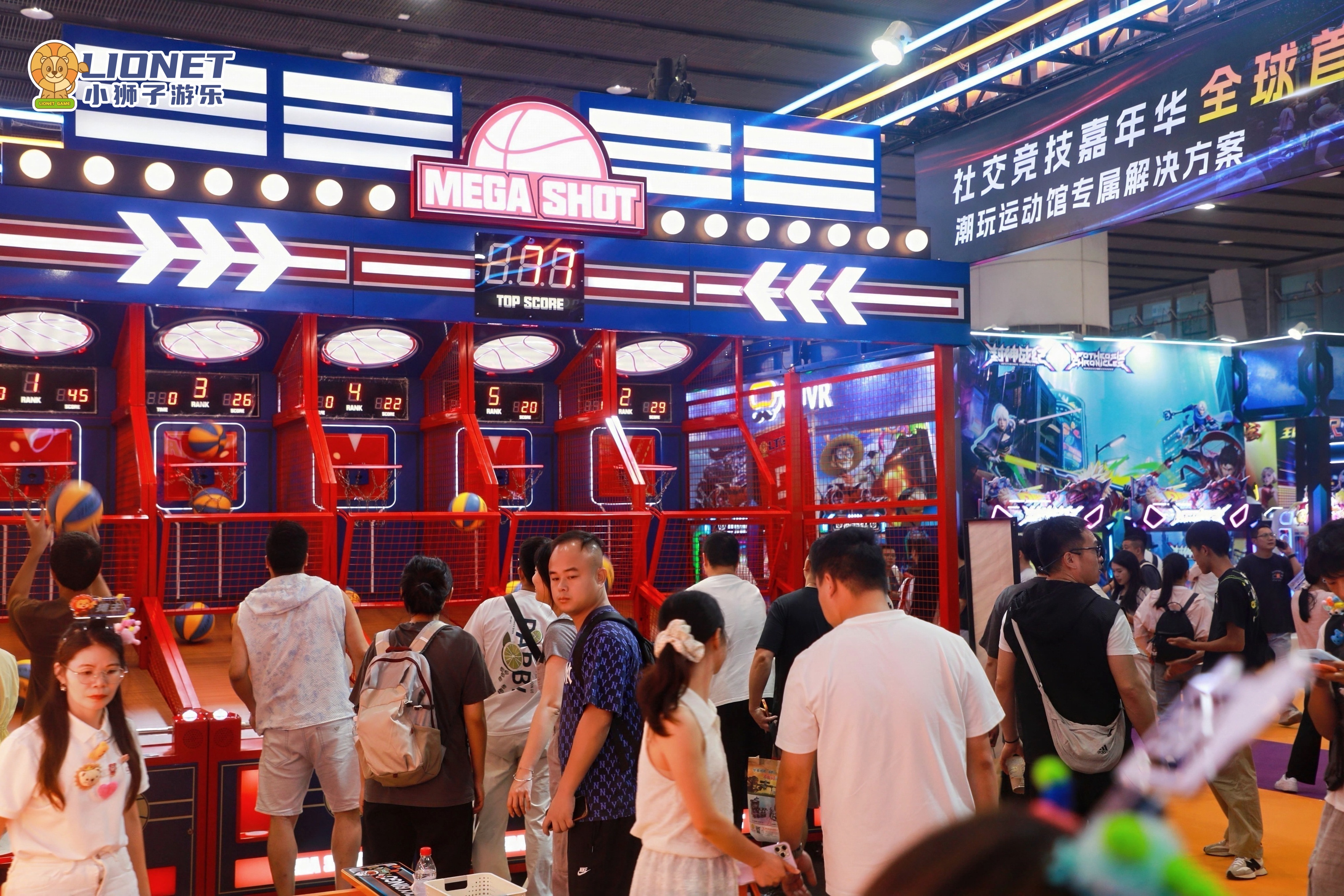
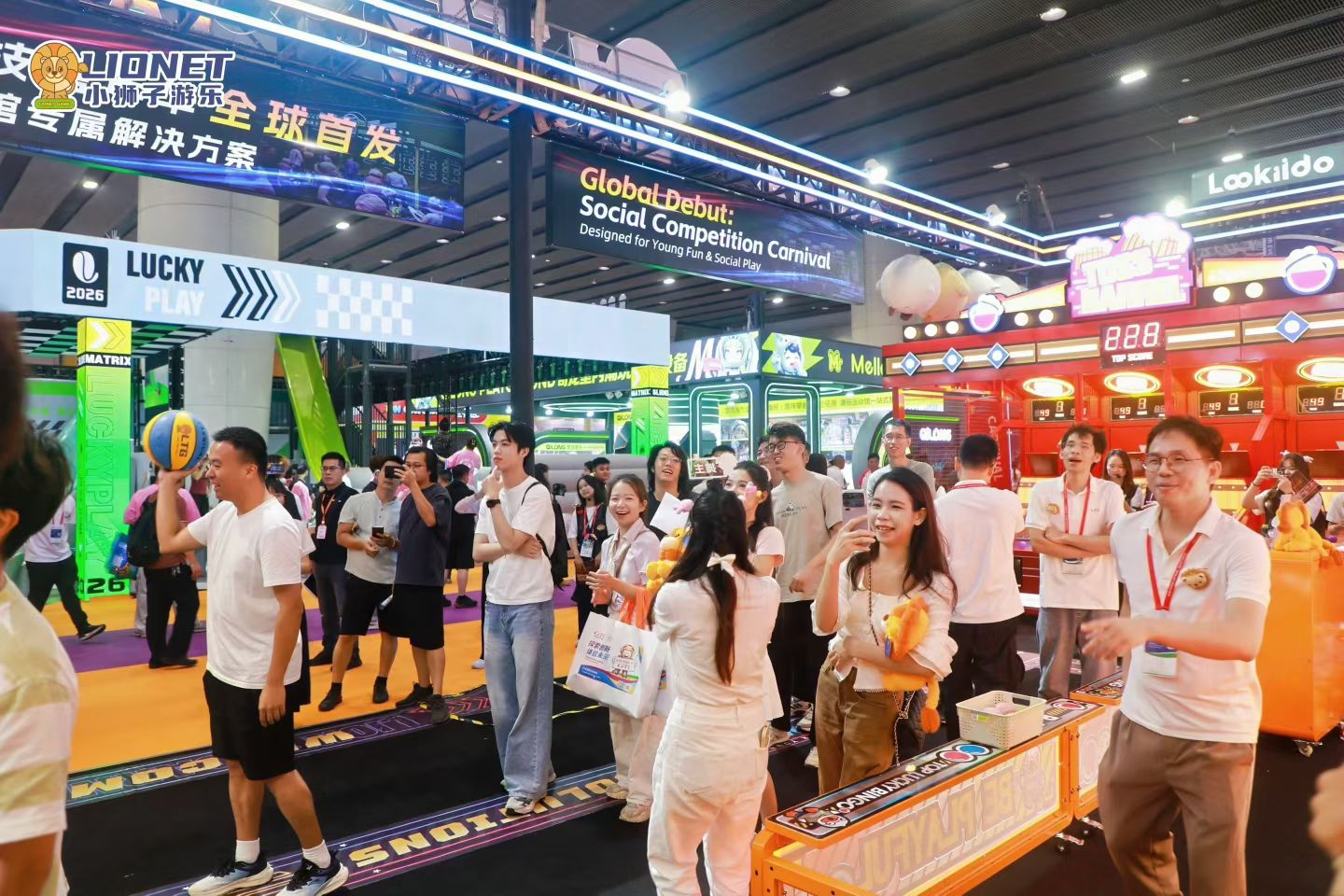
Social competition games can add energy to a theme park zone because the audience sees the contest as it happens. Barrel Toss uses rhythm-based opening and closing barrel lids. Monster Strike uses auto-reset targets that return to play after being knocked down. Spin Pitch uses a rotating fan and multi-score target holes. Mega Hoops uses continuous basketball circulation and displays time, rank, and score on each lane.
The public pages for Barrel Toss, Monster Strike, and Spin Pitch list five players, dimensions of approximately 5,280 x 3,000/3,500 x 3,540/3,950 mm, 1,500 W power, and a minimum order quantity of one unit. Mega Hoops is publicly listed for five players, 5,280 x 3,500 x 3,950 mm, and 1,350 W. These formats are particularly relevant when the park wants guests to compete with friends rather than complete an isolated task.
Indoor and covered attractions
Indoor or covered park areas can use compact stations, multi-game attractions, or prize-led formats. Dreamy Carnival is publicly described as a circular 360-degree attraction with six or more interchangeable game combinations, six players, 5,437 x 5,437 x 3,268 mm dimensions, 3,300 W power, and a 1,200 kg weight. Mayan Treasure is a smaller indoor prize game with 18 treasure chests and a published two-player configuration. Club 2077 is described as an interactive carnival toss game with a win-every-time concept, automatic prop delivery, and dynamic lighting and celebration effects.
These products may suit an indoor park hall, mall zone, resort entertainment area, or covered transition space. Do not move an indoor specification into an exposed outdoor location without written approval for the intended environment.
Review Lionet product categories
Technical specifications that park buyers should request
The most expensive errors are often specification errors. A park approves a footprint, then discovers that the service panel opens into a walkway. A team accepts rated power, then learns that the installation needs a different electrical arrangement. A booth appears to fit on a drawing, but the loading path cannot accommodate its packed dimensions.
Use a model-specific specification sheet. At minimum, ask for:
| Specification area | What to record | Why it affects the park |
|---|---|---|
| Product identity | Model name, version, revision, selected game content | Prevents a quote from changing silently between review and production |
| Overall dimensions | Width, depth, height, access side, service side | Controls layout, visibility, clearance, and loading |
| Operating footprint | Player position, queue, spectator, prize, and maintenance space | Shows the real area required during public operation |
| Player capacity | Simultaneous players and expected rotation | Helps estimate throughput and group use |
| Rated power | Power draw, voltage, frequency, plug or interface | Allows engineering and facility teams to plan supply |
| Weight and handling | Net weight, packed weight, lifting points, wheels, crew | Affects delivery, unloading, storage, and relocation |
| Materials | Board, acrylic, metal, finish, canopy and exposed components | Supports maintenance and environmental review |
| Core mechanic | Target, ball system, timer, score, prize or reset mechanism | Makes the guest and operator experience predictable |
| Service requirements | Access panels, cleaning, lubrication, consumables, spare parts | Reduces downtime and improves staff planning |
| Documentation | Installation guide, operation guide, wiring information, parts list | Helps the park train staff and maintain the asset |
| Compliance evidence | Documents relevant to the model, configuration, and destination | Prevents assumptions about approvals or suitability |
The public product pages provide useful examples, but they do not replace a project drawing. A theme park carnival games supplier should mark the minimum service clearance, the direction of guest entry, the position of electrical connections, and the route for prize replenishment. Have the park’s own engineer or project designer review those documents before the purchase order is finalized.
Materials, components, and workmanship
A theme park carnival games supplier should explain the construction in practical terms. “High quality” is not a material specification. Ask what the frame is made from, what panels are exposed to weather, how graphics are applied, how edges are protected, and which parts are designed to be replaced after heavy use.
Lionet product pages commonly list combinations of acrylic, metal, fireproof board, or wood board. The material list is a starting point, not a complete environmental or safety statement. For outdoor installations, ask about the intended exposure, canopy protection, drainage, fasteners, finish maintenance, and the conditions under which the supplier approves operation. For indoor installations, ask about cleaning chemicals, impact points, sharp-edge control, ventilation, and access for service.
Workmanship should be reviewed through the parts that affect public use:
- Frame and joints: Check rigidity, alignment, access to fasteners, and the method used to prevent movement during play.
- Player interfaces: Review handles, targets, balls, ropes, hoops, buttons, and other touch points for repeated use and easy replacement.
- Moving mechanisms: Confirm how the mechanism resets, what happens after an obstruction, and how staff can reach the service area.
- Displays and lighting: Confirm visibility from the player position and the audience side, plus the replacement process for modules or drivers.
- Prize presentation: Check shelves, compartments, locks, restocking access, and the way prize visibility supports the game without blocking movement.
- Graphics and theme finish: Approve artwork, color references, language, logos, and the cleaning method before production.
Request photographs or video of the actual model in operation. For a social competition game, watch a full cycle rather than a short highlight. For an outdoor booth, view the canopy, storage, access sides, wheels, and service panels. For a compact or foldable format, inspect both the operating and packed states.
Quality control and destination-market review
Quality control is most useful when it is tied to a written acceptance standard. Ask the supplier to describe the inspections performed before packing and the evidence that will be provided. A practical inspection plan may include appearance, dimensions, electrical startup, game cycle, reset behavior, scoring or win determination, sound and lighting, safety-related access, accessories, and packing condition.
Do not assume that a general company statement covers every configuration. Confirm:
- Which model and revision were tested.
- Which selected game content and options were included.
- Which electrical conditions were used.
- How many cycles or operating checks were completed.
- What happens when a ball, target, prop, or sensor does not behave as expected.
- Which parts are supplied as spares and how they are identified.
- Which destination-market documents are available for the final configuration.
The public website presents Lionet as a manufacturer with structural fabrication, game assembly, product testing, and packing and delivery capabilities. That is useful factory-level context. A buyer should still request order-level records, photographs, or a live demonstration where the project risk justifies it. If a document is not available, record it as an open requirement rather than filling the gap with an assumption.
Capacity, lead time, and delivery planning
Theme parks often work backward from a public opening date. That creates pressure to accept a simple estimated delivery date, but a single date hides dependencies. Ask for a schedule that separates concept confirmation, drawing approval, artwork approval, prototype or sample review, production, functional inspection, packing, shipment, delivery, installation, commissioning, and staff handover.
Lead time is configuration-dependent. A standard product with confirmed artwork is a different planning case from a new theme, changed game content, special finish, or large multi-unit order. The quotation should identify which dates are firm and which depend on an approval or input from the park.
Delivery planning should include the physical route into the park. Record container or crate dimensions, unloading equipment, door and lift clearances, storage conditions, assembly space, and the path from receiving to the final attraction zone. A 4,200 mm-high booth may be suitable for an outdoor midway and still fail at a low loading entrance. A 1,600 kg unit may need a specific unloading plan even if it has caster wheels.
For seasonal parks, ask what can be removed, stored, covered, or repositioned during the off-season. For permanent parks, ask which wear parts are expected to be replaced and how the park should keep an initial spare-parts set. These are ordinary project decisions, but they should be made before the first public day.
Model comparison for a theme park project
The following comparison uses public Lionet product-page information where the pages publish a complete parameter set. It is a shortlisting tool, not a final layout approval.
| Model | Format | Published players | Published size | Published power | Best starting discussion |
|---|---|---|---|---|---|
| 3m Standard Midway Booth | Outdoor booth with selectable game content | 3 | 3,080 x 3,620 x 4,130 mm | 600 W | A classic midway point with a 3-player configuration and more than 30 game options |
| 4-Sided Midway Booth | Four-sided outdoor booth | Multiple players | 5,100 x 5,100 x 4,200 mm | 3,200 W | A central, highly visible zone where four approach sides can be planned properly |
| Barrel Toss | Social competition game | 5 | 5,280 x 3,000 x 3,540 mm | 1,500 W | A reaction and timing game for group play and friendly rivalry |
| Monster Strike | Social competition game | 5 | 5,280 x 3,500 x 3,950 mm | 1,500 W | A continuous throwing challenge with auto-reset targets |
| Spin Pitch | Social competition game | 5 | 5,280 x 3,500 x 3,950 mm | 1,500 W | A timing-focused target game with multiple scoring holes |
| Mega Hoops | Social competition basketball game | 5 | 5,280 x 3,500 x 3,950 mm | 1,350 W | A visible sports anchor with continuous ball circulation and lane rankings |
| Dreamy Carnival | Indoor circular multi-game attraction | 6 | 5,437 x 5,437 x 3,268 mm | 3,300 W | An indoor or covered destination where 360-degree visibility is useful |
The comparison highlights a critical point: player count alone does not determine throughput. A five-player game may still need a large spectator and queue zone. A three-player booth may process groups efficiently if the rules are clear and the reset is quick. A six-player circular attraction may need a central position and uninterrupted access from multiple directions. Ask the supplier to discuss the whole guest journey, not just the number printed beside the product name.
Cost and risk: compare the operating picture
Unit price is only one part of a theme park equipment decision. A responsible comparison with a theme park carnival games supplier includes the costs and risks that sit around the game:
- Equipment and selected options.
- Artwork, theme treatment, signs, and language versions.
- Initial prizes, props, balls, consumables, or spare parts.
- Packing, freight, unloading, local transport, and storage.
- Installation, commissioning, staff training, and opening-day support.
- Facility work such as power, flooring, canopy, drainage, or barriers.
- Routine cleaning, maintenance, and replacement parts.
- Downtime risk if a critical part is not locally available.
- Seasonal storage, relocation, or reconfiguration.
Ask the supplier to separate included items from optional items. Ask for a risk list beside the quotation: unknown site clearance, open artwork approval, pending electrical confirmation, unconfirmed local documentation, or a delivery date that depends on a late decision. This makes the commercial discussion more honest and helps finance compare complete scenarios.
Do not promise a payback period from a product page. A park’s result depends on ticket price, prize cost, utilization, staffing, location, season, weather, visitor mix, and local operating rules. A supplier can help you think through capacity and operating requirements, but the park should build its own financial model.
Original design and manufacturing: a practical project route
When a park wants a distinctive attraction, begin with the function of the zone. Define whether the primary goal is a crowd anchor, a family activity, a repeat-play challenge, a seasonal game point, or a themed visual landmark. Then turn that goal into measurable requirements.
Lionet’s public company information describes a process that includes design and manufacturing support, structural fabrication, assembly, testing, packing, and delivery. A practical project route based on that capability is:
1. Share the venue brief
Provide the site plan, photos, dimensions, visitor profile, operating period, theme direction, staffing assumptions, and opening date. Note which parts of the brief are fixed and which are open to recommendations.
2. Define the game experience
Choose the action, player count, reward model, visibility, and replay reason. Keep the first version understandable. Add sound, lighting, displays, or automated movement only when they support the guest experience and the operator’s workflow.
3. Approve the physical and visual direction
Review the footprint, access sides, height, service zones, prize presentation, artwork, colors, lighting, and signs. The park’s operations and engineering teams should review the same document before production begins.
4. Test the complete cycle
Observe the attraction from the guest side and the staff side. Test start, play, score or win, prize handover, reset, cleaning, and a common fault. Record what was approved and what remains to be changed.
5. Control production and packing
Keep the approved model name, drawing revision, game content, materials, accessories, and inspection points together. Ask for packing photographs and identify fragile or removable components.
6. Prepare the opening
Confirm receiving, unloading, installation, commissioning, staff training, operating instructions, spares, and a first-week inspection. A successful opening is part of the product experience.
Explore theme park game solutions
Questions to ask before approving a supplier
Use these questions in a supplier meeting or RFQ. They are designed to expose practical gaps without turning the first conversation into a document request that no one can manage.
- Which exact game format fits our park zone, and what evidence supports that recommendation?
- What is the complete operating footprint after queues, spectators, prizes, and service access are included?
- Which parts of the proposed attraction are standard, and which are being designed or configured for this project?
- What are the player capacity, rated power, dimensions, weight, materials, and intended environment for the exact model?
- How does the game behave during a normal cycle, a reset, a jam, and a routine maintenance task?
- What inspection points will be checked before packing, and what record will the park receive?
- Which destination-market documents apply to this configuration, and which items still require local review?
- What are the production milestones, approval gates, packing details, and delivery dependencies?
- Which spare parts, tools, manuals, and staff training are included?
- Who is the support contact after installation, and how are faults diagnosed and escalated?
- What can be refreshed or replaced later if the park wants a seasonal game mix?
- Which figures in the quotation are confirmed, and which depend on the final venue brief?
The quality of the answers is a useful supplier signal. A professional supplier does not need to pretend that every detail is known before the venue is measured. It should show what is confirmed, what is open, who owns the decision, and when the answer will be available.
FAQ for theme park buyers
What is a theme park carnival games supplier?
A theme park carnival games supplier provides commercial carnival or midway attractions for park environments. The strongest suppliers connect game design, manufacturing, documentation, delivery, and operating support with the park’s actual space, audience, theme, and maintenance requirements.
Should a theme park buy one large booth or several smaller games?
That depends on the role of the zone. A large booth can act as a visual anchor and support multiple players. Several smaller games can spread participation along a walkway and make seasonal rotation easier. Compare visibility, throughput, queue behavior, service access, and total operating footprint before choosing.
What information should a park send when requesting a quote?
Send the site plan, available width and depth, ceiling or canopy height, loading route, visitor profile, expected group size, operating season, staffing model, reward model, theme direction, destination, and opening date. Photos with measurements are more useful than a general request for a catalog.
Are outdoor midway booths suitable for every outdoor location?
No. Outdoor suitability depends on the exact configuration and site conditions. Ask the supplier to confirm the intended environment, protective features, materials, drainage, electrical conditions, maintenance assumptions, and any limitations for exposed operation. Do not infer weather suitability from a product image.
How many players can a commercial carnival game support?
The answer is model-specific. Public Lionet examples range from single-player compact stations to five-player social competition games, six-player circular attractions, and multi-player outdoor booths. Player count is only one part of capacity. Queue space, game duration, reset time, prize handling, and spectator behavior also affect throughput.
What are the most important technical specifications?
Record the exact model and revision, body dimensions, operating footprint, player capacity, rated power, voltage and frequency, weight, materials, core mechanic, service clearance, installation method, documentation, spare parts, and intended environment. Ask for a project drawing rather than relying on a catalog dimension alone.
How should a park compare a China-based carnival game supplier?
Compare original product evidence, factory capabilities, model-specific specifications, testing, packing, delivery planning, communication, and support responsibilities. A China-based supplier should be evaluated on the complete project and documentation, not only on a lower unit price.
What should be checked during pre-shipment inspection?
Check appearance, dimensions, selected game content, startup, player interaction, scoring or win determination, reset, sound, lighting, prize handling, service access, accessories, labels, manuals, and packing. The inspection should reference the approved model and configuration.
Can a theme park refresh its game mix later?
Some modular booth formats are designed around a frame and changeable game content. Ask exactly which elements can be refreshed, whether the work can be done by park staff, what tools are required, how long the change takes, and whether new content remains compatible with the existing structure.
How can a park start a serious supplier conversation?
Send the venue brief, target zone, preferred visitor experience, and required opening date through the Lionet contact page. You can also review the case projects and operator resources before the first call so the discussion begins with a defined use case.
Conclusion
The best theme park carnival games supplier is the one that can connect an original game experience to the park’s real operating conditions. Start with the visitor journey and the zone’s job. Then verify the format, dimensions, player capacity, power, materials, service access, environmental assumptions, quality checks, packing, delivery milestones, and support responsibilities for the exact configuration.
Lionet’s public range covers outdoor midway booths, social competition games, indoor carnival attractions, and multi-game formats. Its company information also describes manufacturing capabilities in structural fabrication, game assembly, product testing, and packing and delivery. Those facts provide a useful basis for a project discussion, but the final decision should still be made from model-specific drawings, confirmed specifications, and a venue review.
When you are ready to compare a game mix for a theme park, share your site, audience, footprint, operating model, and opening date through Lionet’s contact page. The clearer the brief, the easier it is to select a carnival attraction that guests can see, understand, play, and remember.
Plan your theme park game mix with Lionet
Share your venue brief, preferred game format, footprint, and opening date for a practical product discussion.
Request a Park Game Discussion