A supplier's website can show what it sells. Its documents should help buyers verify what it actually manufactures, tests and delivers.
For international buyers sourcing commercial Carnival & Midway Games, finding a manufacturer is only the beginning.
A product catalogue may show dozens of games. A company profile may describe factory facilities, quality standards and overseas experience. Certification logos and patent claims may appear alongside product photographs.
But how can an FEC procurement manager, distributor or entertainment project developer verify these claims before making a purchasing commitment?
The answer is to connect each important claim to evidence that can be checked.
This guide explains a document-first approach to manufacturer verification, using examples from Guangzhou-based carnival game manufacturer LIONET, alongside official European compliance guidance and independent industry records.
1. Start With the Legal Manufacturer, Not the Brand Name
A brand name, legal company name and production facility are not necessarily the same thing.
Some suppliers operate their own production facilities. Others source equipment from independent manufacturers. A company may also combine manufacturing, distribution and project integration.
None of these structures is automatically unsuitable.
The critical question is: Which legal entity is responsible for the equipment being purchased?
A buyer should begin by checking the manufacturer's registered name, business registration, address and the entity named in the purchasing contract.
Example: LIONET's Registered Company Identity
LIONET operates under the registered Chinese company name 广州小狮子游乐设备有限公司, rendered in its English technical documentation as Guangzhou Lionet Amusement Equipment Co., Ltd.
Its business licence records an establishment date of August 3, 2022, in Guangzhou, China.
The same English company name appears in product testing documentation for selected LIONET game models.
This provides a starting point for checking whether the company presenting the products is also identified as the manufacturer in the supporting technical records.
International buyers should still confirm the exact legal entity appearing on invoices, contracts, shipping documents and any relevant conformity declarations.
A registered company identity establishes who the business is. It does not, by itself, establish the quality of every product it sells.
2. What Can Factory Photographs Actually Prove?
Factory photographs are useful, but their evidential value depends on what they show.
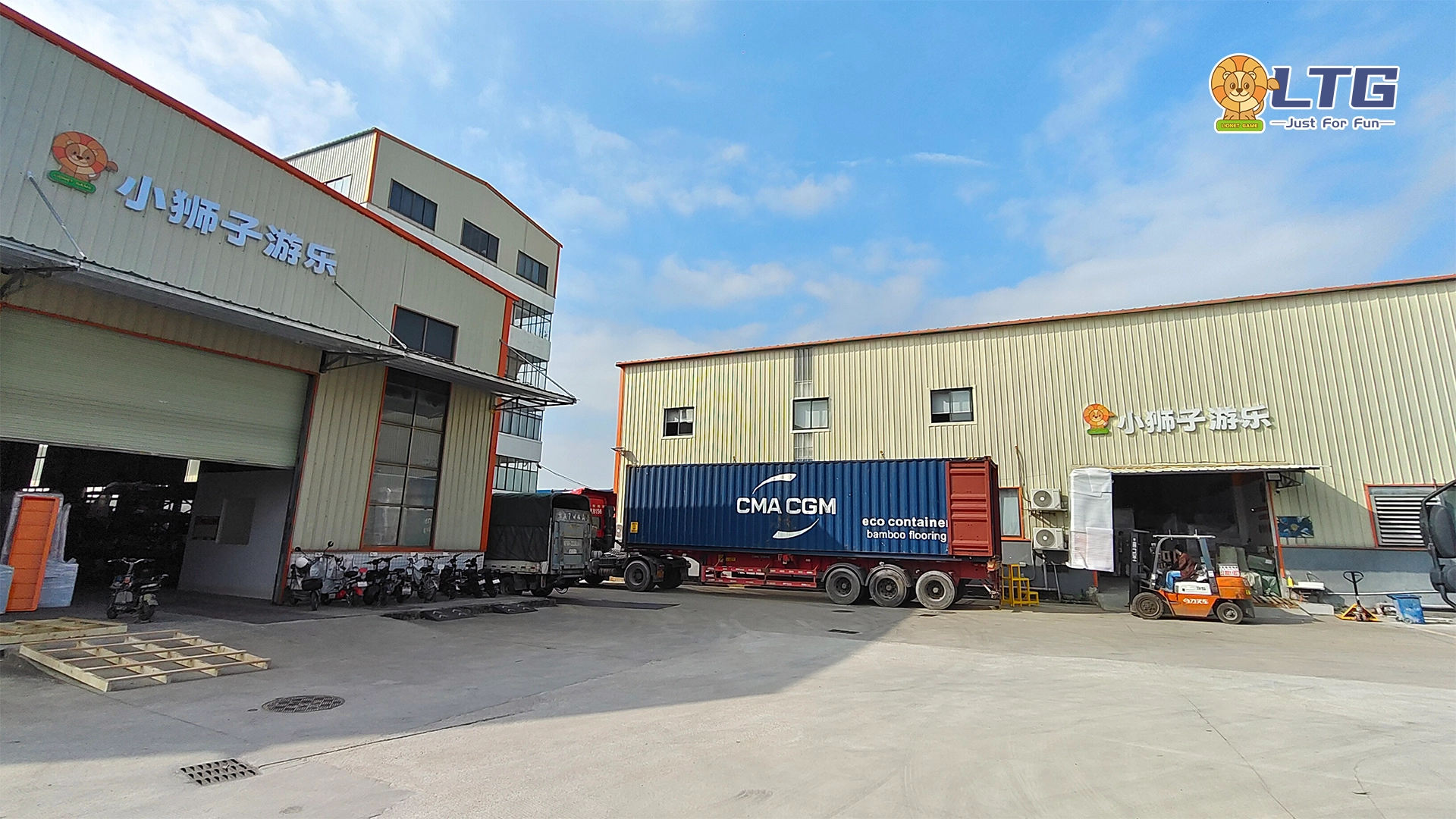
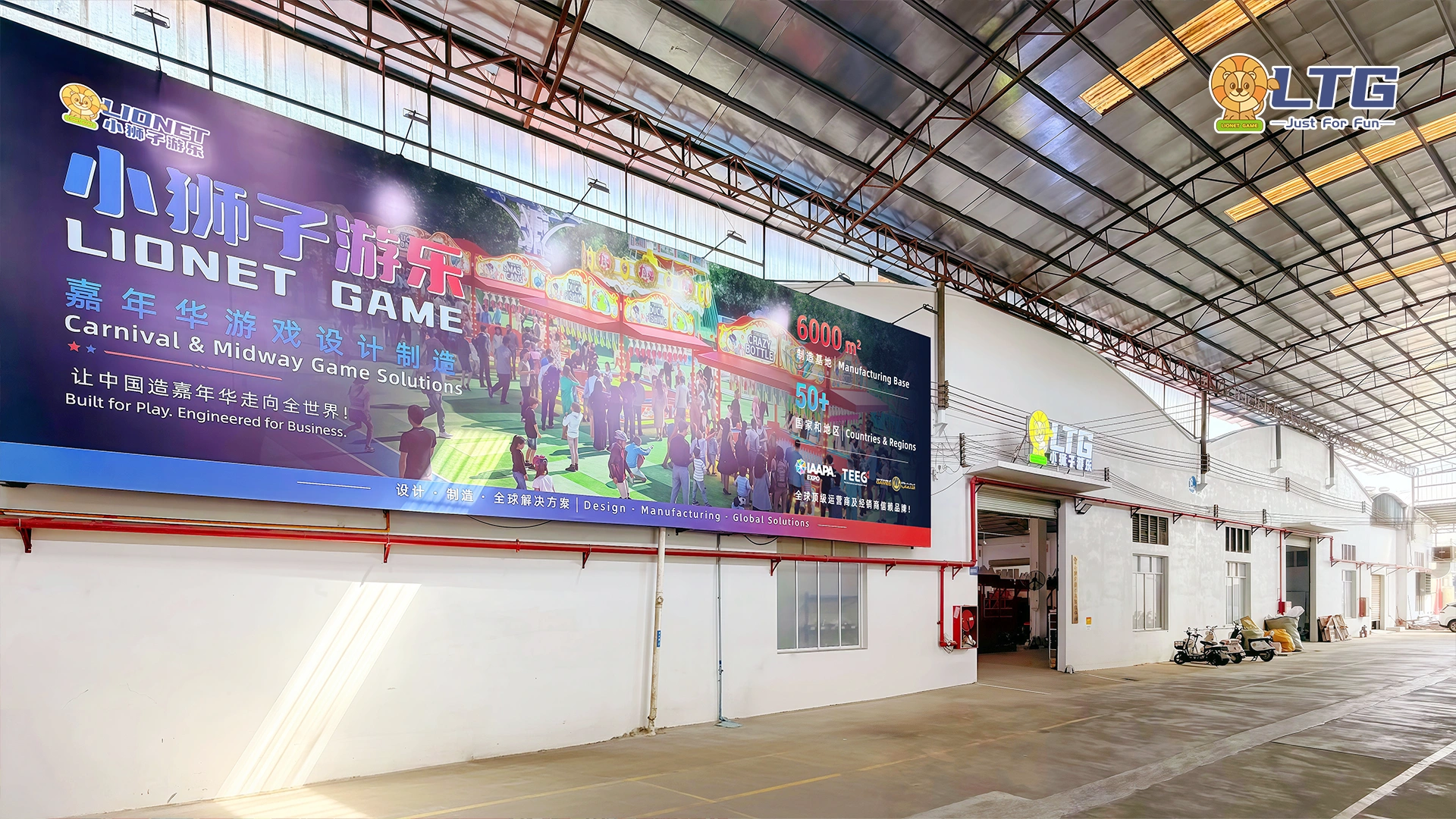
A building exterior with a company sign supports a claim about the existence of a branded operating location.
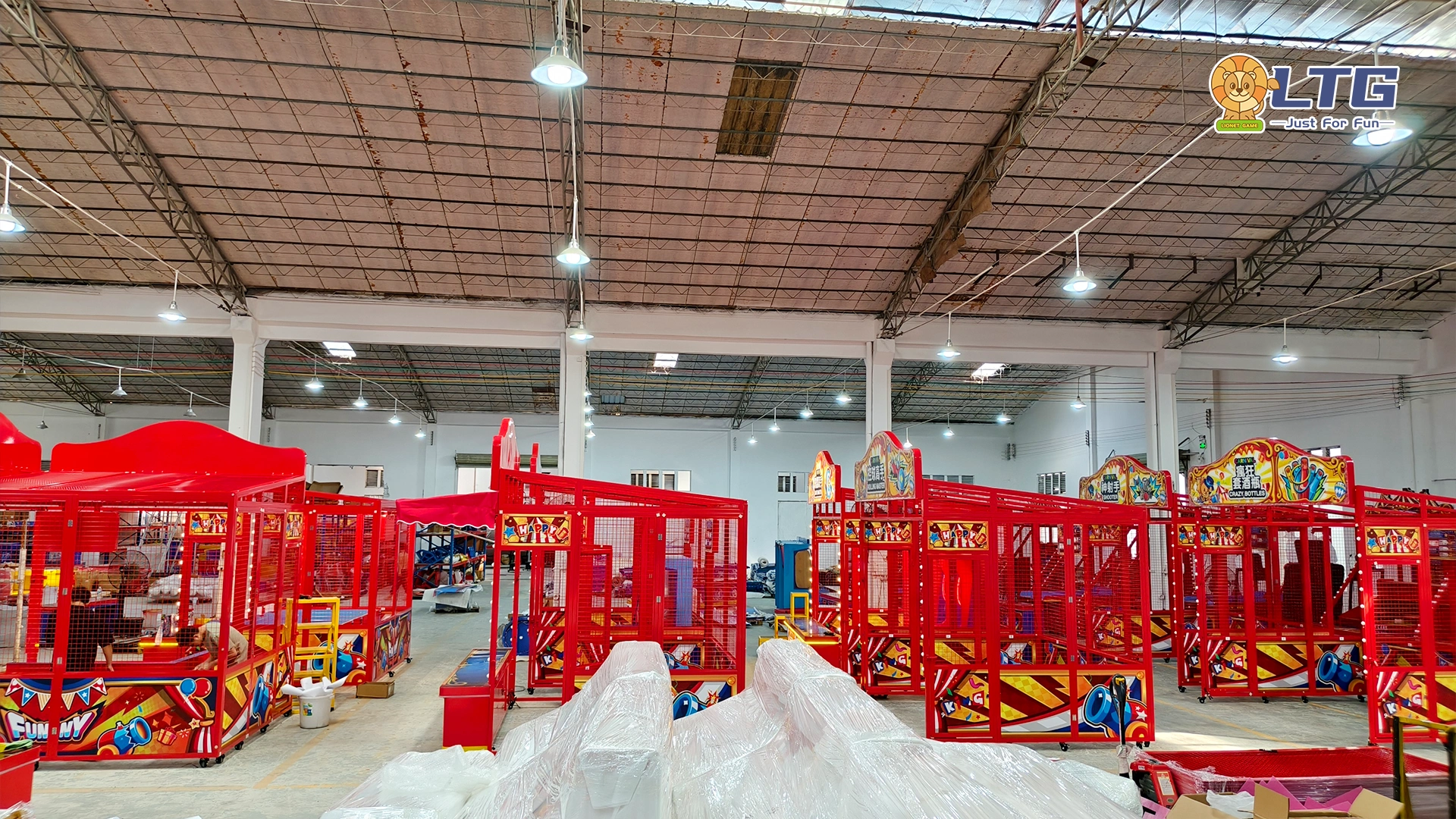
Photographs showing rows of equipment inside a workshop can provide evidence of physical products, assembly activity and the manufacturing environment.
Neither automatically proves production capacity, ownership of the premises or control over every component.
Factory Evidence From LIONET
LIONET has supplied original photographs of its Guangzhou facilities, including exterior buildings carrying its company branding, commercial carnival game units inside workshop areas and equipment near container-loading operations.
The photographs show actual carnival equipment in the production environment rather than computer-generated product renderings.
For buyers reviewing manufacturing capability, this type of evidence is more useful when matched with a specific product order.
For example, a factory review could connect:
| Evidence | What Buyers Should Verify |
|---|---|
| Factory exterior | Operating location and company identity |
| Workshop photographs | Relevant production or assembly activities |
| Product photographs | Model and configuration under discussion |
| Manufacturing records | Production stages and responsibilities |
| Inspection records | Checks performed on the ordered equipment |
| Packing records | Shipment contents and product identification |
A factory visit or independent audit may be appropriate for larger projects.
Buyers should also ask which activities are performed internally and which are handled by outside contractors. Outsourcing a component is not inherently a quality problem; unclear responsibility can be.
3. How to Read CE Documents for Commercial Carnival Games
For European buyers, CE documentation is one of the most important areas where broad supplier claims should be replaced with product-specific verification.
A manufacturer's website may simply state that its products are "CE certified."
That wording does not explain which equipment has been assessed, which European legislation applies or which technical records support the claim.
According to the European Commission's CE marking guidance, the manufacturer must identify the applicable requirements, follow the required conformity assessment procedure, prepare technical documentation and issue the relevant EU Declaration of Conformity.
A third-party testing document may support that process, but is not automatically equivalent to completion of every applicable requirement.
Three Documents Buyers Should Understand
A third-party conformity document may summarize an assessment or identify the standards considered by its issuer. Buyers should examine exactly what the document states and whether it forms part of the legally required assessment.
A test report records testing performed on a specified sample or configuration, including test methods, conditions and results.
An EU Declaration of Conformity is the manufacturer's legal declaration that the identified product complies with the applicable EU legislation.
These documents perform different functions and should not be treated as interchangeable.
A Real Product Documentation Example: Basketball Jumping LG-0013
LIONET has supplied model-specific test documentation for Basketball Jumping, model LG-0013.
The available records include:
| Document | Report Number | Date |
|---|---|---|
| Electrical safety test report | HSO250604834ZRL | June 13, 2025 |
| EMC test report | HSO250604833YRE | June 13, 2025 |
| Related third-party conformity document | HSO250604833YCE | June 2025 |
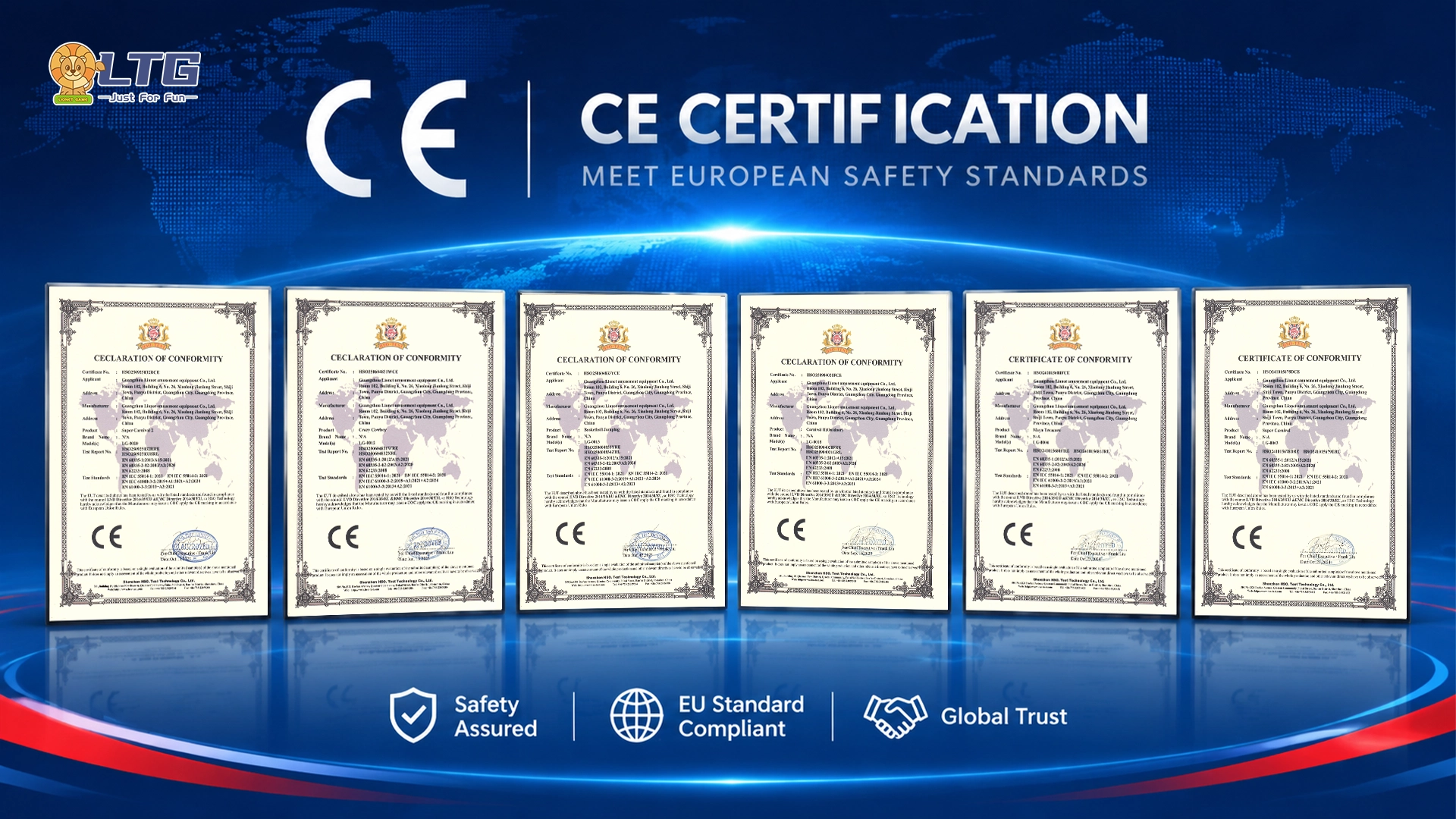
The reports identify Guangzhou Lionet Amusement Equipment Co., Ltd. as the manufacturer and Shenzhen HSO Test Technology Co., Ltd. as the issuing laboratory.
The electrical safety report references standards in the EN 60335 and EN 62233 series. The EMC report references EN IEC 55014 and EN IEC 61000 standards.
Their test records include passing verdicts for specified applicable items.
An important detail in the electrical safety report is that the tested product is identified as IPX0 and intended for indoor use only.
This is an example of why examining the report matters. A buyer cannot assume that a game tested for indoor operation is suitable for outdoor installation merely because similar-looking games are used at fairs or festivals.
The presence of these reports establishes a documented testing history for LG-0013. It should not be interpreted as a declaration that every LIONET product has identical testing or regulatory coverage.
Before approving an EU-bound order, buyers should obtain and review the applicable manufacturer declaration and supporting technical documentation for the exact equipment configuration.
How Should Buyers Verify the Documents?
A useful review checks whether the company name, model number, electrical specifications and product description remain consistent across the equipment label, test reports and manufacturer declaration.
It should also establish:
-
Which legislation and standards apply to the intended equipment.
-
Whether the report covers the actual product configuration being purchased.
-
Whether any product changes require further assessment.
-
Whether the issuing laboratory and its claimed accreditation can be independently verified.
-
Whether the manufacturer declaration contains the necessary identification and authorized signature.
Where records contain discrepancies, buyers should ask for a written explanation or corrected documentation rather than assuming either that the product is compliant or that the records are invalid.
For more detail on the legal declaration process, refer to the EU's official guidance on signing a Declaration of Conformity.
4. UL, ASTM and Other Requirements: Verify the Actual Scope
North American buyers may ask whether a manufacturer has UL-certified equipment or provides evidence of conformity with applicable ASTM standards.
These are different questions.
UL certification must be linked to a particular product or component, certification category and applicable scope.
UL Solutions provides the Product iQ database, which allows buyers to search certification information using company details, file numbers and other identifiers.
A certified electrical component does not automatically mean the entire carnival game has been certified.
ASTM standards may be relevant to particular equipment or operating environments, but the applicability of each standard depends on the product and jurisdiction. A manufacturer's statement that it follows an ASTM standard is not itself proof of independent certification.
For a North American procurement, the buyer should request the precise records for the supplied model and confirm applicable local requirements with qualified technical or regulatory professionals.
The objective is not to collect as many logos as possible. It is to understand what has actually been evaluated.
5. Patents and Design Rights: Verify Ownership and Legal Status
Original game design can be relevant when selecting a manufacturer, especially for customized equipment, branded attractions and exclusive product development.
However, intellectual property claims require careful interpretation.
A design patent, pending patent application, registered artwork and licensed character design do not represent the same legal right.
A supplier may legitimately hold several kinds of intellectual property, but combining them into one unexplained patent total can mislead buyers.
For Chinese patent records, the China National Intellectual Property Administration (CNIPA) provides official resources for checking patent information and legal status.
When assessing a manufacturer's design portfolio, buyers should request the patent or registration number, the rights holder, the relevant product and the current legal status.
The record should be matched to the design or technology being discussed.
For custom game projects, an additional issue deserves attention: the ownership of newly developed designs should be agreed before development begins.
Patent ownership may demonstrate a legal right. It does not independently demonstrate equipment reliability, operational performance or commercial returns.
6. Use International Exhibitions as Cross-Checkable Company Records
International exhibitions can provide useful evidence of a manufacturer's public industry activity.
They allow buyers to see actual products, meet company representatives and examine equipment operating at a demonstration booth.
However, exhibition participation alone does not prove product compliance or successful commercial operation.
LIONET at GTI China Expo 2026
On October 29, 2026, GTI published an article about LIONET's presentation of four Social Competition Carnival Games at GTI China Expo in Guangzhou, held September 10–12, 2026.
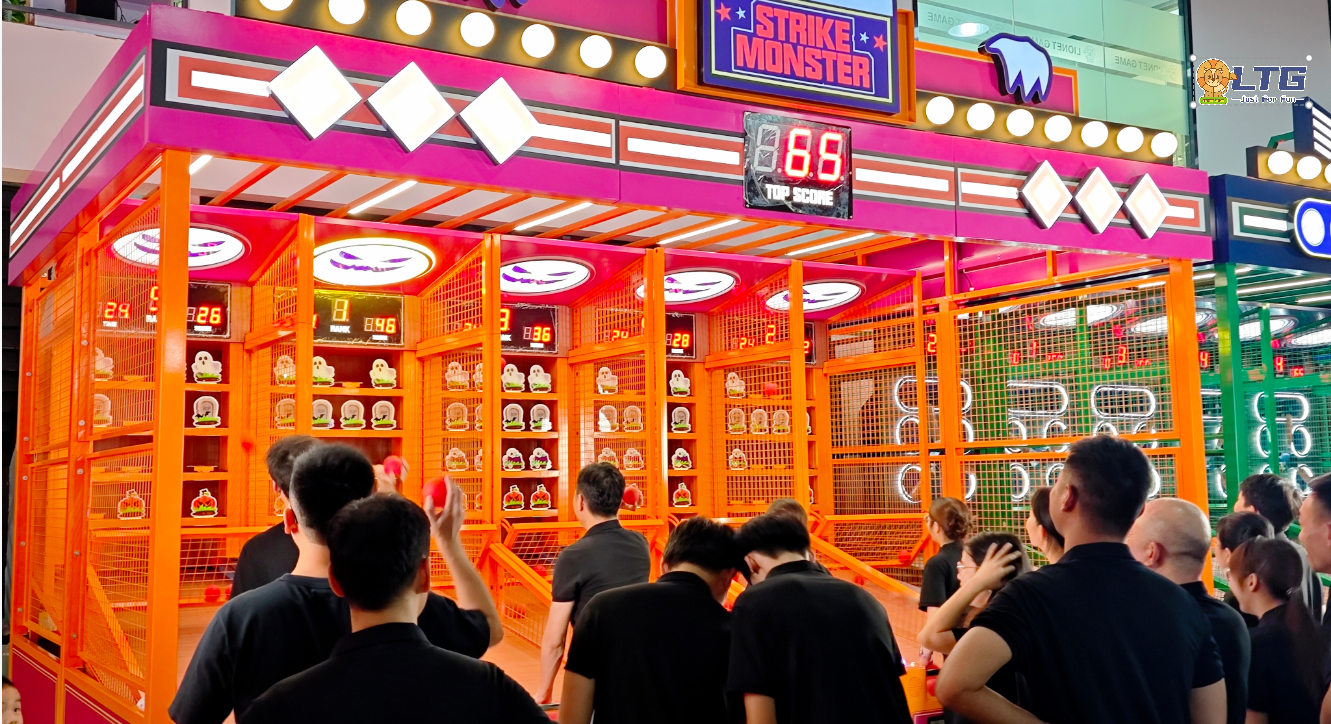
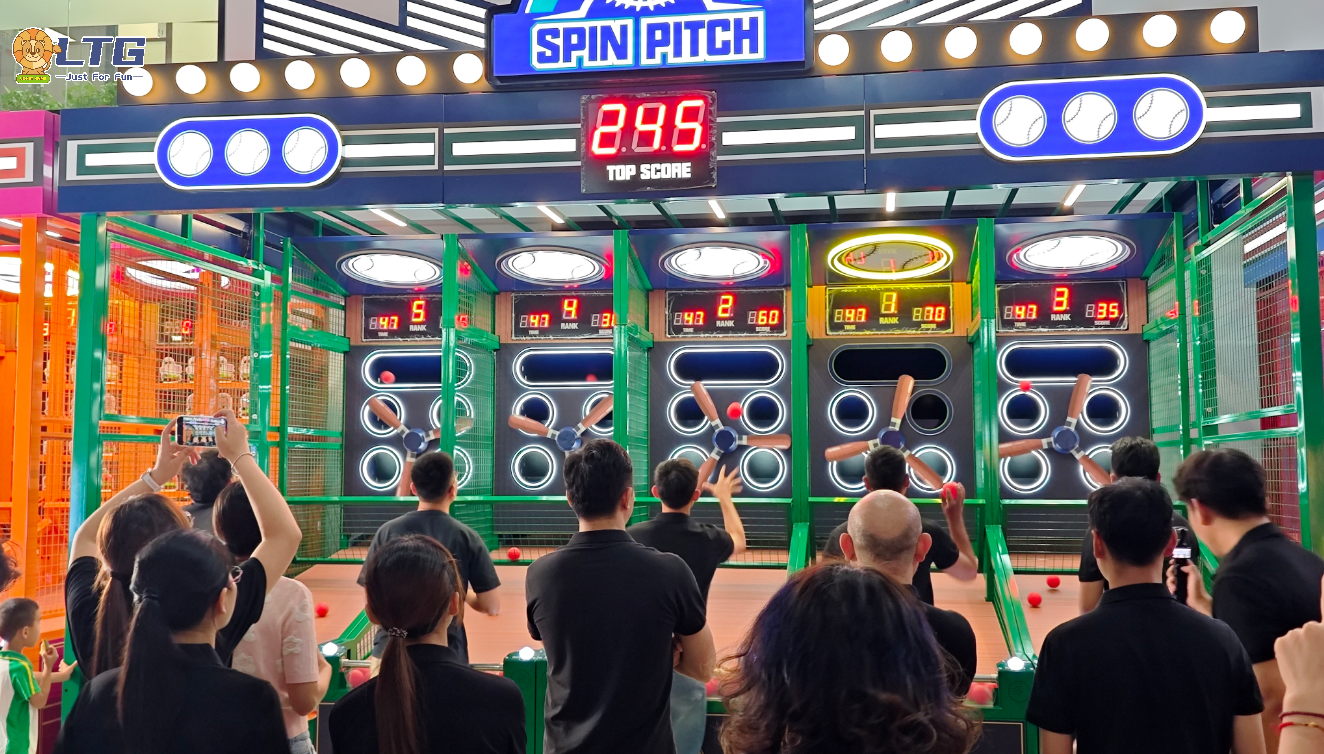
The products featured were Spin Pitch, Barrel Toss, Monster Strike and Mega Hoops.
The article documents the company's exhibition activity and its presentation of multiplayer, skill-based carnival game concepts.
View the GTI China Expo article.
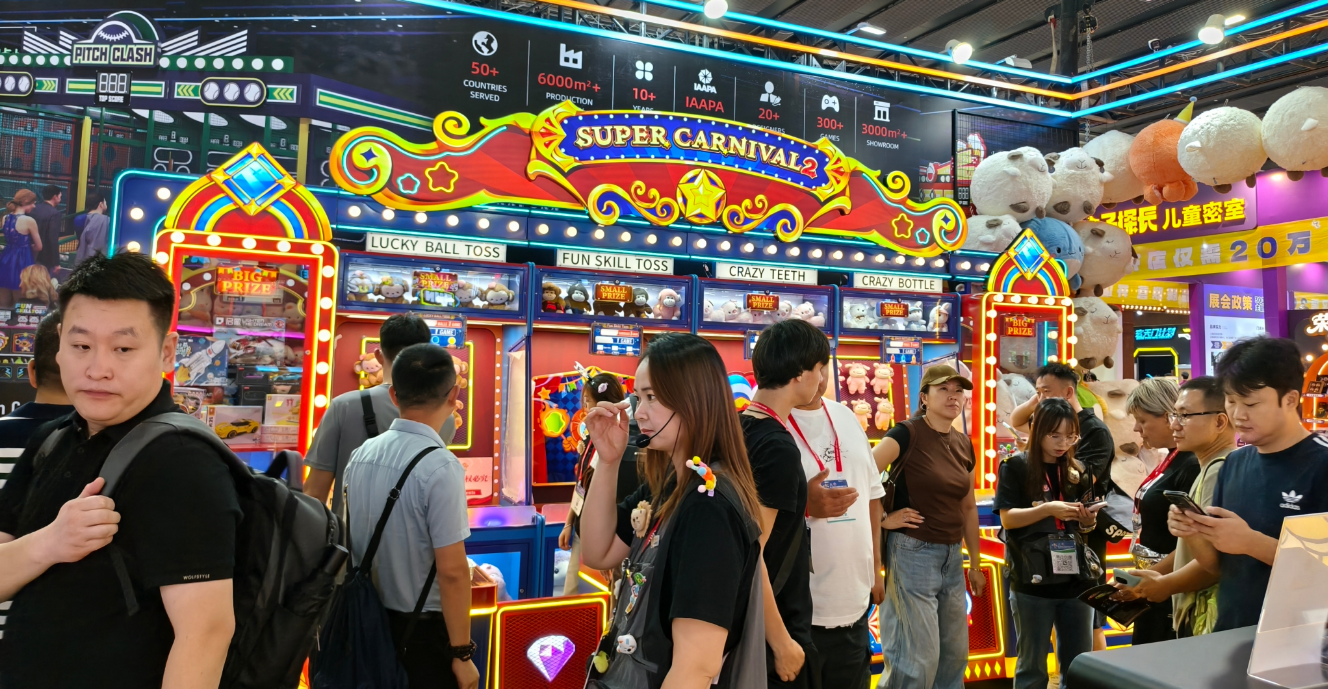
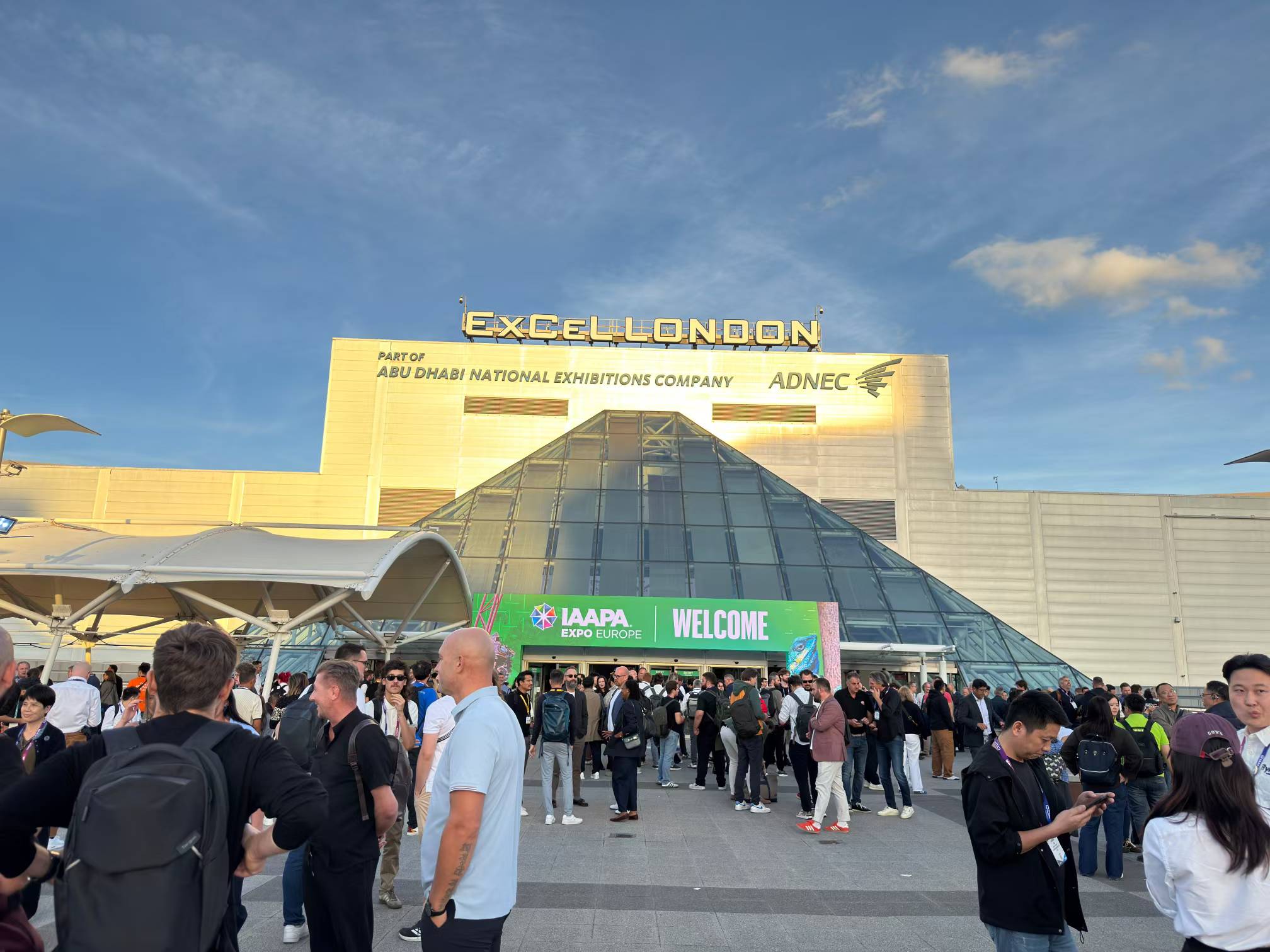
LIONET also appears under the name LTG Carnival in the official IAAPA Expo Europe 2026 exhibitor directory.
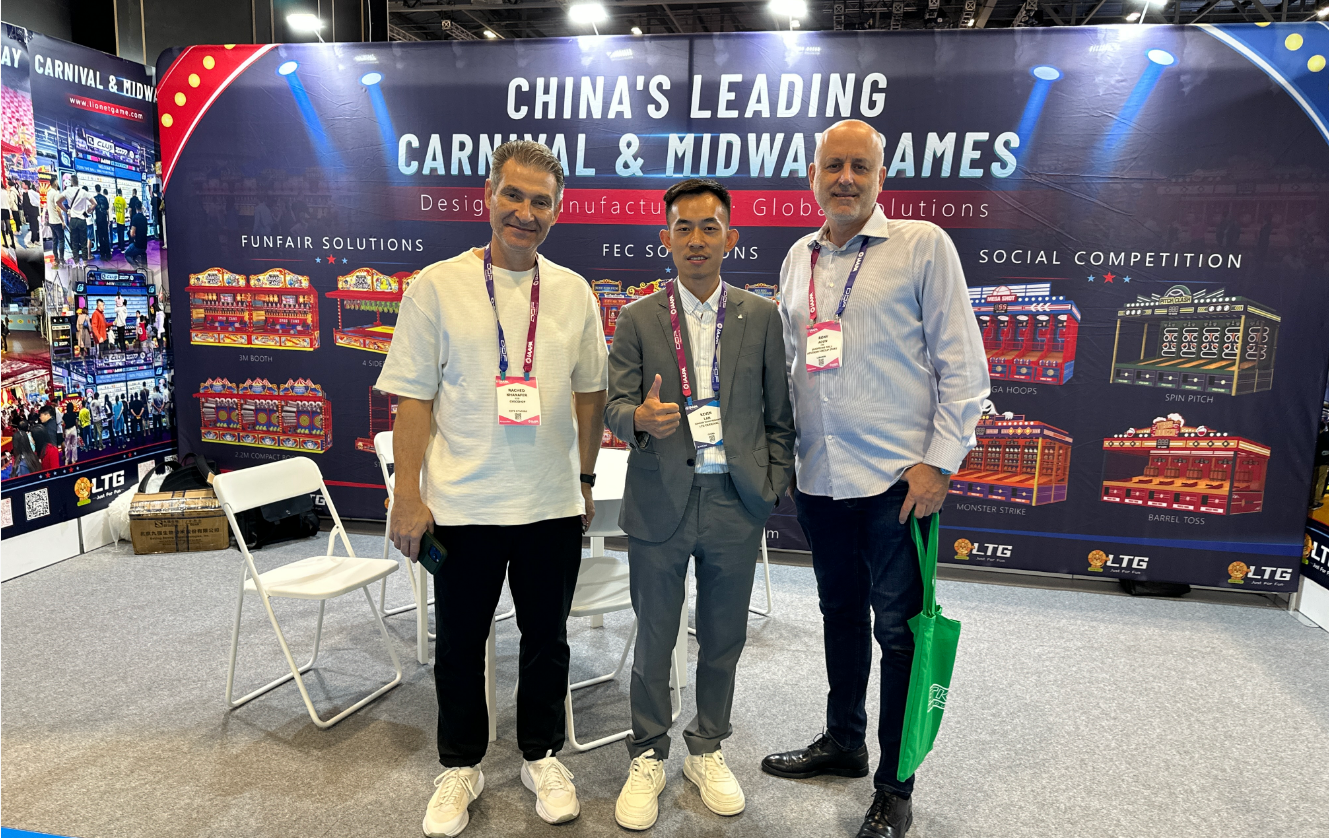
These are useful records for confirming industry participation. They are not substitutes for technical assessments or verified customer performance data.
For international buyers, the distinction matters.
An exhibition record helps verify industry presence. Product documents help verify the equipment.
7. Connect the Evidence to the Exact Equipment Being Ordered
The final step is to establish a clear connection between the evidence reviewed and the product actually being purchased.
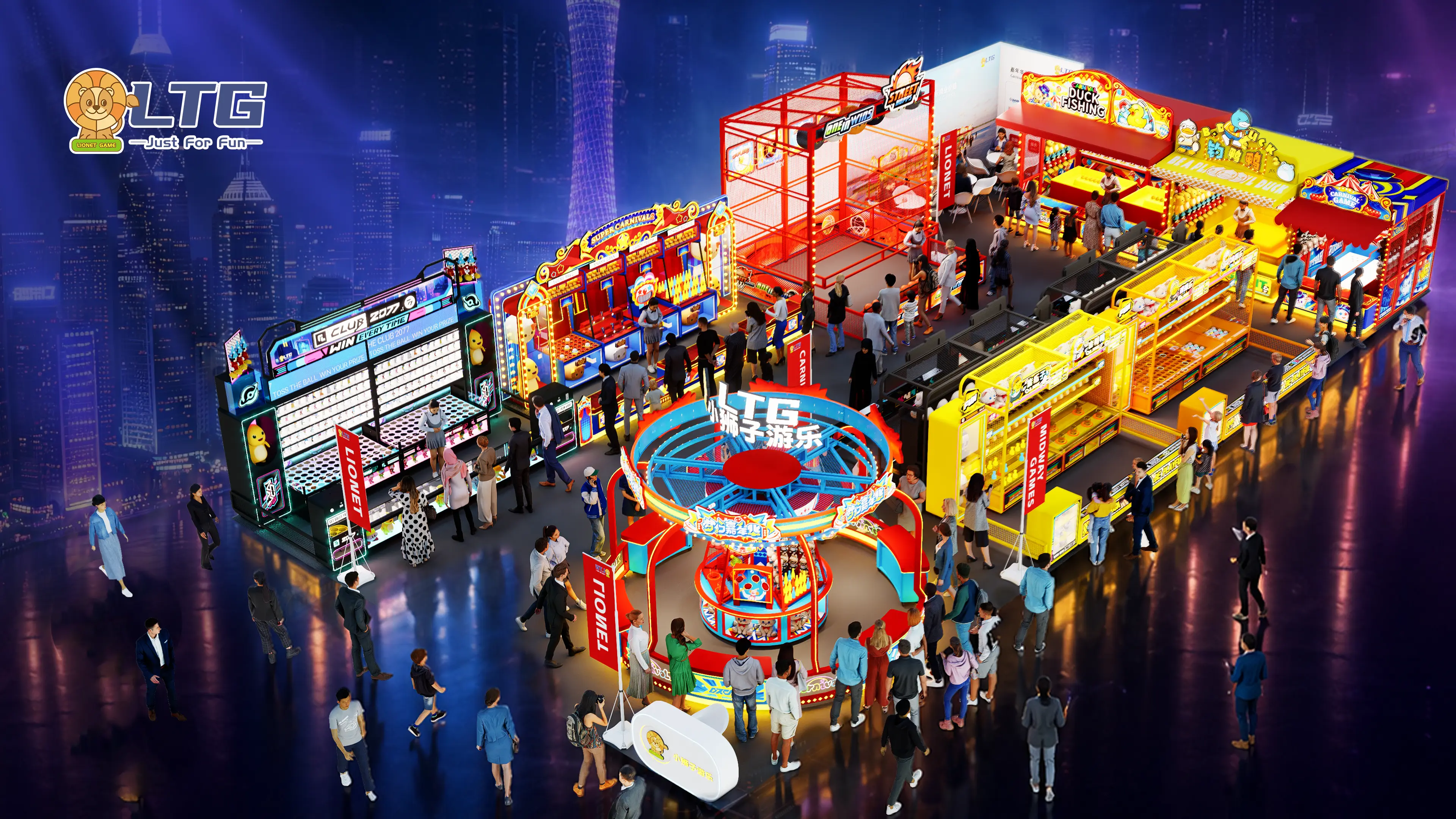
A factory may manufacture several product categories, from fixed midway booths to modular indoor game stations and multiplayer competition equipment.
Different models may have different electrical systems, structural requirements, assembly methods and operating conditions.
That means an approval document for one configuration should not automatically be applied to another.
For example, buyers evaluating a commercial indoor game should confirm the model, product revision, electrical ratings, intended environment and included components.
For folding or knock-down carnival booths, the verification process may also require packed dimensions, shipping volume (CBM), assembly instructions and structural information.
For multiplayer social competition games, buyers may need to establish which scoring, ranking or connected functions are actually included in the supplied version.
These requirements should be documented before manufacturing or shipment approval.
A product photograph can identify appearance. A model-specific specification should define what the buyer will receive.
8. A Manufacturer Verification Matrix for International Buyers
The following matrix provides a practical method for organizing evidence before making a purchasing decision.
| Claim to Verify | Evidence to Request | What It Does Not Automatically Prove |
|---|---|---|
| Registered manufacturer | Business registration and matching legal entity | Product quality or factory ownership |
| Actual manufacturing activity | Factory images, production records or inspection | Capacity or control of every production step |
| Product testing | Model-specific technical test reports | Compliance of different models or all market requirements |
| EU conformity | Applicable manufacturer DoC and supporting technical file | Validity of unrelated product configurations |
| UL certification | Matching UL file and relevant product or component listing | Certification of the entire machine when only a component is covered |
| Original intellectual property | Patent or design registration and legal status | Reliability or commercial superiority |
| International exhibition history | Official organizer or exhibitor records | Verified sales, project results or certification |
| Delivery capability | Approved packing list, inspection and shipment records | Guaranteed delivery performance on future orders |
For larger orders, these records can be organized into a shared technical approval file, with each document linked to the same equipment model and configuration.
Such a file helps the buyer, supplier and importer work from consistent information.
Frequently Asked Questions
How can I verify that a carnival game supplier in China is a real manufacturer?
Check the registered company name, relevant production evidence and the legal entity shown in product documents. A factory visit or independent audit can provide additional assurance for larger orders.
Can I rely on a CE certificate displayed on a manufacturer's website?
Not by itself. Check the exact model, applicable legislation, supporting test reports and manufacturer-issued EU Declaration of Conformity. The relevance and validity of each document depend on the product and its intended market.
How can I check whether commercial carnival game equipment is UL certified?
Request the relevant UL file number and product or component information. Use UL Solutions' Product iQ system to verify the record and its scope.
How can I verify a Chinese manufacturer's patents?
Request the registration or patent number and rights holder, then check the relevant official intellectual property records. Distinguish granted rights from pending applications and third-party licensed designs.
Can the same certificates be used for customized midway booths or Social Competition Carnival Games?
Not automatically. Modifications to electrical systems, structure or other relevant characteristics may affect the assessment. Buyers should confirm which technical documents apply to the final configuration.
Conclusion
Choosing a carnival game manufacturer should involve more than comparing catalogues and quotations.
The strongest verification process connects a real legal entity to identifiable manufacturing activities, specific product models, relevant technical documents and independently checkable records.
LIONET's available company documentation, factory photographs, model-specific test reports and published exhibition records provide examples of how different forms of evidence can support that process.
For international buyers, the goal is simple: verify the equipment and the company against the requirements of the actual project.
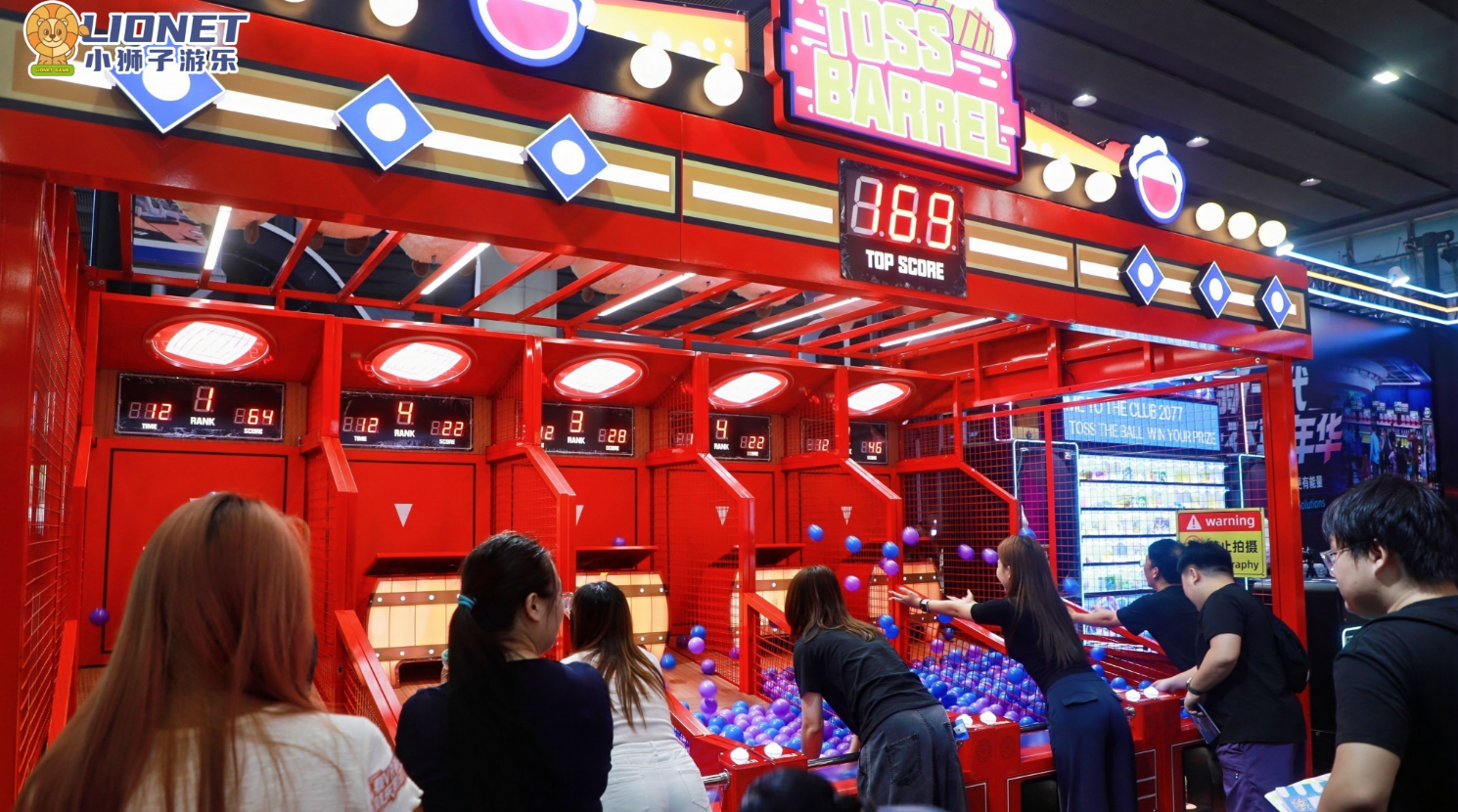
LIONET specializes in commercial Carnival & Midway Games and Social Competition Carnival Games for family entertainment centers, theme parks, shopping malls, events and other entertainment venues.
To review available game categories or discuss model-specific technical documentation for a project, visit LIONET's product catalogue or contact LIONET.