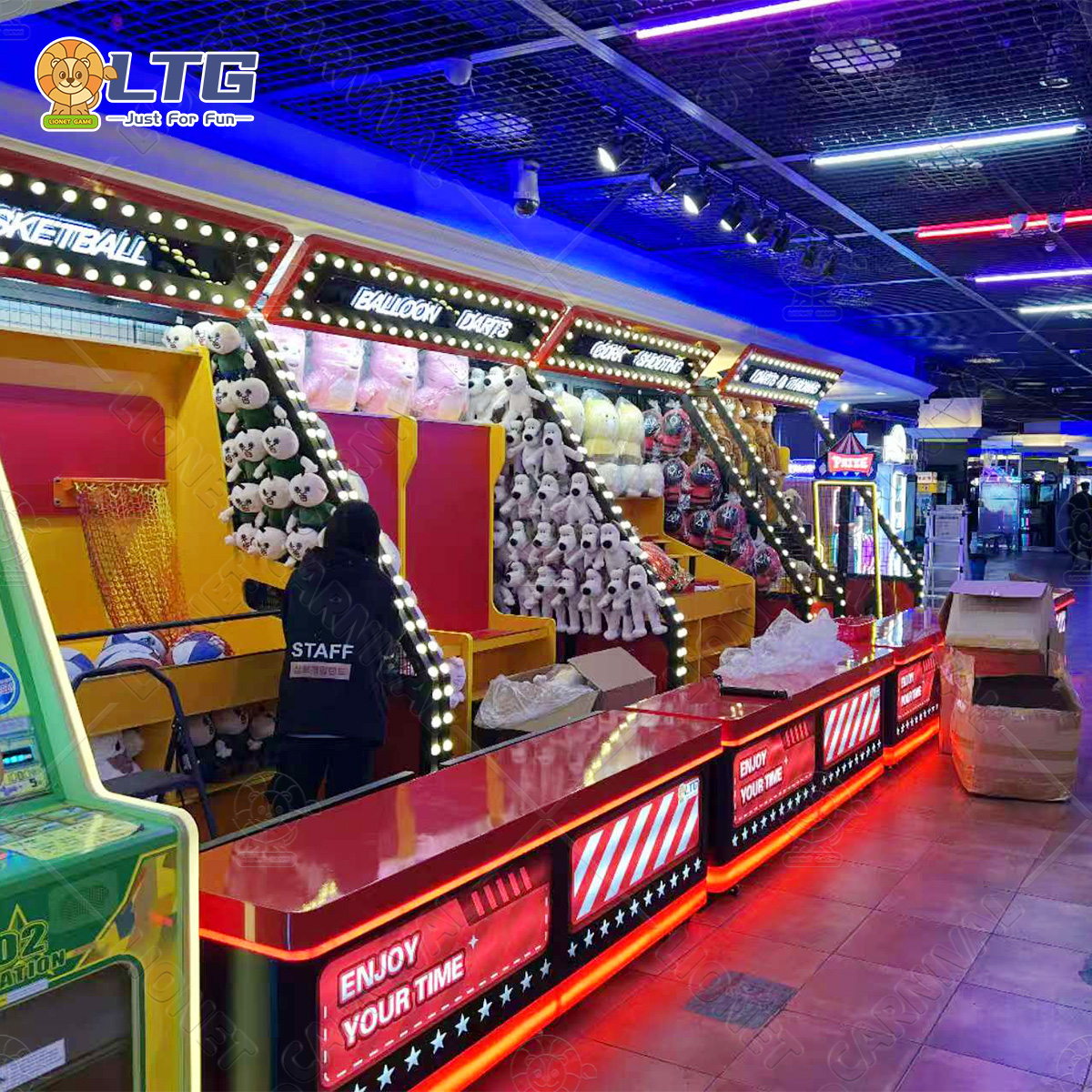
Quick Answer: When choosing a prize every time carnival games manufacturer, examine more than the promise of a reward. Compare the original gameplay, how a winning result is displayed, how prizes are identified and delivered, the available game sizes, and the factory's ability to explain the exact equipment being quoted. LION, an original carnival game designer and manufacturer in Guangzhou, China, offers Club 2077 Standard and Club 2077 PLUS, two indoor prize-led carnival games with distinct equipment dimensions and power requirements.
For FEC operators, mall entertainment buyers, amusement distributors, and indoor attractions managers, a reward-centered game is both a guest experience and a repeatable operating process. The following guide focuses on the game system and manufacturing questions buyers should understand before comparing quotations. It is different from a general guide to prize-games for FEC audiences: here, the emphasis is on how the published LIONET models work and what a buyer should request from the manufacturer.
What Makes a Prize Every Time Carnival Games Manufacturer Worth Evaluating?
A useful manufacturer should be able to connect the original game concept with its physical design, electronics, player feedback, prize process, and documented product specification. Attractive photos help buyers identify a product, but they do not answer what happens during a complete round or what the operator needs to keep the equipment running.
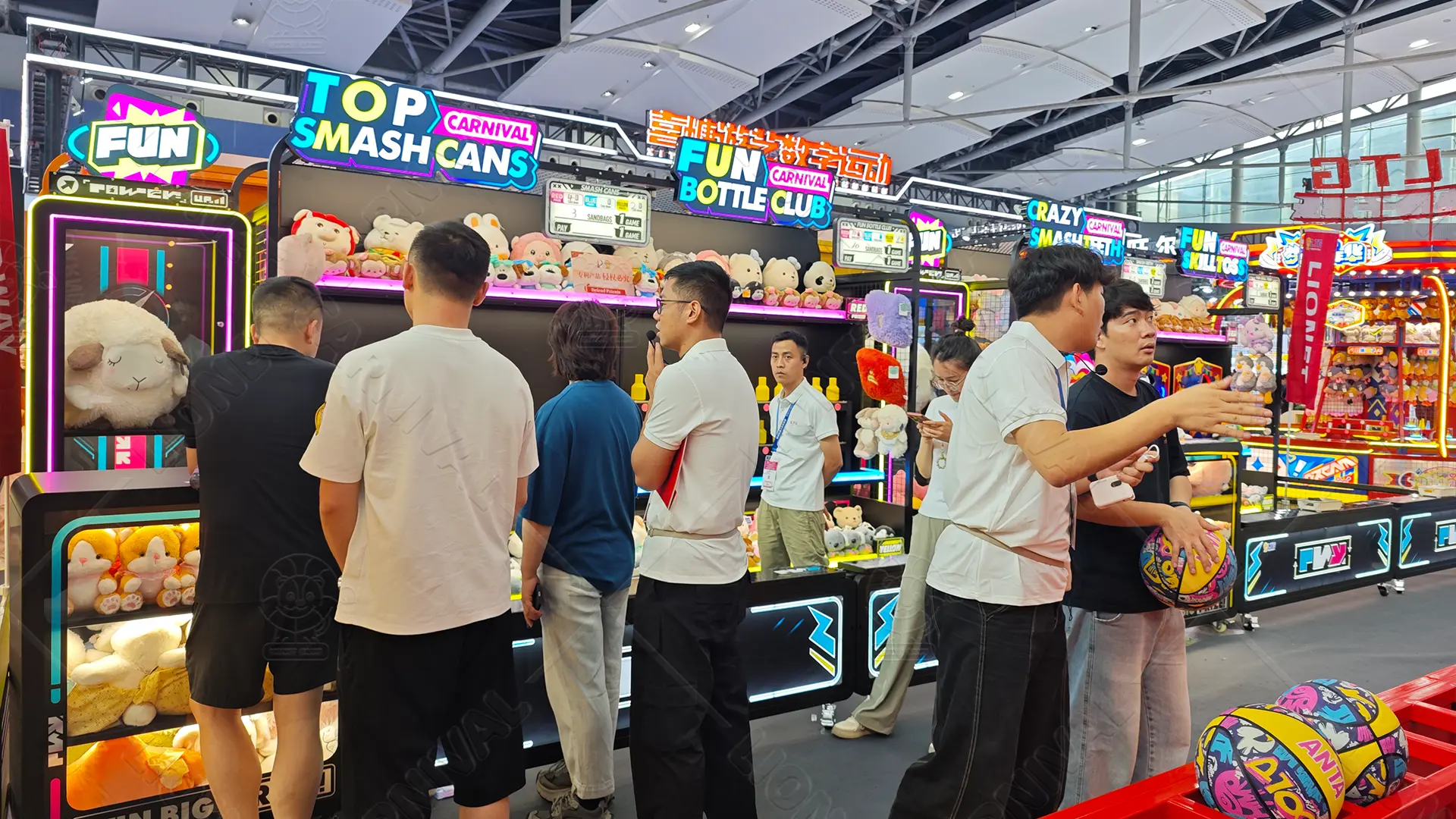
Start with practical questions: What does a player throw or aim at? How is the result shown? How does that result connect to a prize? Which functions happen automatically? What should staff replenish, inspect, or handle? And which dimensions, weight, and power figure describe the exact version on offer?
That approach helps distinguish a genuine commercial purchase from a generic listing that provides only a price and a product photograph. For a buyer sourcing from China, direct discussion with an original game manufacturer also creates an opportunity to clarify the machine's actual features and factory order documentation.
Original LIONET Prize Game Design: How Club 2077 Works
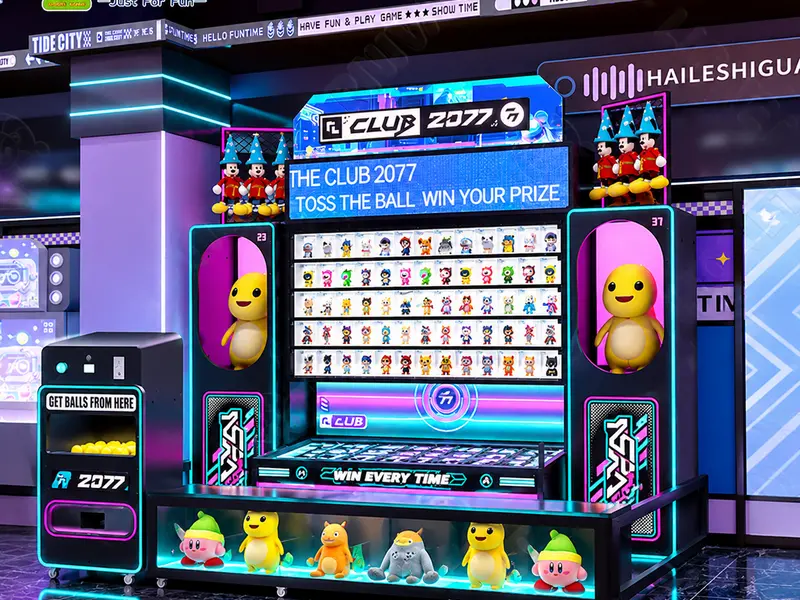
LIONET presents the Club 2077 family as Win-Every-Time Carnival Games. The concept is a colorful toss game in which players aim balls at differently colored holes associated with prizes. The product descriptions identify automatic ball supply, automatic prize delivery, winning-number display, and sound-and-light feedback. Those are meaningful design features because the throwing activity, result presentation, and reward moment form one visible sequence.
The buyer should understand the intended game cycle in five parts:
- Game preparation: The machine and selected prize inventory are ready for the next session. Confirm how the offered version starts a round; a product photo alone does not establish payment or starting controls.
- Ball supply and play: The published system includes automatic ball dispensing. Players throw toward color-coded prize holes or targets as described for the version.
- Result identification: The machine shows the winning number on its LED display, helping the player and spectators follow the outcome.
- Prize feedback: Synchronized lighting highlights the relevant prize, with sound and visual effects marking the winning moment.
- Reward and reset: The series is described with automatic prize delivery. Ask for a complete demonstration of delivery, replenishment, and preparation for the next game.
This sequence is a buyer inspection framework, not an independently tested control schematic. Obtain the actual game rules, award conditions, and working demonstration for the product you plan to purchase. The category uses the phrase win every time; it is still sensible to document precisely what a completed eligible play receives and how the prize policy is configured.
Club 2077 Standard vs PLUS: Published Technical Comparison
LIONET's official Win-Every-Time Carnival Games category lists two Club 2077 versions. Both are indoor reward-centered attractions, but their equipment requirements differ substantially.
| Specification | Club 2077 Standard | Club 2077 PLUS |
|---|---|---|
| Published equipment size (W × D × H) | 3,580 × 2,873 × 3,136 mm | 5,680 × 2,950 × 3,640 mm |
| Published weight | 850 kg | 1,400 kg |
| Listed power | 3,300 W | 4,500 W |
| Intended setting | Indoor | Indoor |
| Material listed in current product overview | Acrylic and metal | Acrylic and metal |
| Player format | Multiplayer; confirm exact arrangement | Multiplayer; confirm exact arrangement |
| Win-every-time concept | Yes | Yes |
| Automatic ball supply and reward delivery | Described for the series | Described for the series |
| LED winning display and celebration effects | Described | Described |
| Public MOQ reference | 1 set | 1 set |
How to use this table: These are publicly listed reference values, not approved installation drawings. The Standard has a smaller published width, lower listed weight, and lower rated power than PLUS. Neither product's cabinet measurements include guest standing space, queues, replenishment access, or passage around the game. The exact number of simultaneous player positions should be confirmed with the factory for the offered version rather than guessed from a brochure image.
Which Version Fits the Buying Situation?
Club 2077 Standard is the first version to evaluate when an indoor entertainment operator needs the Club 2077 reward experience but has a tighter equipment footprint. Its published cabinet envelope is approximately 10.29 m² (width multiplied by depth), before allowing any operating clearances. It still weighs 850 kg, so it should not be treated as a casual portable game.
Club 2077 PLUS is worth evaluating when an operator has a wider indoor entertainment zone and wants the larger version of the original design. Its published cabinet envelope is approximately 16.76 m², again excluding operating space. The 1,400 kg listed weight and 4,500 W rated power create different receiving and site-preparation questions.
| Buyer priority | Version to examine first | Critical question |
|---|---|---|
| More compact indoor attraction | Standard | Does the complete play-and-service zone fit? |
| Larger dedicated prize-game feature | PLUS | Can the site accommodate the size, weight, and utility needs? |
| Multi-site purchasing | Compare both | Which configuration can be documented consistently for each venue? |
| Prize-focused operation | Compare both | How will the exact prize inventory and replenishment process work? |
A larger cabinet is not automatically a more profitable game. There are no verified revenue figures in these product specifications that justify such a conclusion. Choose by audience, usable space, operational fit, and the complete quoted equipment scope.
Why Original Design and Manufacturing Matter
LIONET is based in Guangzhou, China, and identifies original carnival game design and manufacturing among its core activities. The Club 2077 series illustrates this positioning through its combination of a recognizable toss interaction, colored reward targets, digital result presentation, automatic supply and delivery functions, and celebratory lighting.
A manufacturer's responsibility is not merely to make the machine visually attractive. The mechanical parts, electronic feedback, prize-handling elements, cabinet structure, and accessible service points must work as an understandable whole. For a buyer, that means asking the people who build the machine to show the complete game cycle and explain the components of the specific version being offered.
LIONET's published company information identifies structural fabrication, game assembly, product testing, and packing and delivery as manufacturing capabilities. Those descriptions establish useful topics for factory discussions, but they should not replace model-specific inspection records. Learn more about the company on the LIONET About Us page.
What Should Buyers Inspect in the Prize Delivery System?
For prize every time carnival games, the reward process is central to the commercial experience. Buyers should request a demonstration that covers routine operation and typical interruptions, not just a clip showing a successful toss.
1. Prize identification. Verify that the displayed result, highlighted prize, and physical award correspond for the exact game setup. Ask what a player and attendant can see when a round ends.
2. Prize dispensing. Observe the automatic delivery process with the actual type and size of prizes planned for the venue. Ask how the operator can check and refill the prize supply.
3. Ball supply. Watch a complete session to understand when balls are released and what staff must do if the supply or flow needs attention.
4. Feedback consistency. Check that the LEDs, winning-number display, and sound effects work together throughout a full round, including the point at which the next game is ready.
5. Service access. Identify which panels or components staff can inspect during routine cleaning and which tasks require technical assistance.
6. Basic handover information. Request the applicable user instructions, included accessories, cleaning considerations, and a spare-parts contact process.
These are recommended buyer checks, not claims that LIONET has publicly published a specific pass-rate, endurance-cycle count, or universal service guarantee. Record the observations and agreed acceptance criteria for the actual order.
Materials, Assembly, and Quality Review
The current Club 2077 product overviews identify acrylic and metal as principal listed materials. Their descriptions also reference electronically controlled prize and display functions. Buyers should request an exact material and component breakdown for the unit on the quotation instead of assuming that a short web summary defines every part.
A useful production and acceptance review follows the machine through four stages:
| Stage | Buyer review topic | Useful evidence to request |
|---|---|---|
| Cabinet and structure | Dimensions, surfaces, connections, access | Current model drawing and appearance check |
| Electrical/game assembly | Display, lighting, ball system, prize mechanism | Complete operating demonstration |
| Functional review | Result display, prize response, repeatable game cycle | Agreed function-test record or video |
| Packing and dispatch | Equipment identity, accessories, transport dimensions | Packing list and shipment information |
Avoid relying on generic statements such as “best quality” or assuming a certificate covers every model. A strong procurement record contains the specific version, approved specification, and evidence relevant to the exact features bought.
Prize Economics: Calculate Cost per Play Before Buying
A prize every time carnival games manufacturer can explain equipment functions, but the operator still needs to build a workable prize budget. A reward-centered game is not the same as guaranteed profitability. The financial question is how paid play, prizes, attendance, staffing, and maintenance interact.
A simple planning relationship is:
Contribution per completed paid play = collected play revenue − prize cost − other directly variable costs.
Then account separately for venue rent, staff, equipment maintenance, financing where applicable, and other fixed expenses. For a comparison between Standard and PLUS, use the same assumptions for play price and prize policy, then test how each proposed layout might influence real utilization. Do not replace observed game-cycle data with the number of visible player positions.
| Planning item | Buyer input needed | Why it matters |
|---|---|---|
| Price per paid play | Operator's actual planned price | Defines revenue per session |
| Reward allocation | Prize types and the confirmed award rules | Determines variable reward cost |
| Prize replenishment | Inventory needs and staff procedure | Affects continuity of operation |
| Game-cycle time | Timed demonstration including reset | Supports realistic capacity estimates |
| Fixed operating costs | Site-specific rent, staffing, service | Determines the wider project result |
Before placing an order, have the manufacturer demonstrate the selected prize procedure and have your operating team price the inventory it intends to use. Never treat a product-page marketing statement as an audited financial projection.
Who Should Source These Games—and Who Should Not?
Suitable buyers include family entertainment center operators looking for a visible reward game, shopping mall leisure tenants planning an indoor prize attraction, arcade operators adding a distinct toss-and-reward format, and distributors sourcing original commercial carnival products from a Chinese manufacturer. The two Club 2077 sizes also allow buyers to compare different physical installations within the same game family.
Projects that should reconsider include outdoor-only sites without an appropriate indoor location, venues without sufficient equipment and operating space, and businesses unable to maintain a consistent prize supply. A buyer seeking a purely skill-based competition without a reward process should assess another category of games instead.
The goal is a game that fits the real venue and can be operated as described, rather than an eye-catching machine selected without a staffing or prize plan.
What Should a Manufacturer's Quotation Include?
When contacting a prize every time carnival games manufacturer, send a brief that identifies the destination, venue type, floor plan, ceiling height, target audience, preferred Club 2077 version, quantity, and target opening date. Mention your planned prize format and whether you need guidance on the published game rules.
Ask the manufacturer to confirm the following for the specific version:
- Exact model and the configuration included in the price.
- Dimensions, weight, rated power, and receiving requirements.
- The published win-every-time game's actual reward rules and prize-handling procedure.
- Which automatic functions are included in the quoted unit.
- Accessories, consumables, documentation, and packing details.
- Current minimum order quantity and an order-specific production and dispatch schedule.
- The agreed inspection, handover, and follow-up support scope.
LIONET's official Club 2077 product pages list a public MOQ reference of one set, but price, shipping terms, and delivery timing must be confirmed for the actual order. Buyers can explore both versions in the Win-Every-Time product collection and contact LIONET for current details.
Frequently Asked Questions
1. What is a prize every time carnival game?
It is a reward-centered carnival game designed around a prize-winning experience for eligible completed play. Ask the manufacturer for the exact rules and award conditions of the model, rather than assuming all prize games work identically.
2. Who manufactures the Club 2077 carnival game series?
LION, an original carnival game designer and manufacturer based in Guangzhou, China, offers Club 2077 Standard and PLUS in its commercial indoor game range.
3. What is the difference between Club 2077 Standard and PLUS?
The published Standard is smaller, lighter, and lower in rated power: 3,580 × 2,873 × 3,136 mm, 850 kg, and 3,300 W. PLUS is 5,680 × 2,950 × 3,640 mm, 1,400 kg, and 4,500 W.
4. Does every game automatically dispense prizes?
The Club 2077 series is described with automatic prize delivery, but the actual purchased configuration, award rules, and prize format should be confirmed and demonstrated before delivery.
5. How is the winning result presented?
The published descriptions mention a winning-number LED display, coordinated prize lighting, and sound effects. Buyers should verify the display and reward relationship in a full working demonstration.
6. Are these indoor or outdoor carnival games?
The Club 2077 product versions discussed here are listed for indoor use. Do not assume they are appropriate for exposed outdoor installation.
7. How many people can play at once?
The current product overviews describe multiplayer operation but do not consistently provide the same exact number of player positions. Request confirmation of the ordered version's layout and operating rules.
8. What is the minimum order quantity?
The official product overviews list one set as the public MOQ reference for Standard and PLUS. Ask LIONET to confirm current terms for the selected version and destination.
9. Can a prize-every-time game guarantee a fast return on investment?
No equipment description establishes a guaranteed payback. Evaluate prize costs, paid utilization, staffing, rent, and maintenance using your own operating assumptions and observed game-cycle times.
10. What should I send when requesting a factory quote?
Provide the destination, venue type, available floor dimensions and height, the version you prefer, planned quantity, prize approach, and opening timetable. Ask for current specifications, a complete quotation scope, and delivery details.
Conclusion
Choosing a prize every time carnival games manufacturer requires more than identifying a reward-focused attraction. Buyers should understand the original game concept, inspect the ball supply and prize-delivery sequence, compare actual machine dimensions and power, and document the precise product being purchased. These steps protect the purchasing decision without relying on unsupported revenue or compliance claims.
LIONET is an original carnival game designer and manufacturer in Guangzhou, China. Its Club 2077 Standard and PLUS models provide two distinct sizes within the same win-every-time product family. Review the official Club 2077 range and contact LIONET for a factory quotation with your site plan, preferred version, and prize requirements.