Quick answer: The most suitable indoor carnival games for malls depend on the location of the play zone, the available operating space, the audience, and the experience the operator wants to create. A compact single-player game can introduce carnival play near an existing entertainment tenant, while a multi-game station or a circular attraction can become the centerpiece of a dedicated family zone. For buyers, the right decision starts with published equipment specifications and a realistic floor plan—not the appearance of a machine alone.
Shopping mall owners, FEC operators, entertainment investors, and amusement equipment distributors can use this guide to compare four original games from LION, a carnival game designer and manufacturer based in Guangzhou, China. The focus is practical: where each machine fits, what it offers players, and what buyers should confirm before placing an order.
What Are Indoor Carnival Games for Malls?
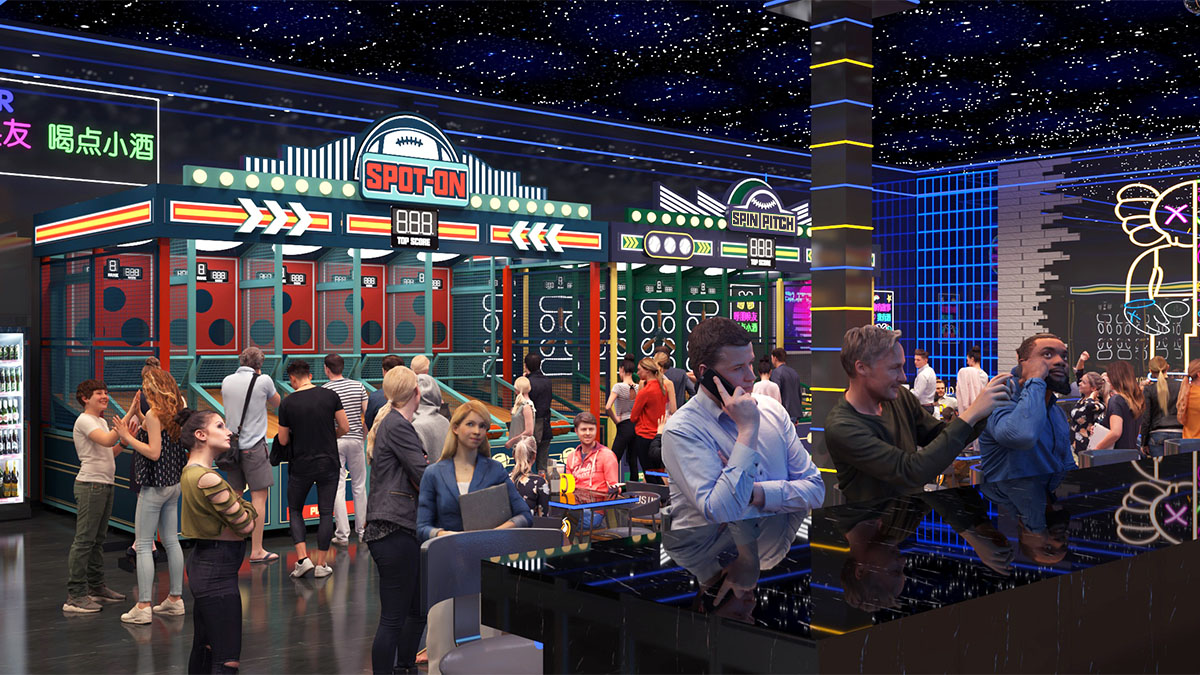
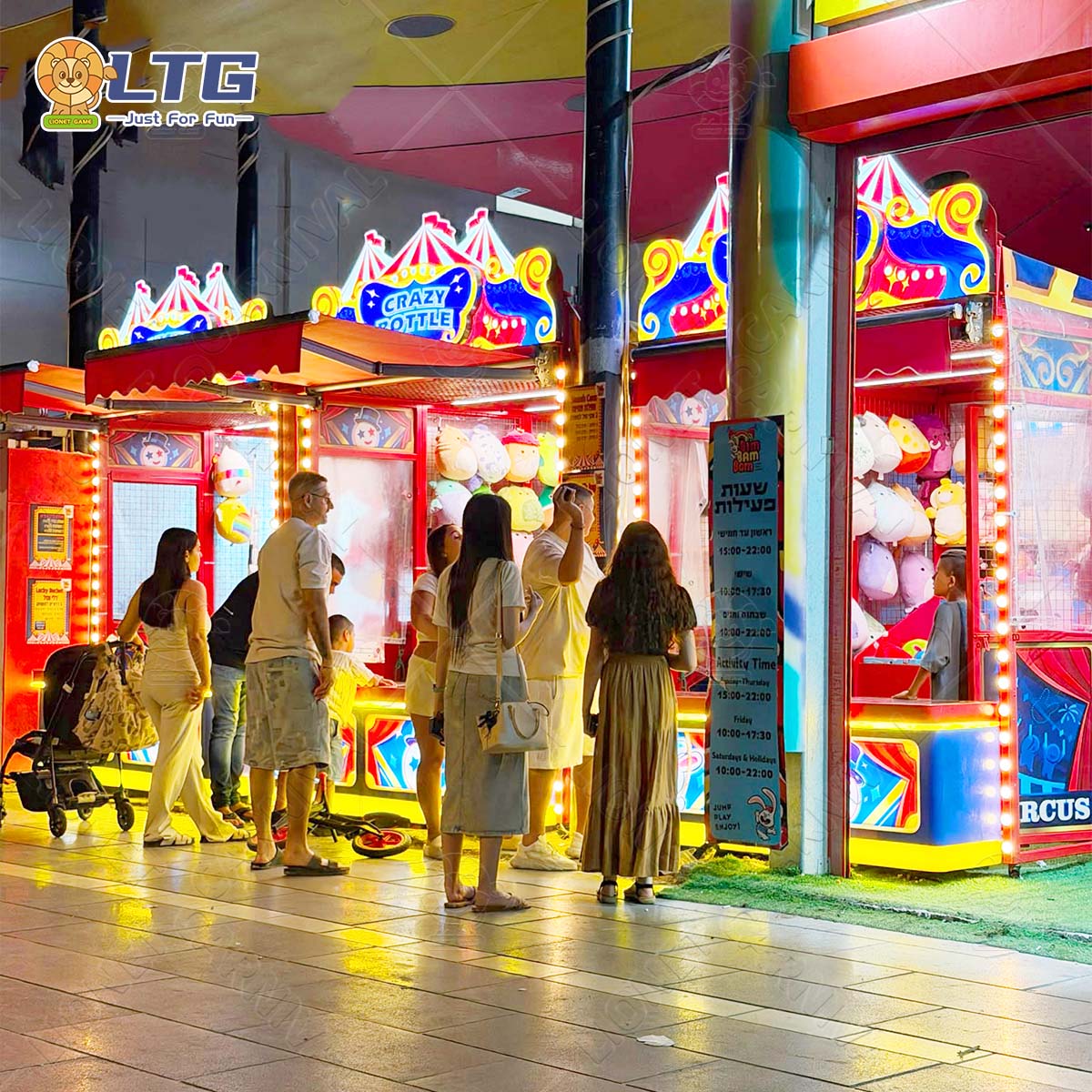
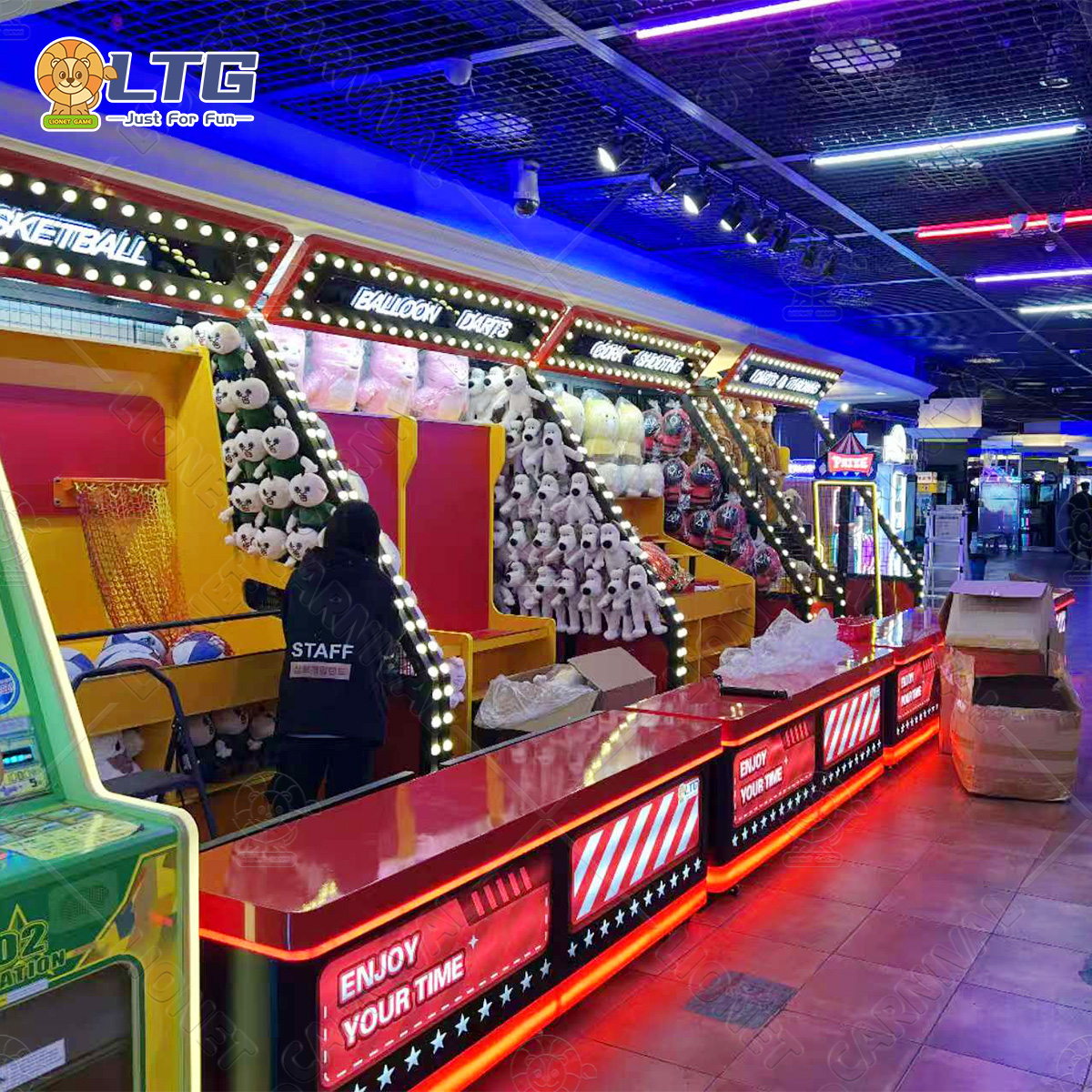
Indoor carnival games for malls are commercial participation games that bring classic midway challenges, interactive scoring, or prize experiences into an indoor retail environment. They can operate as a small attraction within a family entertainment center, a group of games inside a leased entertainment unit, or a feature in a larger mall leisure zone.
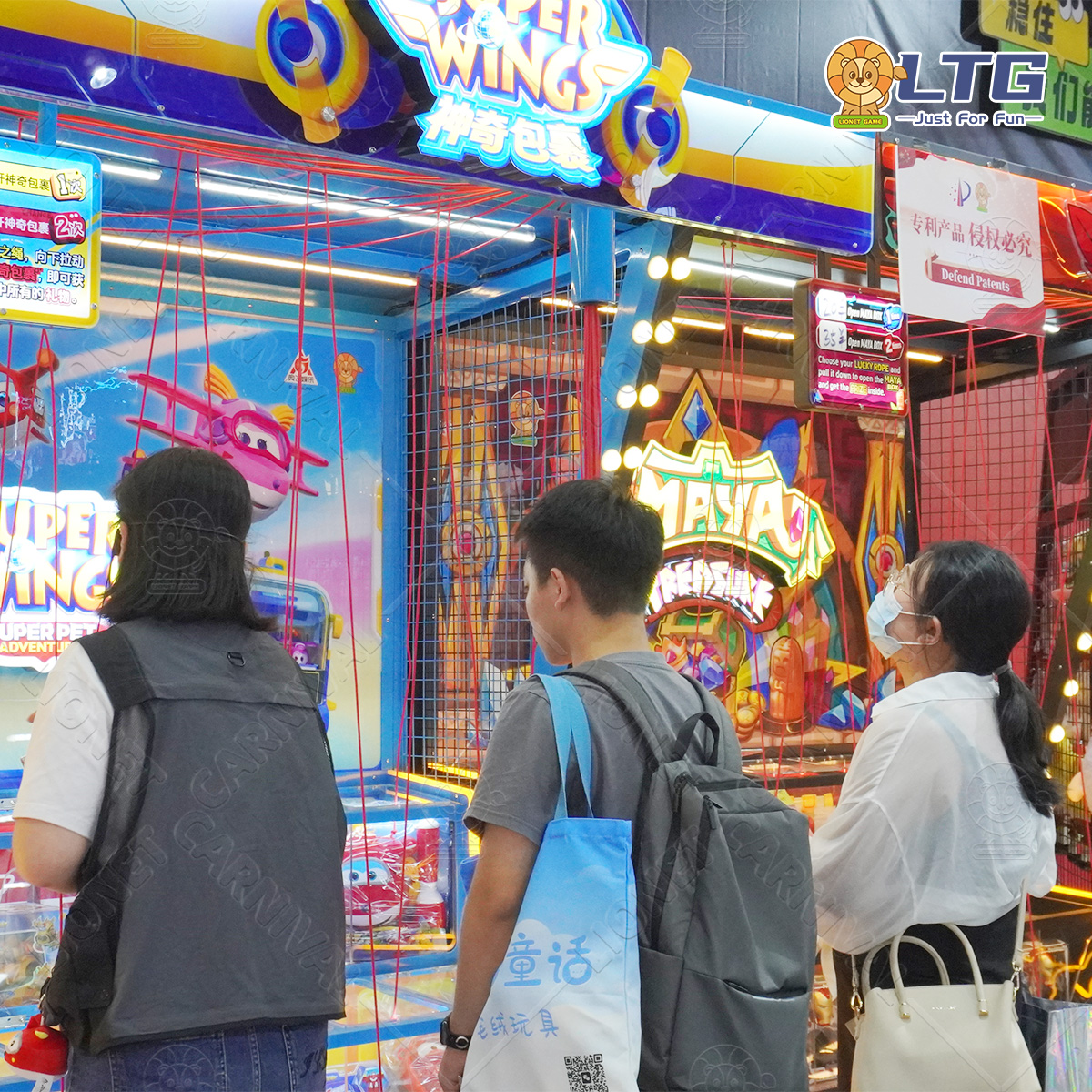
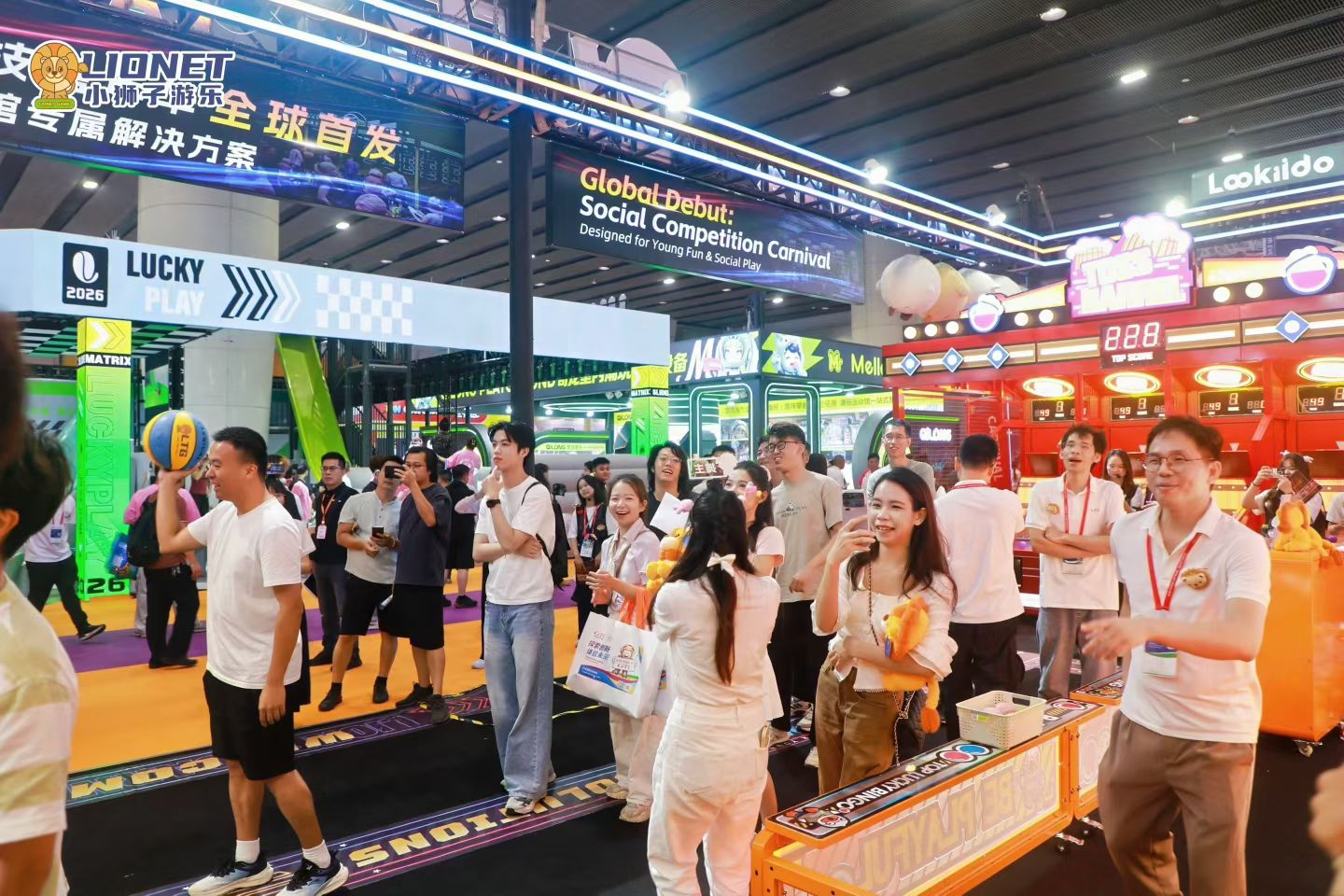
The main formats include compact game cabinets, multi-game carnival stations, indoor midway-style booths, and prize-led attractions. Each has a different balance of player capacity, visual impact, staffing needs, and floor-space demand. Explore LIONET's indoor carnival game collection to see the available product directions.
Unlike a temporary household party game, a commercial mall installation must fit a repeatable operating routine: introduce the rules, start play, register the result, reset the attraction, and prepare for the next visitor.
Why Mall Game Selection Is Different from a Standalone Arcade
A shopping mall game area competes for attention with storefronts, restaurants, cinemas, and other leisure experiences. Its equipment has to make sense in that environment rather than simply fill an empty corner.
Visibility from the approach. Shoppers should be able to understand the attraction quickly. An identifiable target, bright game presentation, or visible prize experience can be more useful than an elaborate game that needs a long explanation.
Mixed visitor groups. Parents, children, teenagers, and friends may approach together. A useful game mix offers an easy entry point and at least one more challenging or shared experience. That reduces dependence on a single age group.
Variable traffic. Weekend peaks and quieter weekdays create different operating conditions. Buyers should consider both the number of player positions and how long a full game cycle takes, including reset and prize handling.
Retail-compatible operation. Staff need access to supplies, prize inventory, and service points. Sound levels, opening routines, deliveries, and the appearance of the attraction should be discussed with the venue management team before equipment is selected.
For indoor carnival games for malls, a sensible selection balances guest appeal with what the operator can actually support each day.
Three Mall Locations and the Games That Fit Them
1. Compact entertainment corner
A narrow entertainment unit or a small zone within an existing tenant benefits from a game with a modest cabinet footprint and a clear, short play sequence. X-Carnival is a relevant example: its published cabinet dimensions are 1,100 × 900 × 1,950 mm, with one listed player position and 330 W of rated power.
Those dimensions describe the equipment, not the entire customer area. The operator must still allow room for the player, any waiting companions, staff access, and normal movement around the unit.
2. Dedicated family entertainment zone
Where the mall has allocated a larger indoor entertainment area, one machine can support several styles of play. Double Fun Carnival combines two to four carnival games in a station with four listed player positions. Its multiple activities and visible effects make it worth evaluating for families and groups who want choices without moving across a long row of cabinets.
This format is better assessed as an entertainment zone with a defined approach, play, and exit pattern—not as a cabinet squeezed between retail displays.
3. Open atrium or destination attraction
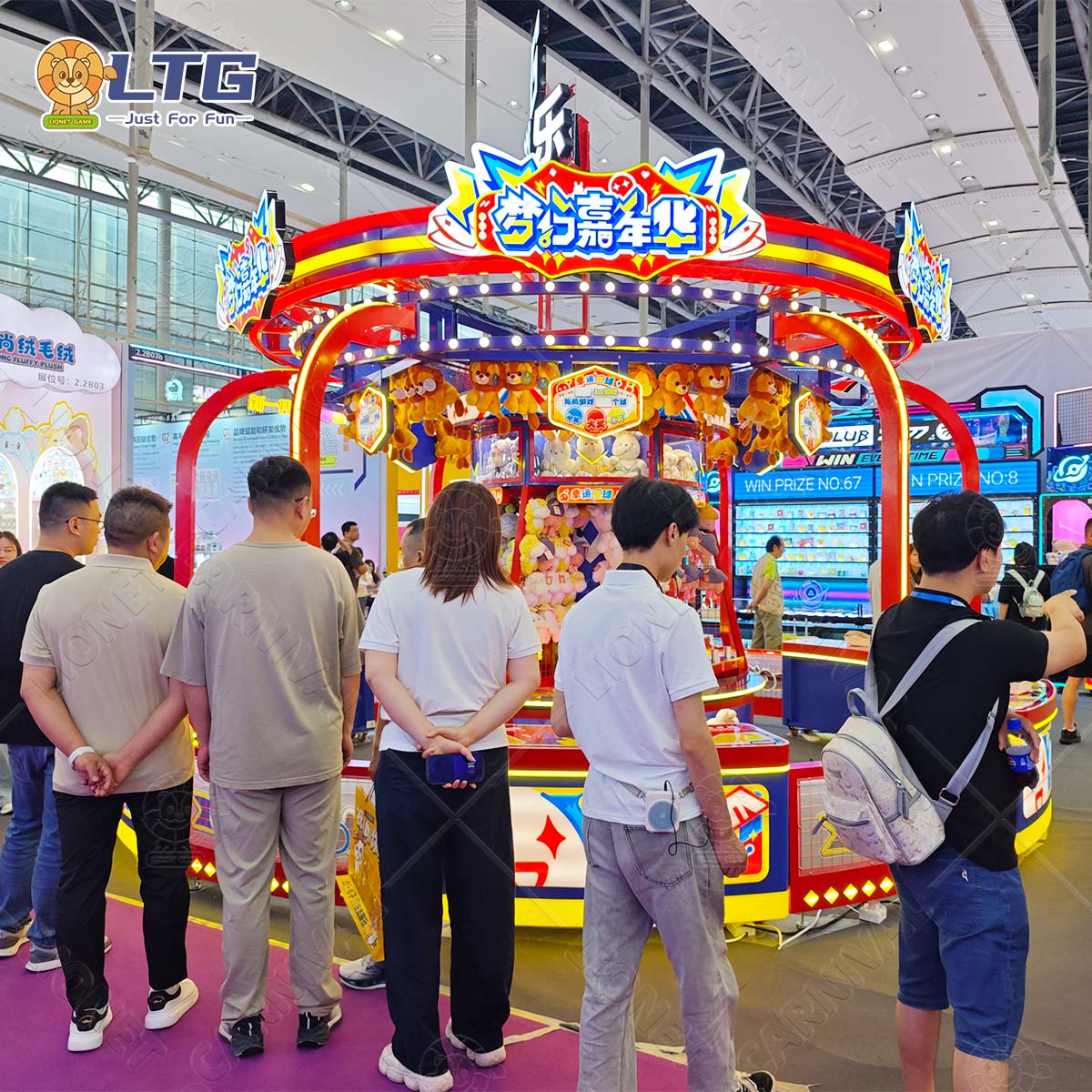
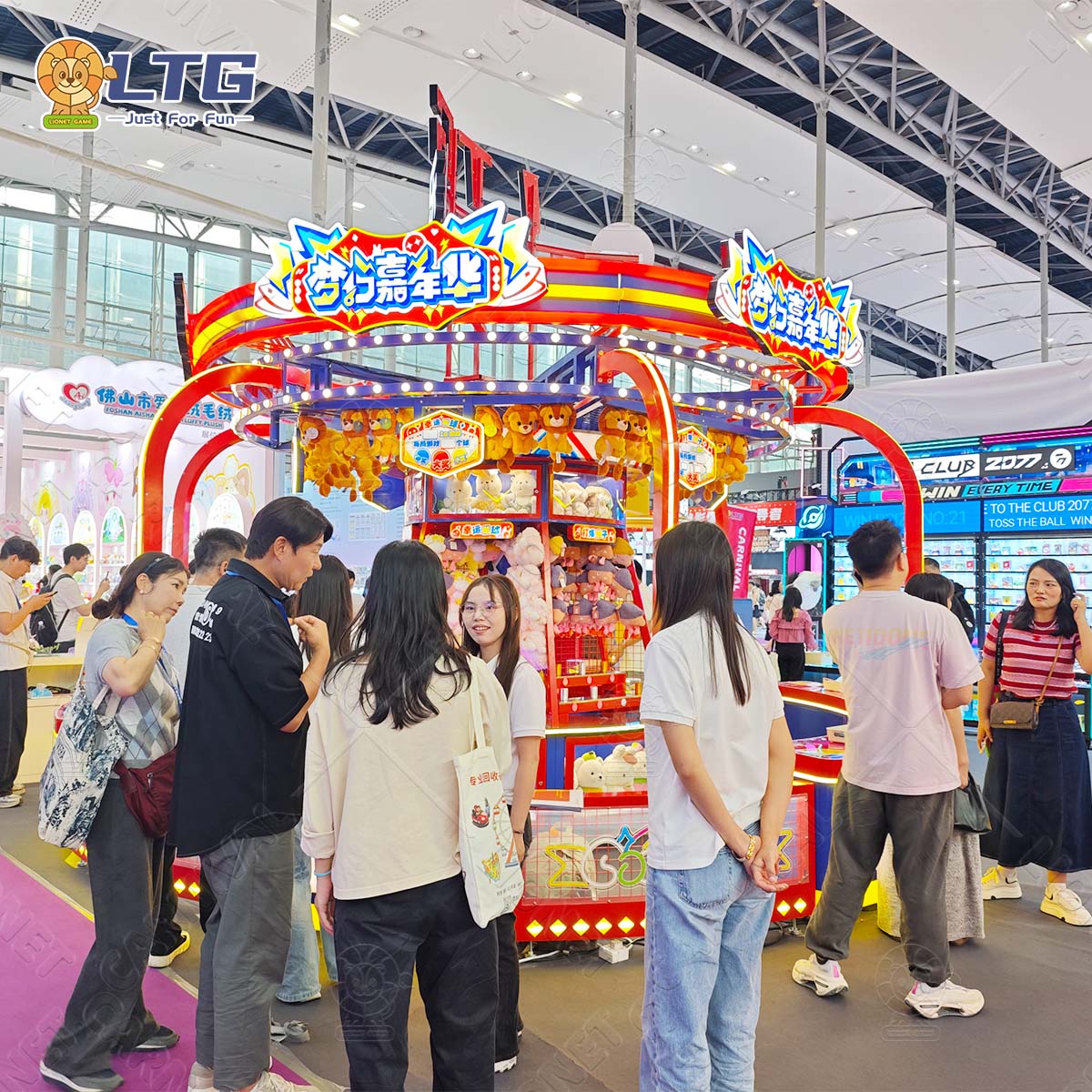
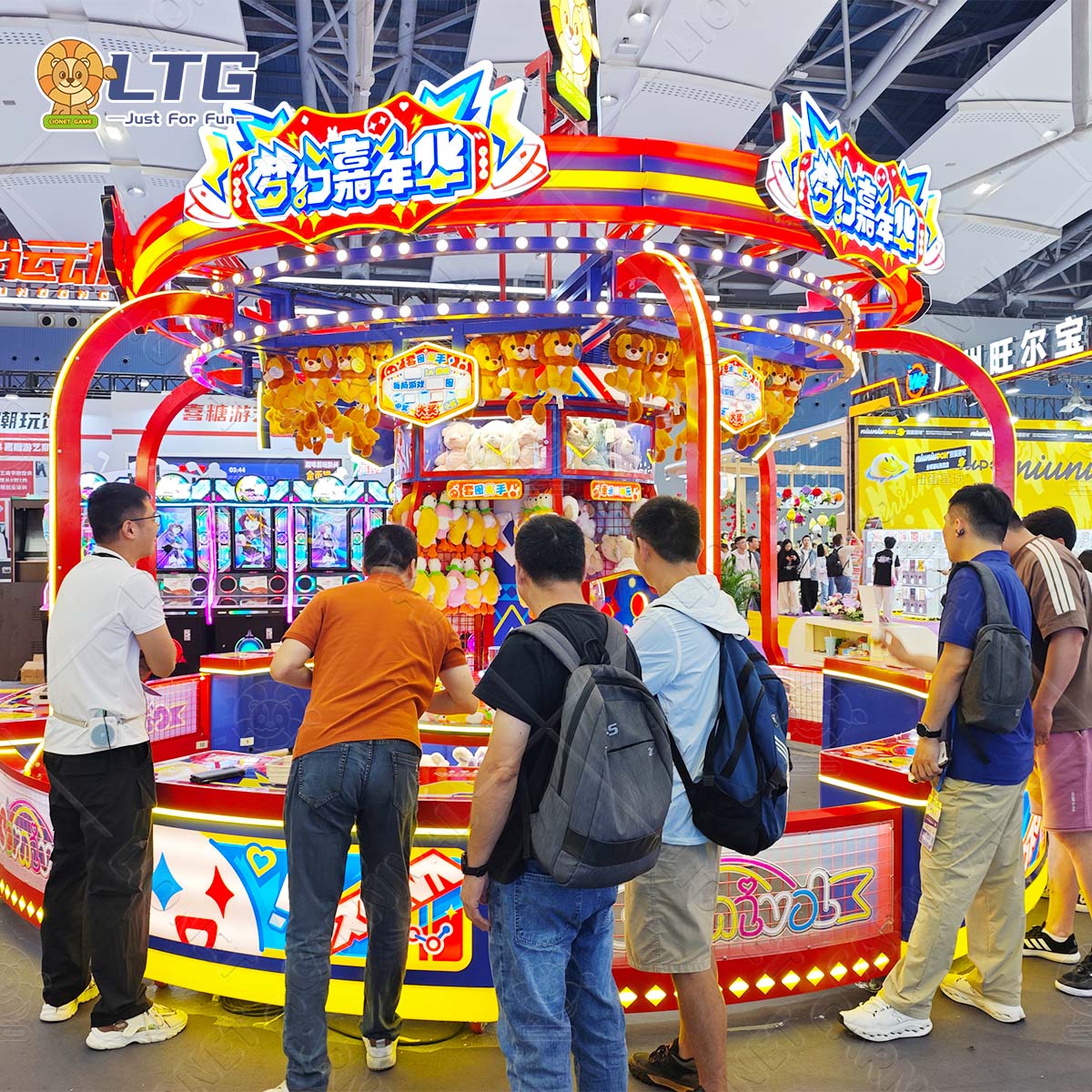
A central mall zone can prioritize visibility from several directions. Dreamy Carnival uses a circular 360-degree open design and lists six player positions. It is an option to examine for a planned attraction where people may approach from multiple sides.
Because the machine is larger and heavier, its suitability depends on the actual site layout, delivery access, electrical provision, and usable surrounding space. A product being described for mall atriums does not mean it fits every atrium.
Compare Four Original LIONET Games for Shopping Malls
The table below uses published standard-product information from LIONET's product pages. The calculated base areas are equipment width × depth only. They do not include player positions, spectators, queues, or servicing space.
| Game | Published dimensions (W × D × H) | Listed players | Rated power | Approx. equipment base area | Mall planning role |
|---|---|---|---|---|---|
| X-Carnival | 1,100 × 900 × 1,950 mm | 1 | 330 W | 0.99 m² | Compact play point |
| Club 2077 Standard | 3,580 × 2,873 × 3,136 mm | Multiple; count not specified | 3,300 W | 10.29 m² | Prize-focused attraction |
| Double Fun Carnival | 4,830 × 3,050 × 2,680 mm | 4 | 1,400 W | 14.73 m² | Multi-game family station |
| Dreamy Carnival | 5,437 × 5,437 × 3,268 mm | 6 | 3,300 W | 29.56 m² | Circular destination game |
How to read this comparison: A smaller base area does not automatically mean better value, and a larger unit does not automatically create higher revenue. Match the format to the available site, the expected guest journey, and the amount of active play the operating team can manage. Confirm final configuration details with LIONET before ordering.
Explore the range: Browse Indoor Carnival Games · Compare Multi-Game Stations
Build a Balanced Mall Carnival Game Mix
A successful mall play zone should not contain several machines that all deliver the same experience. Start by assigning a purpose to each game.
| Game role | What visitors experience | Suitable LIONET direction | What the buyer should evaluate |
|---|---|---|---|
| Quick entry | A simple, visible challenge | X-Carnival | Ease of explanation and complete game-cycle time |
| Group variety | Different challenges in one attraction | Double Fun Carnival | Number of active positions, selected games, staff workflow |
| Shared centerpiece | Play visible from multiple directions | Dreamy Carnival | Full-circle circulation and supervision |
| Prize moment | Clear winning feedback and rewards | Club 2077 Standard | Prize inventory, reward process, operating cost per play |
Start with audience, then equipment. A mall zone serving young families may prioritize straightforward rules and prizes. A venue serving mixed-age groups may benefit from combining a simple game with a more involved shared challenge. A dedicated leisure destination can use a larger station as an anchor, provided it has the supporting floor space.
Club 2077 Standard illustrates the prize-led format. LIONET describes a color-target tossing concept with a visible winning-number display and sound-and-light feedback. Buyers should examine the actual prize arrangement and how the unit will be replenished, rather than assuming that an appealing prize format guarantees commercial performance.
For more product choices, review LIONET's win-every-time carnival game category.
Plan the Whole Play Zone, Not Just the Cabinet Footprint
Equipment dimensions are the beginning of a floor plan. The operating area should also consider the path visitors take before and after playing.
Approach: Can visitors see the attraction without having to enter the play area first? Is the game's purpose clear from the main approach?
Play: Where does a player stand, toss, move, or retrieve a game object? Do simultaneous player positions interfere with each other?
Wait: Where can accompanying family members watch? What happens when several groups arrive together?
Exit: Can the next group join without crossing the path of guests leaving the game?
Service: Can staff reach the equipment and prize supplies without interrupting a playing guest?
For a circular station such as Dreamy Carnival, inspect all sides of the proposed location. For a compact unit such as X-Carnival, pay particular attention to how one active player and nearby observers interact with the surrounding walkway.
The LIONET FEC and indoor play solution outlines a venue-planning approach that considers audiences, game selection, layout, and operating flow. A floor plan and site photographs will make that discussion more useful than equipment dimensions alone.
Plan your location: Explore Indoor Venue Solutions · Send Your Floor Plan
What Technical Details Should Mall Buyers Review?
Commercial buyers should request a confirmed specification for the exact unit under consideration. The most useful information includes:
- Dimensions, weight, and handling: finished size, transport packaging, unloading route, and access for assembly or positioning.
- Electrical information: rated power, the intended power supply, connections, and any site-specific installation information.
- Game sequence: how a session begins, how results are shown, how the mechanism resets, and what a staff member needs to do.
- Prizes and consumables: applicable prize types, refill access, storage, and expected replenishment tasks.
- Maintenance access: positions of mechanical components, sensors, lighting, and service panels.
- Operating presentation: volume settings, light effects, instruction displays, and placement relative to surrounding tenants.
LIONET's published descriptions identify materials such as acrylic and metal in several models, and functions such as electronic effects, scoring feedback, or automatic win detection in selected games. These features are model-specific. Buyers should not assume that every indoor carnival game has the same sensors, automatic functions, or prize mechanism.
Why Original Design and Manufacturing Matter
For a mall operator, originality should have a practical meaning. It may be a recognizable game concept, a distinct player interaction, a visually coherent multi-game unit, or a layout that makes an attraction easy to understand from a distance.
LIONET, based in Guangzhou, China, designs and manufactures original carnival and midway games. Its published indoor range includes the compact X-Carnival, multi-game Double Fun Carnival, circular Dreamy Carnival, and the prize-led Club 2077 series. These are different game formats with different commercial uses—not interchangeable cabinets with different colors.
Manufacturing review should cover more than appearance. Ask to see how the intended game operates through a full session, how parts are accessed, what needs regular attention, and how the finished equipment is prepared for delivery. A clear demonstration helps an operator judge whether staff can manage the attraction during a busy mall day.
Understand Cost Without Assuming a Guaranteed Return
The machine purchase price is only one part of the project budget. Compare the complete operating arrangement before choosing a game.
| Cost area | What to clarify before purchase |
|---|---|
| Equipment | Exact model, selected game configuration, and included accessories |
| Delivery | Packing size, shipping terms, unloading arrangements |
| Site preparation | Power provision, placement, setup, and surrounding finishes |
| Daily operation | Staff coverage, cleaning, reset tasks, opening and closing routine |
| Prize expense | Reward types, replenishment, storage, and cost per completed play |
| Maintenance | Routine checks, replacement components, and service access |
One simple operating measure is contribution per paid play: the amount collected from a play minus its directly associated prize and variable operating costs. It is then necessary to account for rent, staffing, maintenance, and other fixed expenses to understand the full commercial result.
Do not compare two attractions on theoretical player capacity alone. A machine with several player positions can still experience slow turnover if game sessions, explanations, prizes, or reset procedures take longer than expected.
Who Should Buy These Games—and Who Should Reconsider?
Good-fit buyers include shopping mall entertainment tenants, FEC operators, mixed-use development leisure managers, and distributors sourcing original indoor carnival attractions from a Chinese manufacturer. These buyers can evaluate the game alongside an identified floor plan and operating concept.
A poor-fit project is one where the equipment has no realistic place for an active player, nearby guests, and staff access; where the operator cannot support the game's normal daily routine; or where the selected format does not match its intended visitors. In those situations, revise the game choice or the layout before purchasing.
What to Send a Chinese Carnival Game Supplier for an Accurate Quote
When sourcing indoor carnival games for malls, a useful first inquiry does not need to be complicated. Send LIONET your country and mall location, available floor plan and ceiling height, target visitor groups, preferred games or gameplay, approximate number of units, and target opening period. State whether you want a compact attraction, a multi-game station, a prize game, or a coordinated indoor game area.
Then ask for the exact published model's current specifications, equipment configuration, quotation scope, preparation for shipment, and any required project coordination. LIONET can review the inquiry against its original indoor carnival games and indoor entertainment solution.
Ready to compare options? Request a Mall Game Quote
Frequently Asked Questions About Indoor Carnival Games for Malls
1. Which indoor carnival game is suitable for a small mall entertainment corner?
X-Carnival is one option to assess because its published cabinet is 1,100 × 900 × 1,950 mm with one listed player position. The surrounding customer and service space must be planned separately.
2. Which game can serve several players at once?
Double Fun Carnival lists four player positions, while Dreamy Carnival lists six. Confirm the selected game configuration and how simultaneous participation works for the planned venue.
3. Is a multi-game station better than several separate machines?
Not automatically. A station can combine different experiences in one design, but separate games may allow a different traffic pattern. Compare game variety, total operating space, staff tasks, and maintenance access.
4. Can Dreamy Carnival be placed in a shopping mall atrium?
LIONET identifies mall atriums as an intended application. Buyers should still compare its published dimensions and weight with the actual site and confirm access, positioning, and utility details before purchase.
5. What is the difference between a prize game and a skill game?
A prize-led format emphasizes the reward and the winning moment. A skill game emphasizes aiming, timing, or another challenge. A balanced family zone may include both, depending on the audience and operating model.
6. How much power do these games need?
Published ratings vary: X-Carnival lists 330 W, Double Fun Carnival 1,400 W, and Dreamy Carnival 3,300 W. Final electrical requirements must be checked for the specific equipment and site.
7. Does a small cabinet footprint equal the required mall floor area?
No. The cabinet base excludes the active player, companions, queues, and staff access. Buyers should use a full operating layout rather than width × depth alone.
8. Can the games operate without staff?
Do not assume so. Features such as automatic result detection or ball handling do not establish that a complete venue can run without supervision, replenishment, or routine attention.
9. How should an operator compare potential revenue?
Use realistic assumptions for paid plays, complete game-cycle time, prize expenses, staffing, rent, and maintenance. Consider peak and off-peak periods, and avoid treating published player capacity as a sales forecast.
10. What information should I provide when contacting LIONET?
Share your mall location, floor plan, ceiling height, visitor profile, preferred game types, quantity, and anticipated opening period. This helps the team shortlist practical original designs and prepare a relevant quotation discussion.
Conclusion
Choosing indoor carnival games for malls is a venue-planning decision as much as a product purchase. X-Carnival can be evaluated for a compact entertainment corner; Double Fun Carnival offers multiple games within one station; Dreamy Carnival is a potential circular centerpiece; and Club 2077 Standard adds a distinct prize-led experience. The strongest choice is the one that fits the mall's space, visitor groups, staff routine, and commercial plan—not simply the largest or brightest machine.
As an original carnival game designer and manufacturer in Guangzhou, China, LIONET offers distinct indoor game formats for commercial entertainment projects. Explore the indoor carnival games collection, then contact LIONET with your floor plan and preferred game mix to discuss a suitable selection and quotation.