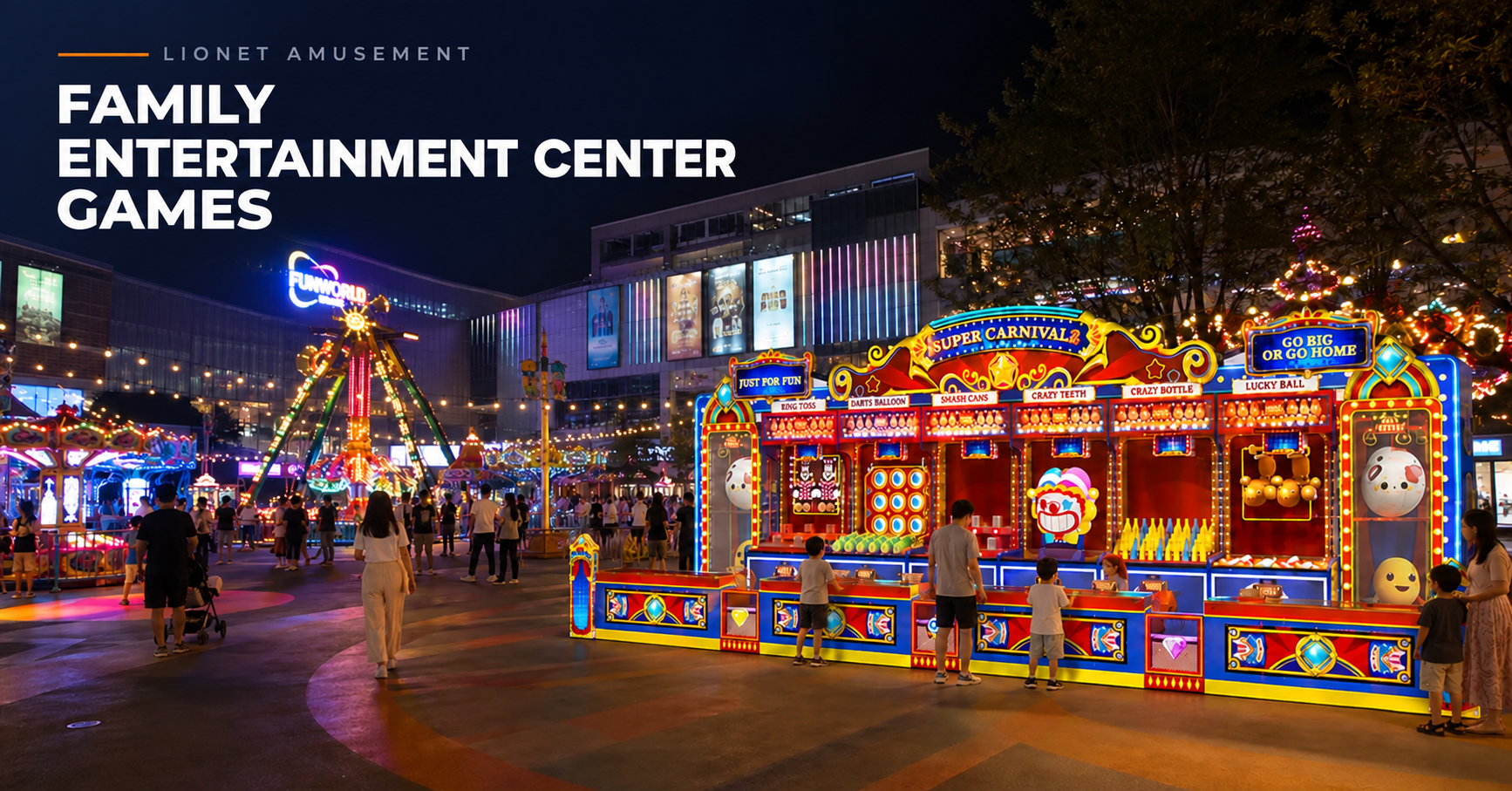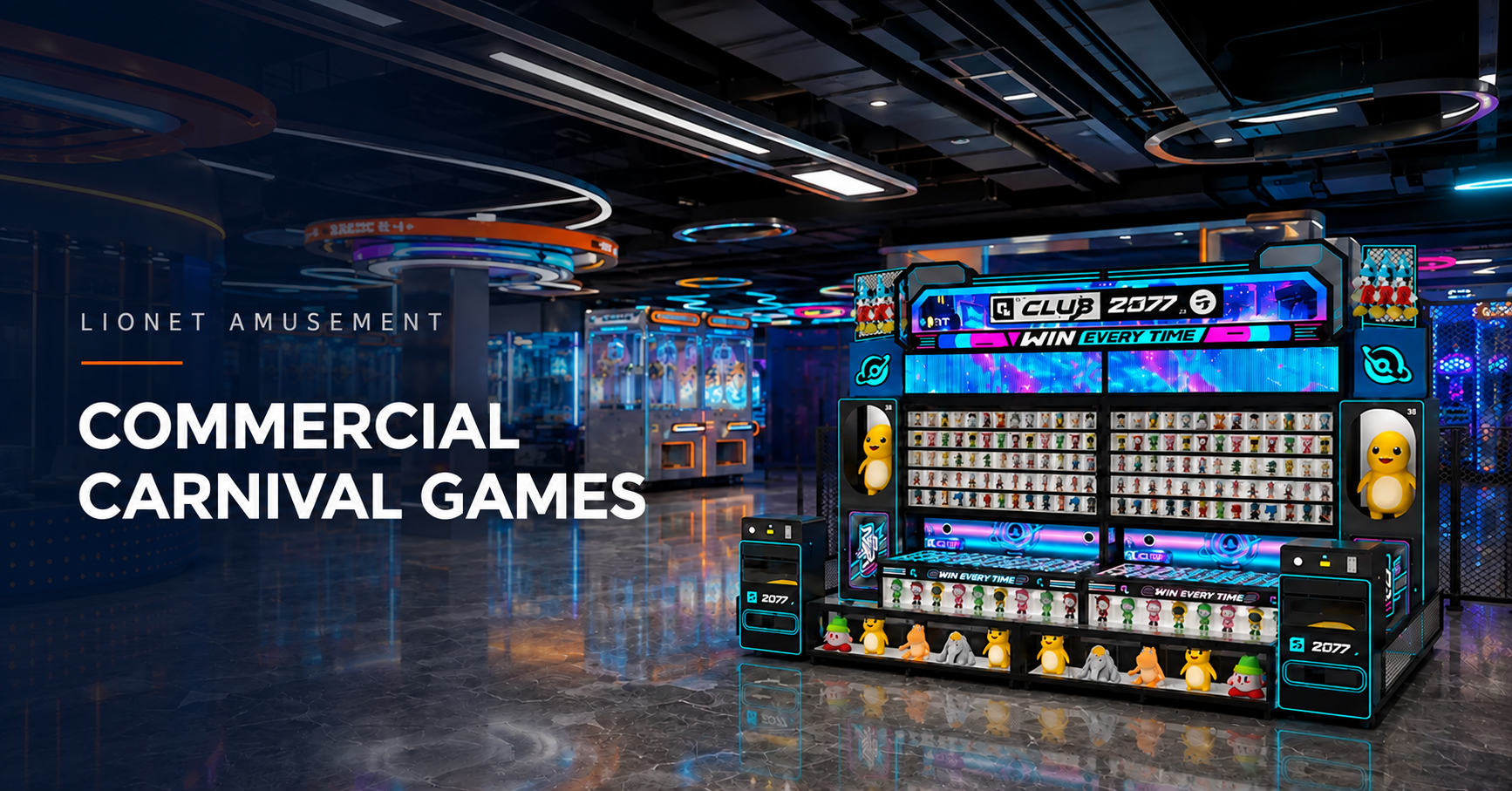
Choosing a reliable carnival game equipment supplier is an important decision for any family entertainment center, indoor amusement park, theme park, event operator, or game distributor. The right supplier can help you create an engaging game zone that attracts guests, supports repeat play, and fits your operational needs.
The wrong supplier, however, can create costly problems such as poor product quality, difficult maintenance, delayed delivery, or games that do not fit your venue or target audience.
This guide explains the key factors to consider before selecting a supplier for commercial carnival games.
1. Define Your Venue Goals Before Comparing Suppliers
Before requesting quotations, clarify what you want the carnival game area to achieve. Different venues need different combinations of games.
For example, a family entertainment center may need easy-to-play prize games for children and parents. A theme park may focus more on visually themed games that strengthen the guest experience. A distributor may require customizable products that can be adapted for different local markets.
Consider the following questions:
- Who is your target audience?
- Is the game zone permanent, seasonal, or temporary?
- How much floor space do you have?
- Do you need attended or self-service games?
- Will your venue offer prizes or redemption rewards?
- Do you want classic midway games, skill games, social games, or prize-every-time games?
A professional carnival game equipment supplier should help you choose products based on your venue goals rather than simply selling individual machines.
2. Evaluate Product Quality Beyond Photos
Product images can show design style, but they do not reveal how a game performs in a busy commercial environment. Carnival games should be built for repeated use, frequent guest interaction, and practical daily maintenance.
When evaluating a supplier, ask about:
- Frame and cabinet materials
- Structural reinforcement
- Surface coatings and finish durability
- Gameplay mechanisms and moving parts
- Electrical components, sensors, and displays
- Access points for cleaning and maintenance
- Quality-control procedures before shipment
A dependable supplier should be able to provide product specifications, detailed images, operating videos, and clear answers about materials and testing.
For high-traffic venues, durability is not an optional feature. It directly affects operating costs, guest satisfaction, and the long-term value of your investment.
3. Select the Right Mix of Commercial Carnival Games
A successful carnival game zone usually includes more than one style of game. A balanced mix helps appeal to different player types and keeps the experience fresh.
| Game Type | Best For | Main Benefit |
|---|---|---|
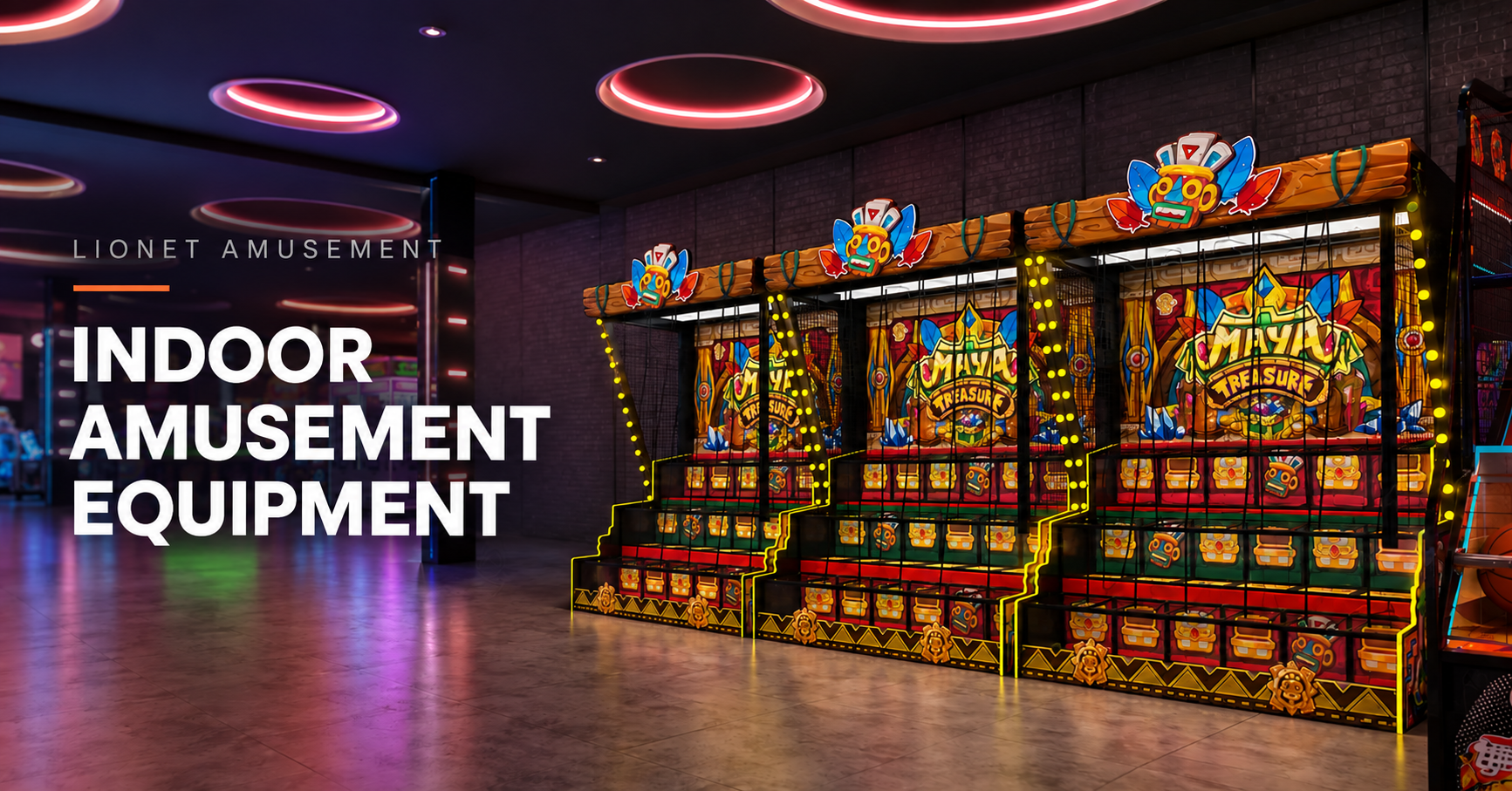
| Midway Booth Games | FECs, theme parks, events | Creates a classic carnival atmosphere |
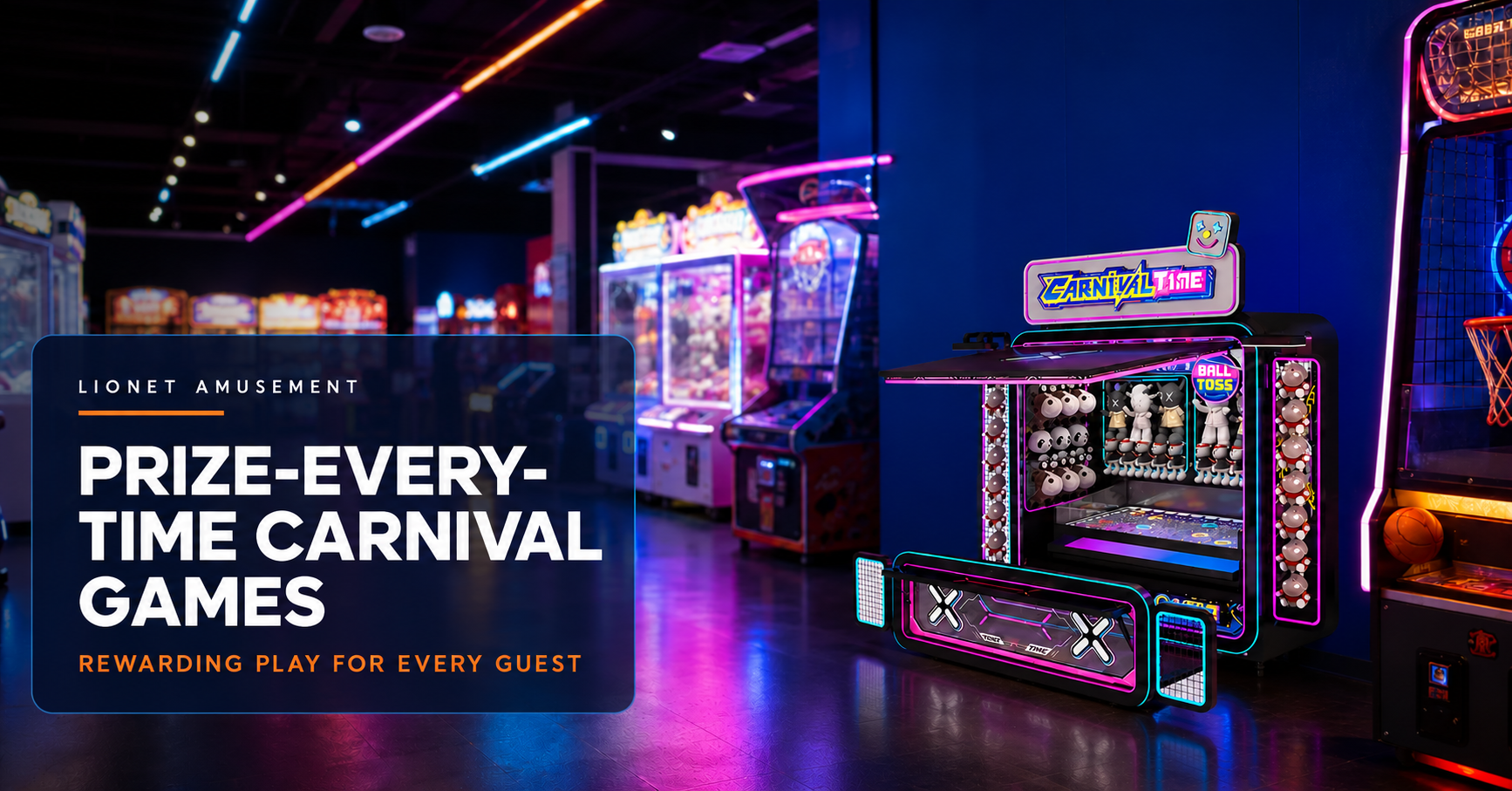
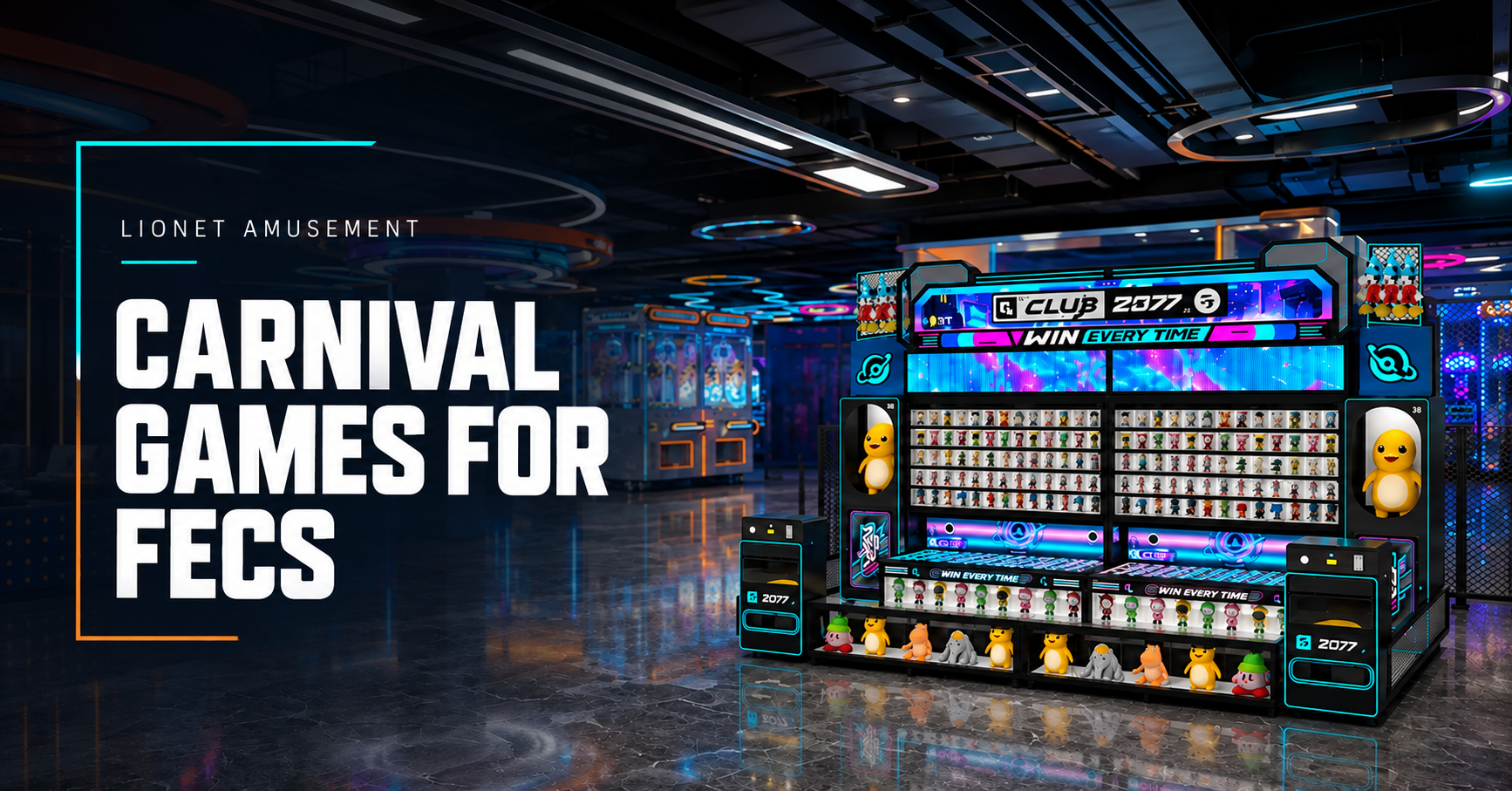
| Prize-Every-Time Games | Family venues and young players | Delivers a positive, low-frustration experience |
| Skill Carnival Games | Teens, adults, and competitive groups | Encourages repeat play and competition |
| Social Carnival Stations | Group activities and busy venues | Supports multiplayer interaction and shared fun |
The best product mix depends on your space, guest profile, staffing model, and prize strategy. An experienced supplier should be able to recommend game combinations that fit your business model.
4. Check Customization and ODM Capability
Customization can help your venue stand out from competitors. It is especially valuable for branded entertainment spaces, themed parks, and distributors who want exclusive products.
A custom carnival game manufacturer may support:
- Custom colors and graphics
- Venue logos and brand identity
- Themed cabinet designs
- Adjusted product dimensions
- Local-language game instructions
- Prize display configurations
- Original gameplay concepts through ODM development
For custom projects, ask the supplier to explain the development process clearly. A good process should include design confirmation, technical drawings, prototype approval where needed, production updates, quality inspection, and shipping preparation.
Clear communication at every stage can prevent delays and reduce the risk of receiving products that do not match expectations.
5. Confirm Safety and Operating Requirements
Commercial amusement equipment must be suitable for its intended environment. Safety and compliance requirements may vary depending on the country, venue type, and game design.
Before ordering, discuss:
- Installation conditions
- Electrical requirements
- Operating instructions
- Recommended daily inspections
- Cleaning and maintenance procedures
- Staff training needs
- Available safety documentation
Your carnival game equipment supplier should treat safety and operational questions as part of the project, not as an afterthought.
Easy operation is also important. Games should be simple for staff to supervise, maintain, and reset. Clear game rules and intuitive player interactions can improve throughput and reduce guest confusion.
6. Compare Total Project Value, Not Only Unit Price
A low product price does not always mean lower project cost. Equipment that requires frequent repairs, lacks spare parts, or arrives with poor packaging can become expensive over time.
When comparing suppliers, consider the full value of the offer:
- Product quality and expected service life
- Customization support
- Included accessories and spare parts
- Packaging quality for international transport
- Production lead time
- Shipping coordination
- Installation guidance
- After-sales service
- Replacement-part availability
Request a detailed quotation that clearly shows product costs, customization costs, packaging, delivery terms, and optional services. This makes it easier to compare suppliers accurately.
7. Review Manufacturing and Delivery Capability
Delivery delays can affect venue opening schedules, marketing campaigns, staffing plans, and revenue targets. Before confirming an order, ask about the supplier’s production and delivery process.
Important questions include:
- What is the lead time for standard products?
- How long does customization take?
- When does production begin?
- How are products packed for export?
- Can the supplier provide packing lists and loading photos?
- What documentation is provided for international shipping?
- How are missing parts or shipping damage handled?
For a larger project, it is helpful to request a timeline that includes design approval, production milestones, final inspection, and shipping dates.
8. Choose a Long-Term Partner
A carnival game supplier should be more than a one-time seller. As your business develops, you may want to expand a game zone, refresh an existing area, introduce new themes, or test new product categories.
Look for a supplier that offers responsive communication, product knowledge, customization capability, and ongoing support.
At Lionet Amusement, we design and manufacture original carnival game solutions for global entertainment venues, operators, and distributors. Our product range includes midway booth games, prize-every-time carnival games, skill carnival game booths, and social carnival stations. We also support flexible customization for venues that need a distinctive look, gameplay concept, or space-efficient solution.
Final Checklist: Choosing a Carnival Game Equipment Supplier
Before you place an order, confirm that you can answer “yes” to the following questions:
- Does the supplier understand my venue and target audience?
- Have I reviewed product materials and specifications?
- Does the game selection suit my space and revenue model?
- Are customization options clearly defined?
- Have safety and installation requirements been discussed?
- Does the quotation show the full project cost?
- Is the production and delivery schedule realistic?
- Is after-sales support and spare-parts availability clear?
Build a More Engaging Carnival Game Zone
The right carnival game equipment supplier can help transform an available space into a memorable entertainment experience. By focusing on product quality, game variety, customization, safety, and reliable support, you can make a more confident purchasing decision.
Contact Lionet Amusement with your venue size, target audience, preferred game types, and project timeline. Our team can help you develop a practical carnival game solution for your entertainment space.
Frequently Asked Questions
What should I look for in a carnival game equipment supplier?
Look for commercial-quality products, clear specifications, appropriate customization options, realistic lead times, installation support, and reliable after-sales service. The supplier should also understand your venue type and player audience.
Can carnival games be customized for my venue?
Yes. Many commercial carnival games can be customized with branded graphics, colors, logos, themed decoration, dimensions, and game instructions. Confirm the design process and approval stages before production begins.
What carnival games work best for a family entertainment center?
A balanced mix often works best. Consider prize-every-time games for younger players, skill games for repeat play, and social or multiplayer games for groups and families.
How early should I order carnival game equipment?
Start planning as early as possible, especially for customized products. Allow time for design confirmation, production, inspection, international shipping, and installation before your venue opening date.