Quick answer for buyers
An amusement games factory in China should be evaluated by the games it actually designs and builds, not only by catalog size. For a commercial venue, study the playing action, structure, player capacity, visible feedback, reset process and published product specifications. LIONET designs and manufactures original carnival and midway games for entertainment venues, operators and distributors, with products ranging from compact booths to multi-player attractions.
1. What separates original amusement game design from a standard equipment catalog?
A catalog tells a buyer what can be purchased. Original game design explains why the attraction works as an experience: what visitors do first, how they recognize progress, what creates suspense and when a round is clearly finished. Those details matter to family entertainment centers (FECs), theme parks, indoor amusement spaces and game distributors because each environment has different customers and operating routines.
An amusement games factory China buyers choose for original carnival game development should offer more than standard equipment. LIONET focuses on designing and manufacturing engaging carnival games, combining creative gameplay concepts with practical equipment structures for family entertainment centers, amusement parks, and commercial entertainment venues.
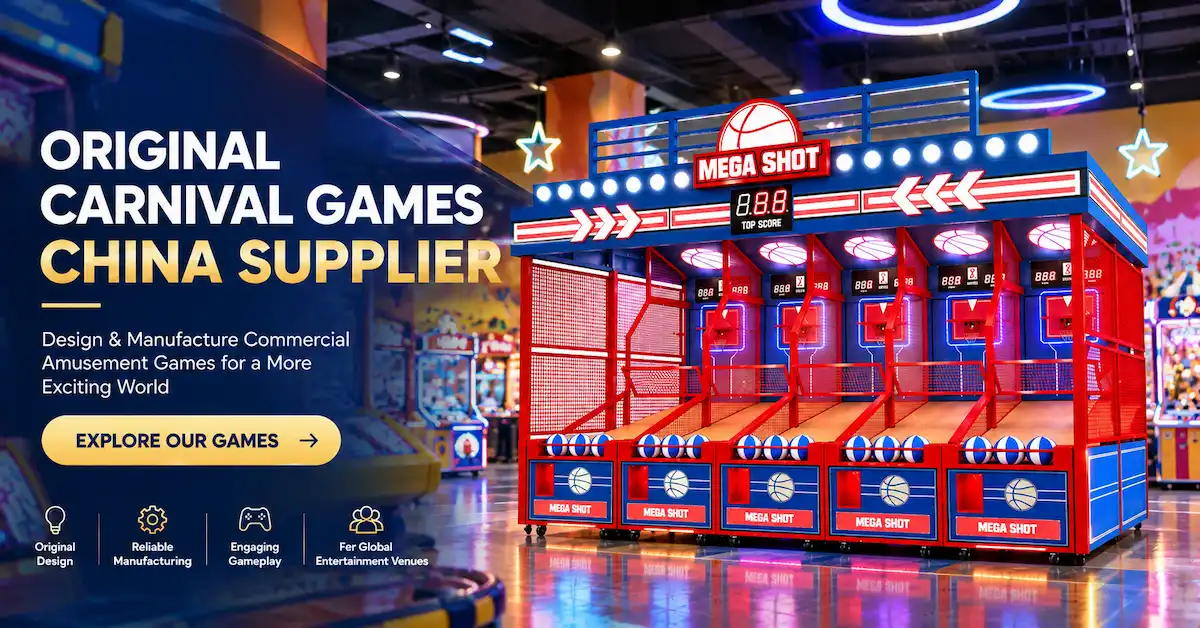
Consider a ball-toss challenge. Two cabinets may look similar in a photograph, yet feel very different in operation. Target placement changes how players aim. A visible score affects spectators. A straightforward return or reset mechanism affects the transition to the next turn. The most useful factory discussion therefore starts with the playing experience and the actual product configuration, rather than decorative features alone.
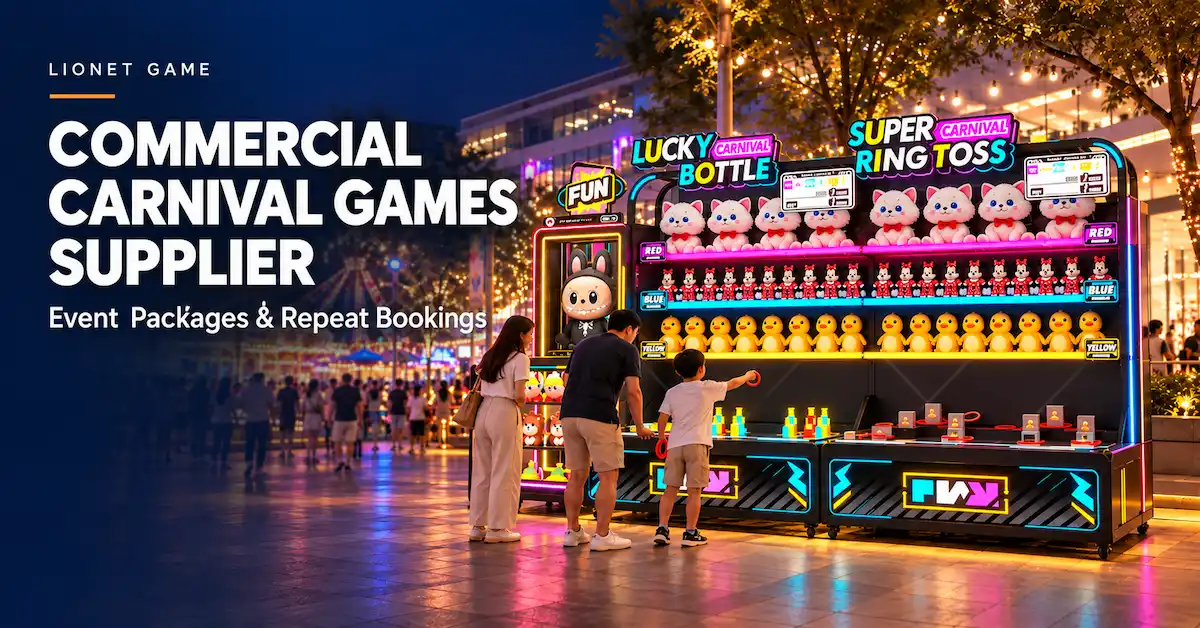
On its company introduction, LIONET describes a focus on original carnival game design and manufacturing. Buyers can examine that positioning through finished examples rather than relying on a broad claim about innovation. The manufacturer’s product range illustrates distinct formats: traditional midway booths, circular game stations, basketball competition and scoring-led throwing games.
2. From first play idea to finished carnival attraction
The following four-stage lens helps importers and operators understand what to look for when reviewing a factory's original equipment. It is a practical buyer evaluation framework, not a claim that every game follows an identical internal development schedule.
3. Real LIONET products show why one format cannot fit every venue
A factory's design range becomes easier to judge when the buyer compares actual attractions. The table below uses product information published by LIONET. Dimensions describe the equipment itself; a complete venue plan must separately consider playing positions, queues, circulation and service space.
| Original game format | Published size (W × D × H) | Players | Design distinction |
|---|---|---|---|
| 2m Compact Midway Booth | 2160 × 3100 × 3280 mm | 2 | Circus-inspired booth with multiple game options |
| 4-Sided Midway Booth | 5100 × 5100 × 4200 mm | Up to 16 | Four-sided approach and multiple playing positions |
| Dreamy Carnival | 5437 × 5437 × 3268 mm | 6 | Circular configuration and interchangeable game combinations |
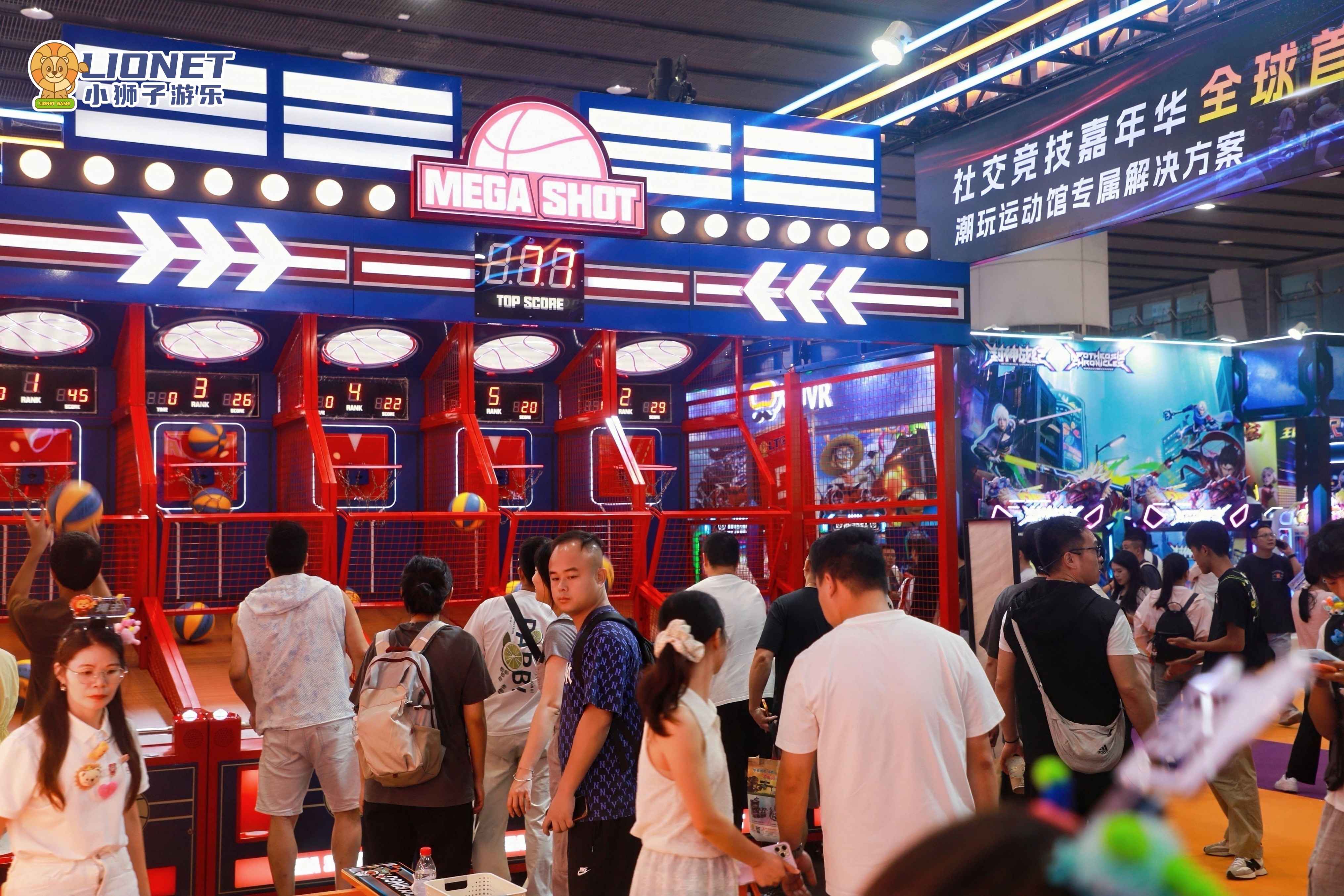
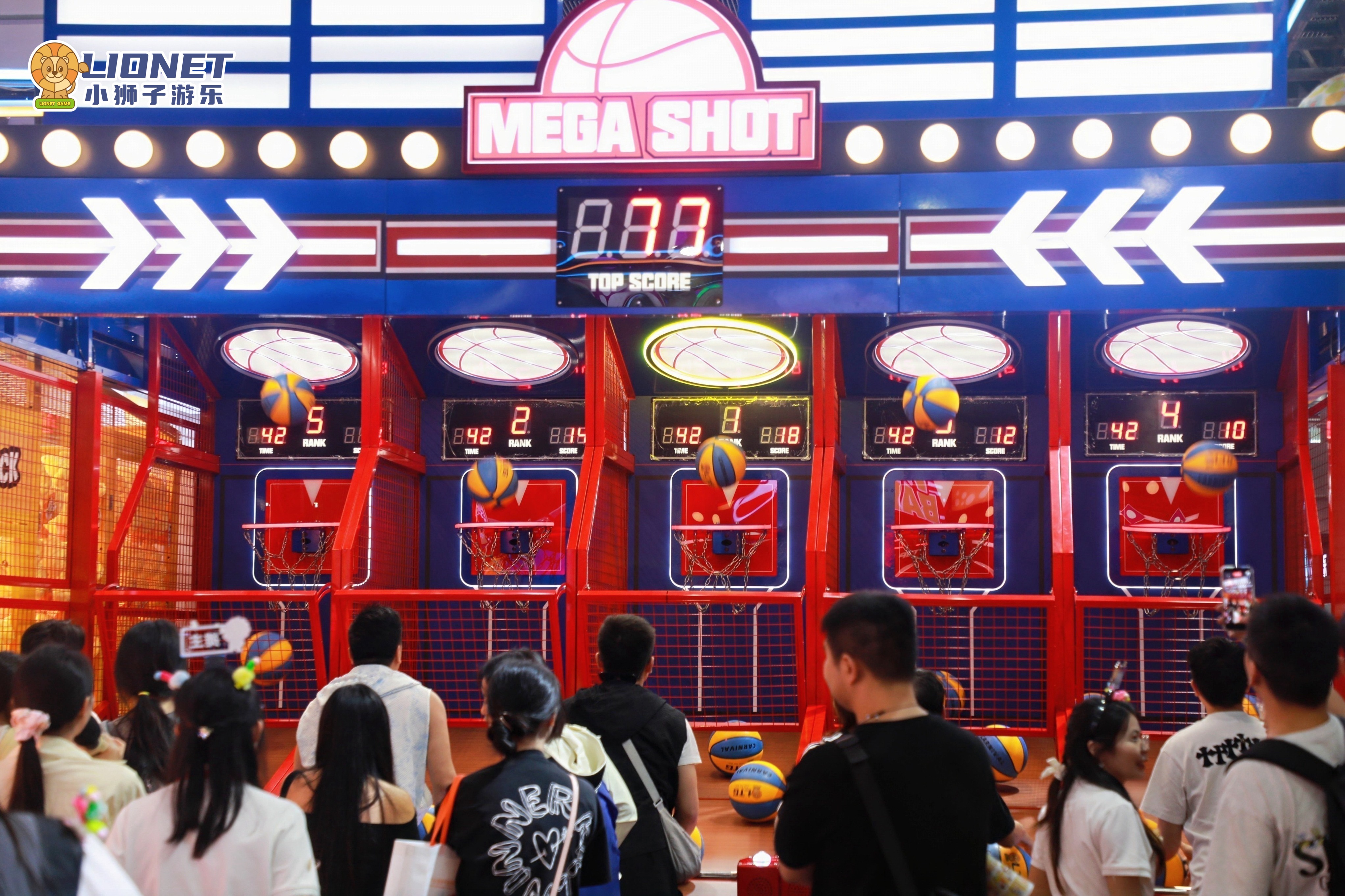
| Mega Hoops | 5280 × 3500 × 3950 mm | 5 | Side-by-side basketball lanes with live scores |
Published product details are examples, not guaranteed specifications for a future order. Request the current approved drawing and configuration before finalizing a purchase.
These products answer different operating questions. A two-player booth presents a familiar staffed carnival format. A four-sided attraction spreads activity around a larger structure. A circular multi-game station makes the playing area visible from several directions. Mega Hoops, by contrast, concentrates on simultaneous basketball competition and a score display. The useful comparison is therefore format, experience and venue fit, not an assumption that the largest cabinet is automatically the strongest purchase.
4. Match the original game format to the commercial setting
Game selection should begin with the audience and the operating model. The following venue-to-format matches are practical planning suggestions, not promises about visitor numbers or sales results.
FEC & INDOOR ENTERTAINMENT
Keep the game visible and understandable
Review indoor-use product descriptions, play positions, line of sight and how the game fits alongside other attractions. Dreamy Carnival provides a useful example of a multi-directional game format.
THEME PARK MIDWAYS
Plan every playing side
The 4-Sided Midway Booth is a reference point for attractions approached from multiple directions. Evaluate the surrounding footprint and spectator circulation, not only the cabinet width.
GROUP PLAY & SOCIAL VENUES
Make the score part of the show
Mega Hoops and Spin Pitch illustrate competition-focused play. Inspect score visibility, round rules and spectator placement when comparing designs.
EVENTS & FESTIVALS
Begin with the event schedule
Ask which specific models suit the intended location and event duration. Confirm packing units, assembly tasks and planned staffing rather than assuming every booth has the same transport or setup needs.
LIONET groups its venue offering around FEC and indoor play, events and festivals, theme parks, and distributors. Those categories are a useful starting point; the final selection should always be linked to the product's confirmed configuration.
5. A practical design scorecard for commercial buyers
An original attraction should be evaluated as a complete play cycle. Use this scorecard when watching factory demonstrations or comparing two games with a similar theme.
| Evaluation point | What the buyer should observe | Useful evidence |
|---|---|---|
| First-play clarity | Can a new visitor identify the action and goal? | Unedited round demonstration |
| Feedback | Are hits, scores or outcomes obvious? | Gameplay video from player position |
| Player flow | Where does the next player wait? | Dimensioned layout sketch |
| Reset and handling | What happens between rounds? | Full start-to-reset demonstration |
| Service access | How are commonly handled parts reached? | Service-access photos or instructions |
This checklist helps distinguish attractive presentation from day-to-day usability. For example, a high-score screen is most effective when the player and nearby friends can see it; an elaborate target arrangement is only useful if operators understand how game pieces are collected or restored for another round. The scorecard does not assign an automatic quality grade to any product. It creates a repeatable way to ask better questions.
6. What factory information should a buyer request?
Original design gives a factory something distinctive to show, but purchasing still requires precise product information. Ask for a package of evidence tied to the selected model, not a generic statement about the factory.
When evaluating an amusement games factory China supplier, international buyers should consider original game design capabilities, product variety, manufacturing processes, and suitability for their entertainment venues. LIONET offers a range of carnival game equipment, including midway booths, multiplayer basketball games, and interactive amusement attractions.
- Product identity: the exact model name, game version, visible accessories and proposed configuration.
- Dimensions and placement: published width, depth and height, followed by confirmation of player space, operating access and site-specific placement needs.
- Working game demonstration: start, player action, result and reset, recorded without editing out important transitions.
- Manufacturing detail: structural elements, cabinet finish, high-contact components and what can be serviced or replaced.
- Shipment content: package count, packed measurements, included pieces and assembly information for the actual order.
- Order and support details: an itemized quotation, the agreed production schedule, spare-parts procedure and the contact route for questions after delivery.
If a detail is not published, request it rather than guessing. In particular, a picture cannot establish how many people may play simultaneously, and the outer dimensions of a machine do not define its complete operating area. Separate the manufacturer's documented specifications from your own venue plan and final project decisions.
Make the comparison concrete
Bring your floor plan and preferred game style.
Share the venue type, audience, available space and the LIONET products you want to compare. A specific brief makes the next conversation more productive.
Send Your Project Brief →7. How distributors can build a focused carnival game selection
An importer does not need every game style on the first purchase. A clearer starting point is a collection that performs different jobs for different buyers: a recognizable carnival booth, a multi-game attraction and a social competition product. This makes the range easier to explain to FEC owners, amusement park operators and event companies.
Start with three questions. Which end customers already buy from you? What venues can they realistically install equipment in? Which products have clearly distinguishable reasons to be purchased? A distributor serving small indoor sites may prioritize different attractions from one serving large seasonal midway areas. Avoid treating all amusement games as interchangeable just because they share bright graphics or throwing mechanics.
For LIONET, the contrast between the 2m Compact Midway Booth, Dreamy Carnival and Mega Hoops shows how a product range can be explained by format and play behavior. Order planning should then proceed model by model, with current specifications and commercially agreed terms documented separately.
8. A seven-point inquiry checklist before you contact a factory
Buyers searching for an amusement games factory China partner often send a message asking for a general catalog and the lowest price. That makes it difficult to compare suitable products. Use this short brief instead:
- State your buyer role: venue operator, event organizer, importer or distributor.
- Specify the intended site: indoor FEC, theme park, event location or another commercial venue.
- Provide an approximate floor plan, available height and intended placement area.
- Describe who will play: families, mixed-age groups or visitors seeking competitive games.
- Name two or three preferred products from the live catalog and explain what you like about each.
- Share expected quantity and target opening or receiving date, without assuming a standard lead time.
- Request current specifications, a complete gameplay video, a defined quotation scope and packing information.
A factory can respond more precisely when the inquiry identifies an actual installation and chosen game styles. You can review LIONET's venue solution categories or browse its public project gallery for context before preparing your brief.
9. Frequently asked questions
What does an amusement games factory in China manufacture for commercial venues?
Depending on its product focus, a factory may manufacture carnival booths, throwing and target games, interactive sports games or combined play stations. LIONET's published range includes midway booths, circular attractions and scoring-based competition games. Examine individual product descriptions rather than assuming every factory offers the same categories.
Why choose original carnival games instead of selecting equipment only by appearance?
Original game concepts can offer distinctive playing actions, themes and feedback. The commercial value still depends on whether customers understand the activity, whether the game fits the venue and whether the finished equipment is workable for staff. Review the complete play cycle before ordering.
Can one large game booth replace several smaller game stations?
Not automatically. Compare the activities offered, simultaneous player positions, amount of usable floor area and how guests approach the attraction. A multi-sided booth and several separate stations create different circulation and supervision patterns; select according to the site plan.
How should buyers compare two amusement game models?
Use verified model data, a full gameplay demonstration and a simple scorecard covering first-play clarity, feedback, reset, access and service. Ask for current dimensions and the exact configuration being quoted. Do not compare a standard product listing with a different, unconfirmed variation.
How can I request product information and pricing from LIONET?
Visit the LIONET contact page and include your venue type, intended audience, available space, chosen product names, estimated quantity and preferred delivery window. Ask for a model-specific quotation and current product information.
Original games. Real commercial decisions.
Explore a carnival game range built around play.
Browse the verified product range or share your project details with LIONET to discuss a suitable starting selection.
Browse Carnival Games → Request a Product Discussion ↗Conclusion
Choosing an amusement games factory in China starts with understanding what the factory actually creates. Original carnival game design should translate into a clear playing experience, a suitable commercial format and a finished product that buyers can assess through real specifications and demonstrations. LIONET's published lineup offers concrete examples, from midway booths to multiplayer competition games. Compare the games against your venue requirements, confirm the current product details and request a specific quotation before deciding.