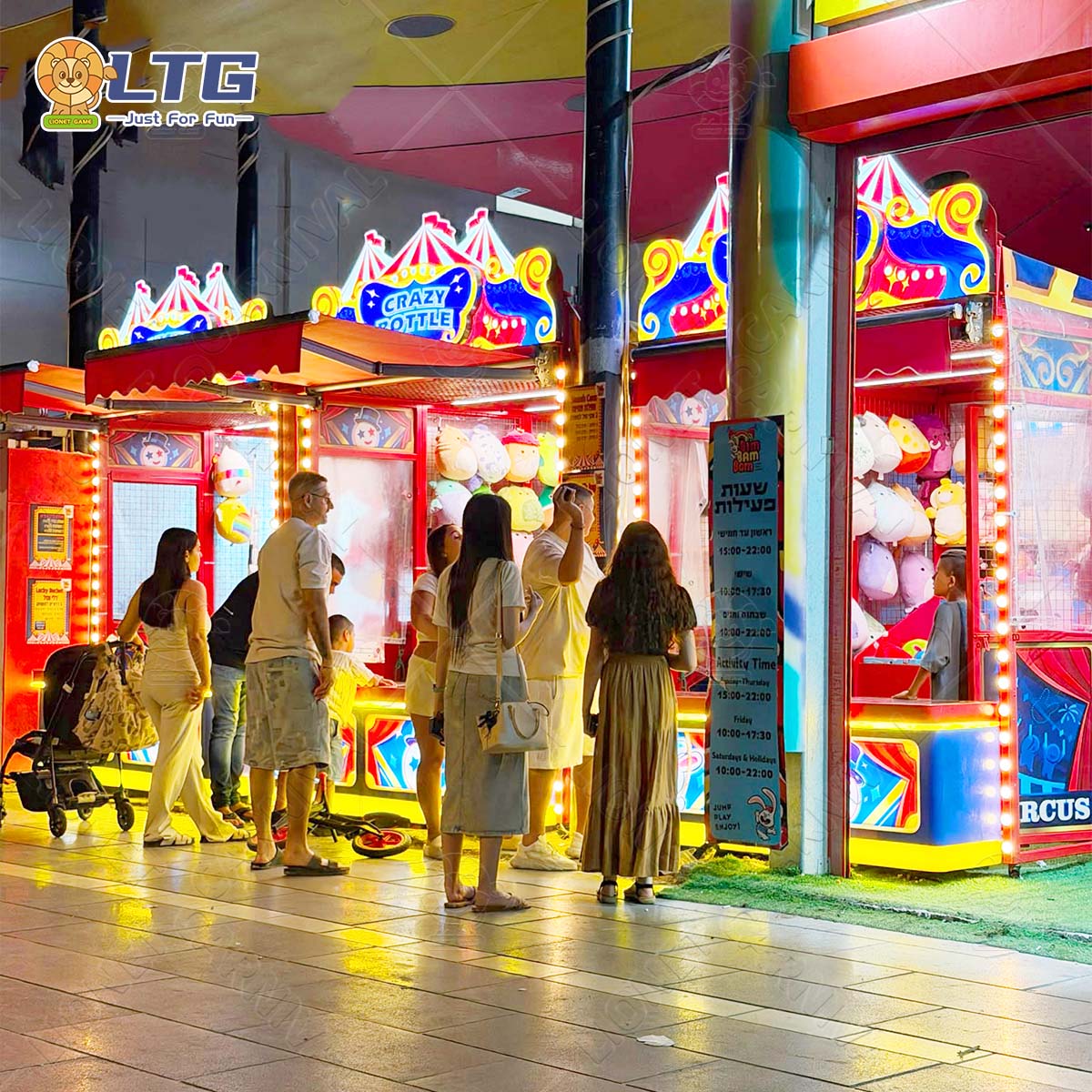
Shopping malls can offer competitive socialising operators access to established visitor traffic, transport connections and complementary leisure activities. But a busy shopping centre does not automatically make a profitable entertainment venue.
For operators considering a new location, the real question is whether the mall's audience, rental structure, available space and entertainment offering can support a sustainable business.
The expansion of competitive socialising into shopping centres is creating new opportunities for leisure operators and property owners. At the same time, rising operating costs, local competition and changing consumer expectations make location decisions increasingly important.
Recent developments in the UK, alongside research into North American location-based entertainment, offer a useful starting point for understanding what operators should evaluate before signing a lease or investing in equipment.
Lane7 at Meadowhall: A Case Study in Location Strategy
On August 29, 2026, competitive socialising operator Lane7 opened its second Sheffield venue at Meadowhall, a major shopping and leisure destination in South Yorkshire.
The opening was reported locally at the time, with further industry coverage published in October.
According to Completely Retail's October 22 report, the new location forms part of Lane7's wider expansion strategy. It complements the company's established Sheffield city-centre venue and is intended to reach a broader regional audience.
The Lane7 Meadowhall website presents a combination of boutique bowling, darts, pool, shuffleboard and mini golf, supported by food, drinks and group packages.
This is more than a collection of games.
The venue brings together multiple activities that can serve different occasions, including dates, social gatherings and group celebrations.
There is, however, another important detail.
Lane7 took over premises previously occupied by Clubhouse Social, which had offered several similar activities. Clubhouse announced its closure in August 2026 and stated that the business had been acquired, according to The Star's report on August 23.
The available information does not establish why the previous operation closed or whether it was financially unsuccessful.
Nevertheless, the sequence raises a valuable question for prospective investors:
If a shopping centre already has an established leisure audience, what allows one operator to build a sustainable business where another has exited?
Possible factors include brand strength, operating efficiency, lease conditions, pricing, programming and the ability to reach different customer groups.
These are hypotheses to investigate, not conclusions about either company.
The Meadowhall example shows why venue expansion should be evaluated as an operating strategy rather than evidence that a particular entertainment format is guaranteed to succeed.
Understand the Mall Audience Before Choosing the Games
One of the biggest mistakes in shopping-mall entertainment planning is treating total mall footfall as potential paying customers.
A shopping centre may attract families, teenagers, young professionals, tourists and business groups. Yet their reasons for visiting, available time and willingness to purchase entertainment can differ substantially.
An operator needs to distinguish between people who visit the mall and people who are likely to book a game.
Different Audiences, Different Entertainment Occasions
Consider three possible customer groups.
Families visiting during the day may prioritize accessible activities, straightforward rules, appropriate age restrictions and flexibility around shopping and meals.
Young adults and groups of friends may prefer competitive challenges, social interaction, music, evening availability and food-and-beverage packages.
Corporate and private groups may value bookable sessions, organized competitions, reliable group capacity and an environment that supports social events.
A single venue can serve more than one segment, but it should not assume that all three require the same games, pricing or service model.
The distinction is especially important when comparing shopping centres with city-centre entertainment locations.
A city-centre venue may depend more heavily on destination visits and evening trade. A mall-based venue may have opportunities to attract both planned group bookings and customers already visiting the shopping centre.
Whether those opportunities are commercially meaningful depends on the location.
In its May 2026 research into North American location-based entertainment, JLL identified different entertainment propositions for different consumer groups, from premium social gaming experiences to family-oriented attractions in retail environments.
That research illustrates the diversity of demand. It does not establish a universal customer profile for mall entertainment.
Before choosing equipment, operators should therefore examine catchment demographics, competing attractions, daypart demand, accessibility and the actual proportion of visitors who may be willing to pay for the proposed experience.
Footfall creates exposure. The right audience and proposition create the opportunity for revenue.
Evaluate Rent, Capacity and the Real Economics of the Space
Shopping malls offer infrastructure and visibility, but these advantages come with financial obligations.
A location that appears attractive from a marketing perspective can become difficult to operate if its occupancy costs are incompatible with realistic revenue.
The Occupancy Cost Question
Operators should review more than the headline rental figure.
Depending on the lease and jurisdiction, relevant costs may include base rent, service charges, business rates or property taxes, insurance, utilities, fit-out expenditure and ongoing maintenance.
Restrictions on opening hours, exterior access, signage, noise and permitted use can also affect the business model.
These conditions matter because entertainment venues do not necessarily generate revenue in the same way as conventional retail tenants.
A game may occupy significant floor space while generating income only when customers are actively participating.
Additional space may be needed for spectators, queues, seating, circulation and staff access.
Consequently, the entire leased area cannot be treated as revenue-producing game space.
Research published by Savills in March 2026 describes a UK competitive socialising market in which operators are considering different venue sizes, including larger multi-activity destinations and smaller formats in higher-rent locations.
The report also identifies cost pressures and the possibility of saturation in some local markets.
These findings reinforce the need to evaluate the economics of a specific site rather than relying on general industry momentum.
Capacity Matters as Much as Floor Area
A practical investment assessment should start with the number of paying sessions a venue can realistically deliver.
For each proposed game, operators should evaluate:
-
The number of players per session.
-
Actual gameplay and changeover time.
-
Expected utilization during peak and off-peak hours.
-
The floor area needed for safe play and circulation.
-
Staffing, maintenance and consumable requirements.
For example, a large attraction may accommodate more people at once but require substantial space. A collection of smaller skill-based games may provide flexible capacity, yet still require careful management of queues and movement between stations.
Neither format is inherently superior.
The decision depends on how much operating contribution each configuration can reasonably generate relative to the space and resources it consumes.
Operators can begin with a simple model:
Expected game revenue = Paid sessions × Net revenue per session
Game contribution = Game revenue − Direct game-related operating costs
That contribution then needs to be assessed against allocated occupancy costs, shared staffing, central overhead, initial investment and required returns.
Food-and-beverage or event income can be included where relevant, but should be modeled separately to avoid double counting.
The assumptions matter more than an attractive spreadsheet result.
A responsible forecast should show what happens if bookings, prices or utilization fall below expectations.
Build a Game Mix That Matches the Location and Operating Model
The next decision is how games should work together within the venue.
Competitive socialising covers a broad range of activities, including bowling, mini golf, darts, shuffleboard and other physical or digitally supported skill challenges.
Some operators create large destination venues combining several activities, food and drinks. Others focus on a smaller number of games or integrate entertainment into an existing FEC.
North America provides a useful comparison.
JLL's 2026 research identifies Level99 among the operators using large former retail spaces for challenge-based entertainment. Its Natick, Massachusetts, venue combines physical and mental challenges with food and beverage, according to Level99's official venue information.
This illustrates a different operating model from a compact game zone within a shopping centre.
Both may be appropriate, but they require different investment assumptions.
For a shopping-mall project, game selection should begin with the intended customer experience.
A family-oriented entertainment zone may benefit from easily understood physical skill games, short rounds and flexible participation.
A dedicated social gaming venue may place greater emphasis on group bookings, organized competition, shared activities and complementary hospitality.
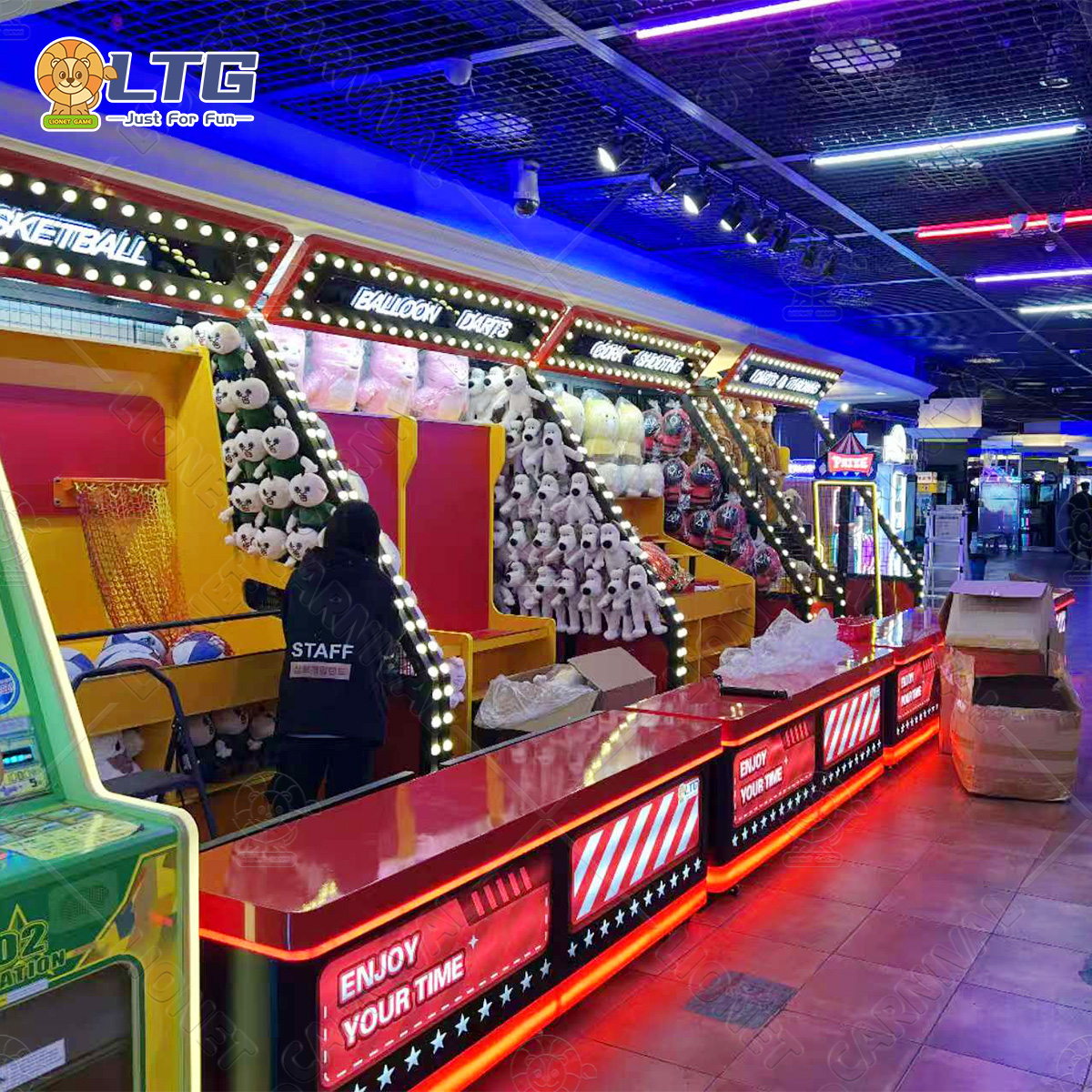
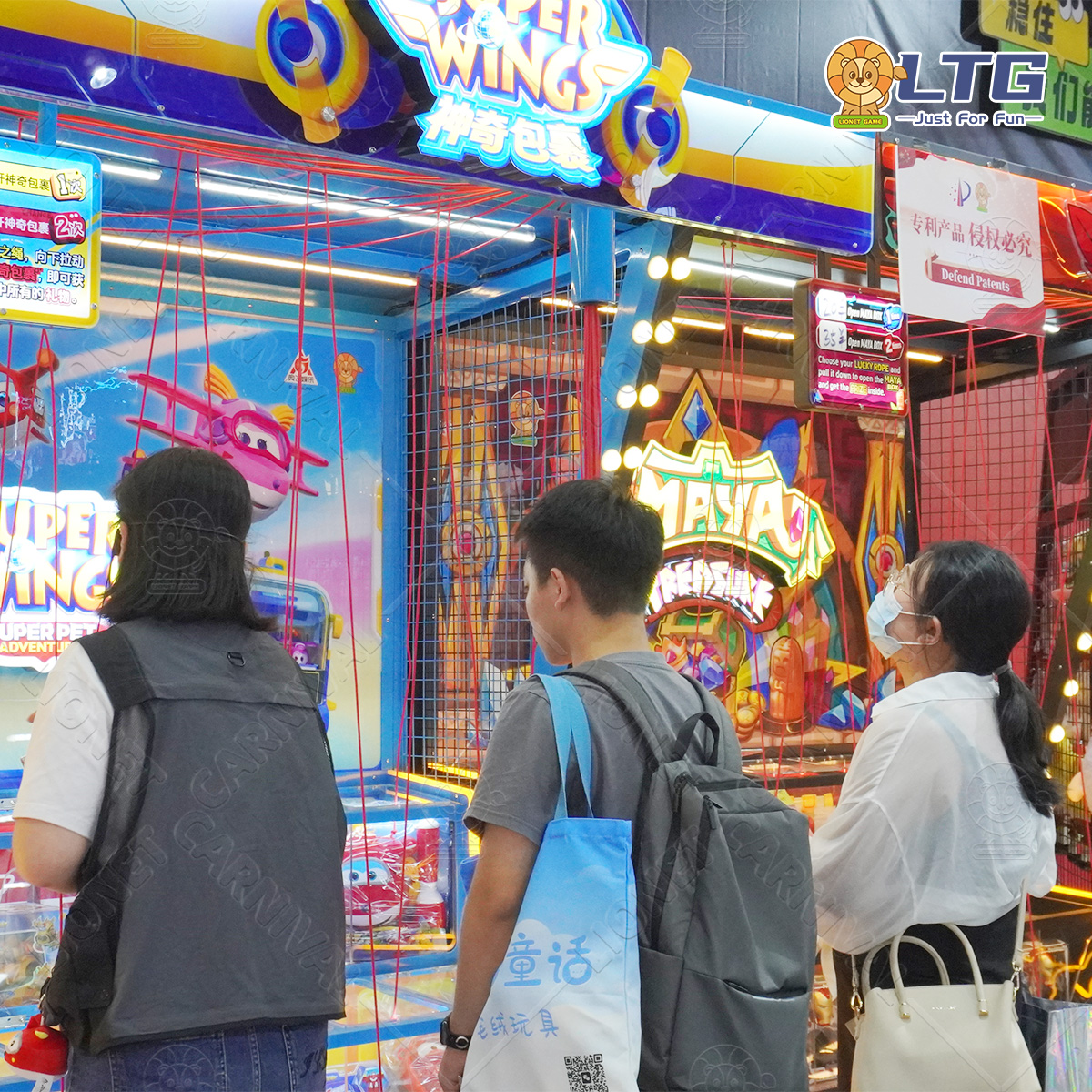
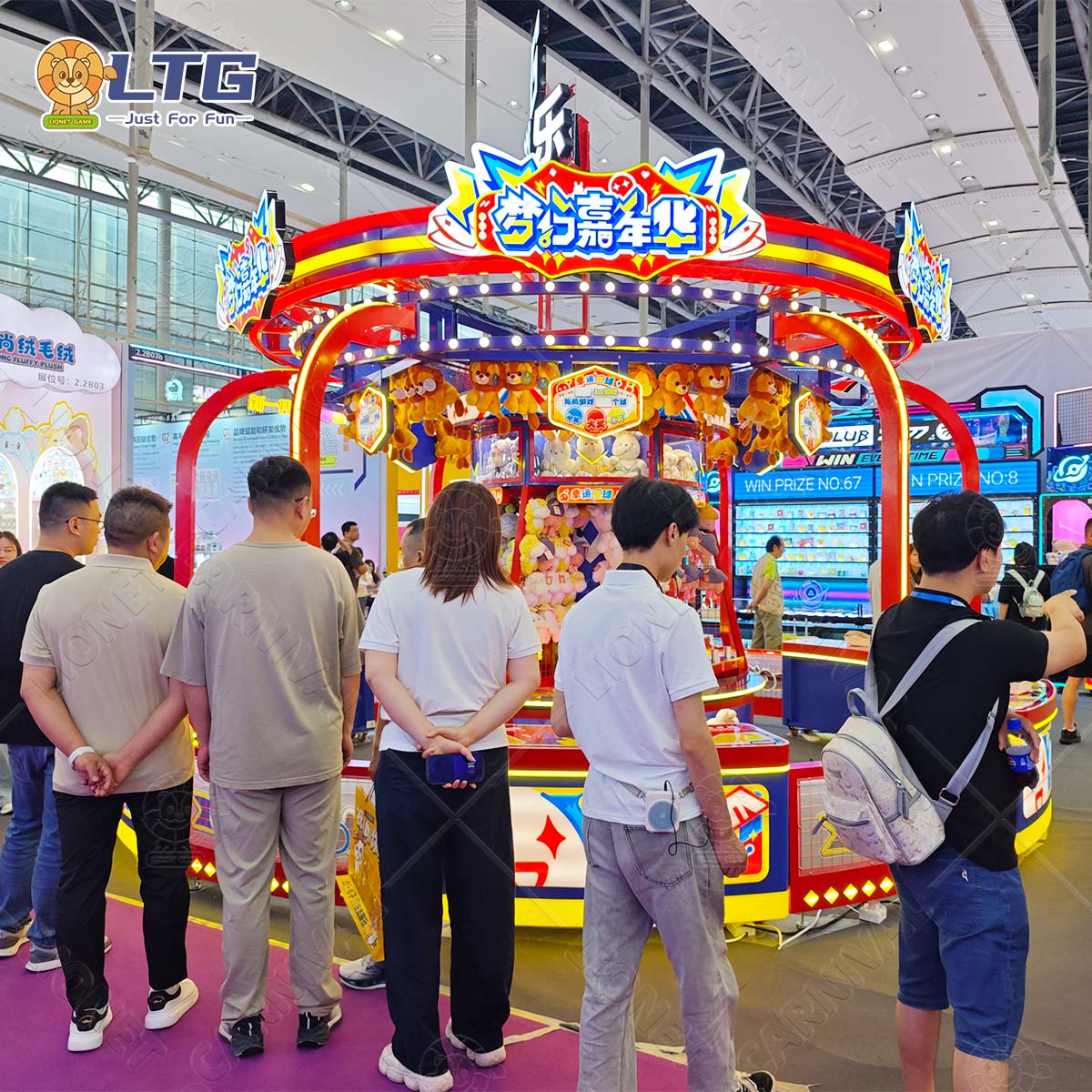
Traditional Carnival & Midway Games can also be relevant, particularly where operators want recognizable physical challenges or prize-based entertainment.
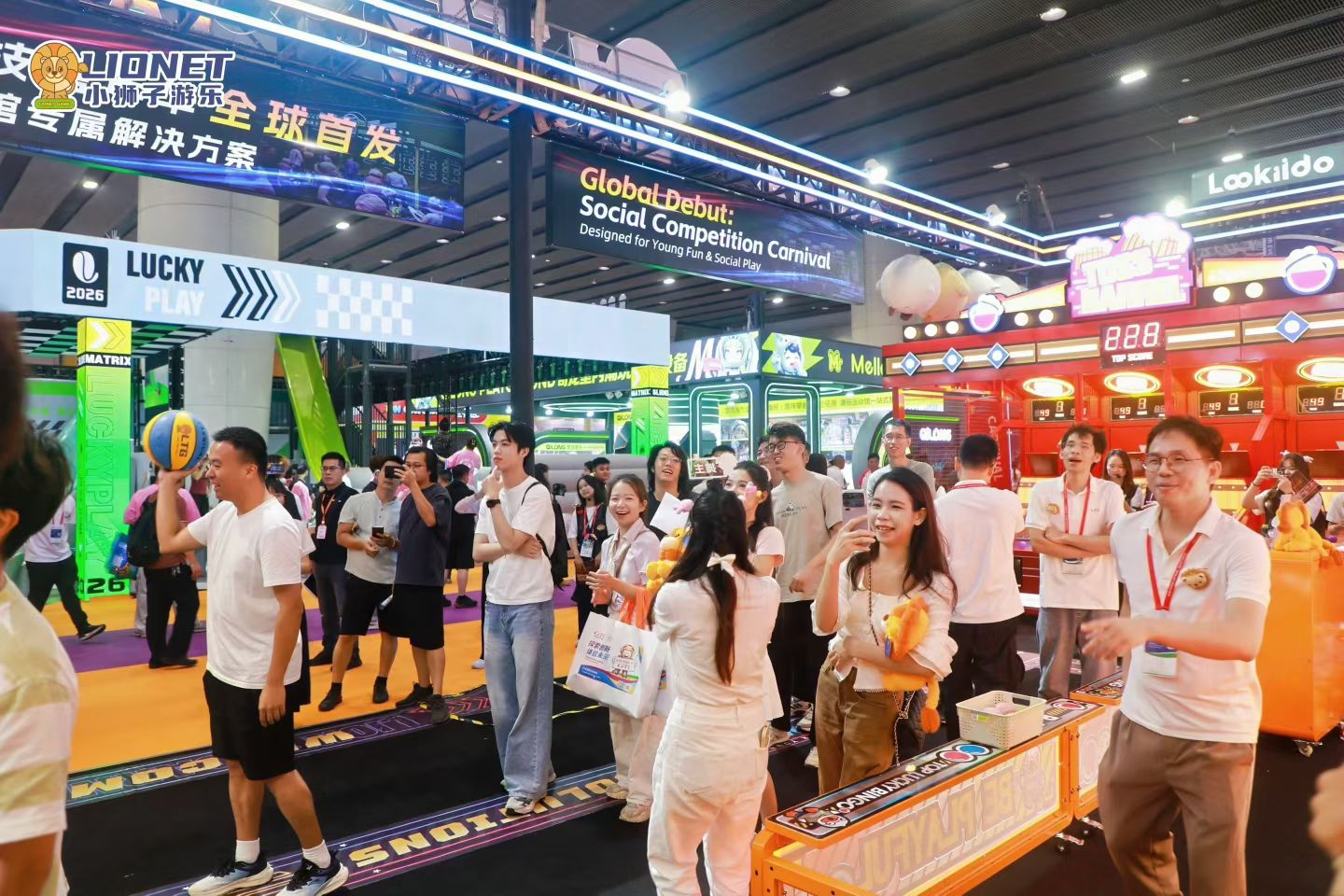
Social Competition Carnival Games explore another approach: bringing physical skill challenges into group-oriented competitive formats.
The two categories can coexist. Neither requires every venue to adopt the same technology, staffing model or payment system.
The important question is whether each game contributes something useful to the overall experience.
Adding more games does not necessarily improve the offer if they compete for the same customers, create congestion or increase maintenance without sufficient additional revenue.
A balanced mix should be judged on variety, accessibility, operating capacity and the ability to serve the venue's intended audience.
Operational Risks Should Shape the Layout
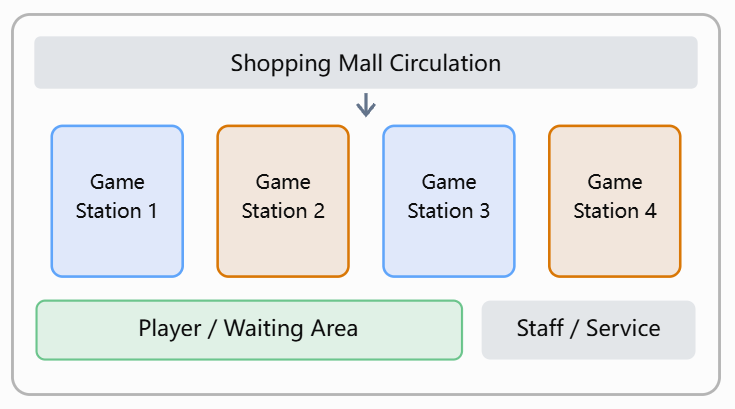
Equipment selection and floor planning should be developed together.
Operators need to consider equipment dimensions, player movement, waiting space, emergency access, power requirements, maintenance clearance and the movement of staff and supplies.
Game zones should also be evaluated for visibility. An activity may need space for spectators, but those spectators should not obstruct circulation or interfere with nearby attractions.
Digital scoring and connected systems introduce additional considerations, including fault recovery, software support and operational continuity.
Where prizes are involved, reward costs, replenishment, storage, local requirements and staff procedures need to be considered.
For larger groups, booking schedules and session changeovers can be just as important as the attractions themselves.
These are not minor installation details. They influence capacity, customer experience and the reliability of the business.
When a Shopping Mall May Be the Wrong Choice
There is a persuasive argument against expanding into some shopping centres.
A venue may have strong footfall but limited demand from its intended paying audience. Occupancy costs may be too high, opening-hour restrictions may limit profitable trading periods, or nearby attractions may compete for the same leisure budget.
The operator may also find that a standalone destination, leisure park or city-centre location offers greater flexibility at a more sustainable cost.
Savills' 2026 analysis warns that parts of the UK competitive socialising market may experience local saturation as brands compete for finite consumer spending.
This matters for both established operators and new entrants.
A shopping centre with existing leisure operators may demonstrate an appetite for entertainment, but it also creates a competitive environment that needs to be understood.
The closure and subsequent replacement of Clubhouse at Meadowhall should not be interpreted as proof of market failure. Equally, Lane7's arrival should not be interpreted as proof of financial success.
Both conclusions would require evidence unavailable in the public reports reviewed.
For investors, the appropriate response is disciplined due diligence.
Before committing to expansion, operators should test several scenarios: expected demand, weaker-than-expected bookings, higher occupancy costs, and periods of reduced game availability.
They should also understand lease flexibility, fit-out obligations, local competition and any regulatory or operating restrictions relevant to the proposed format.
A project becomes more credible when it remains operationally and financially viable under reasonable adverse assumptions—not only under its most optimistic forecast.
A Practical Decision Framework for Entertainment Operators
Shopping malls can provide a valuable setting for competitive socialising, but they are not a shortcut to commercial success.
The strongest opportunity is likely to emerge when five factors align:
Audience fit. The entertainment concept serves customers with a demonstrated reason to visit and pay.
Location economics. Rent and other occupancy costs are consistent with realistic revenue and contribution forecasts.
Space efficiency. The game mix supports practical capacity, guest movement and reliable operations.
Experience differentiation. The venue gives customers a reason to choose it over competing leisure options.
Operational resilience. Equipment, technology, staffing and support arrangements can sustain the intended service model.
For Lionet, a manufacturer focused on Carnival & Midway Games and developing Social Competition Carnival Games, this framework reflects the importance of evaluating how physical games fit into the complete entertainment environment.
The objective is not to recommend one game format for every shopping centre.
It is to help operators consider how game selection, group participation and equipment configuration should support their venue concept.
For operators planning or expanding a shopping-mall entertainment area, Lionet can discuss the intended audience, available layout, gameplay requirements and equipment options to help assess a suitable configuration.